
MAEZ insight
Unlocking the Benefits of a Safety Management System
Discover how a Safety Management System reduces workplace accidents, lowers costs, ensures compliance, and strengthens reputation for Australian transport operators.
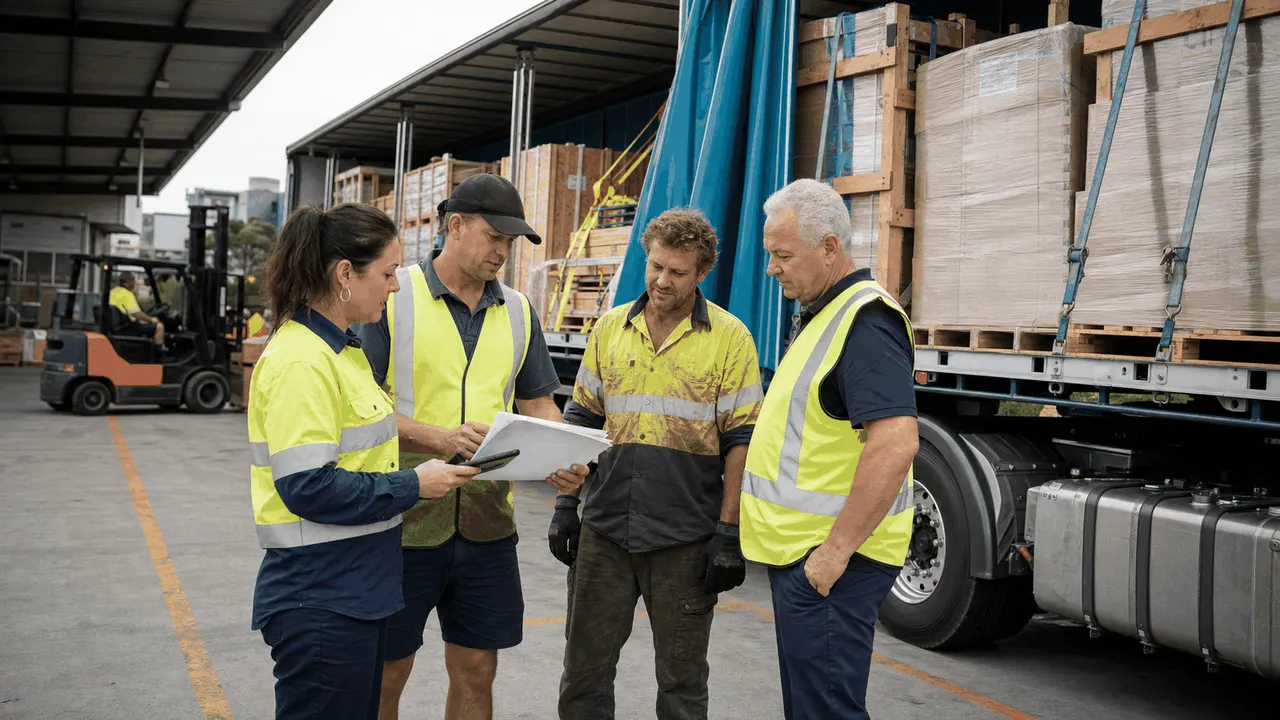
Loading controls need evidence, not assumptions.
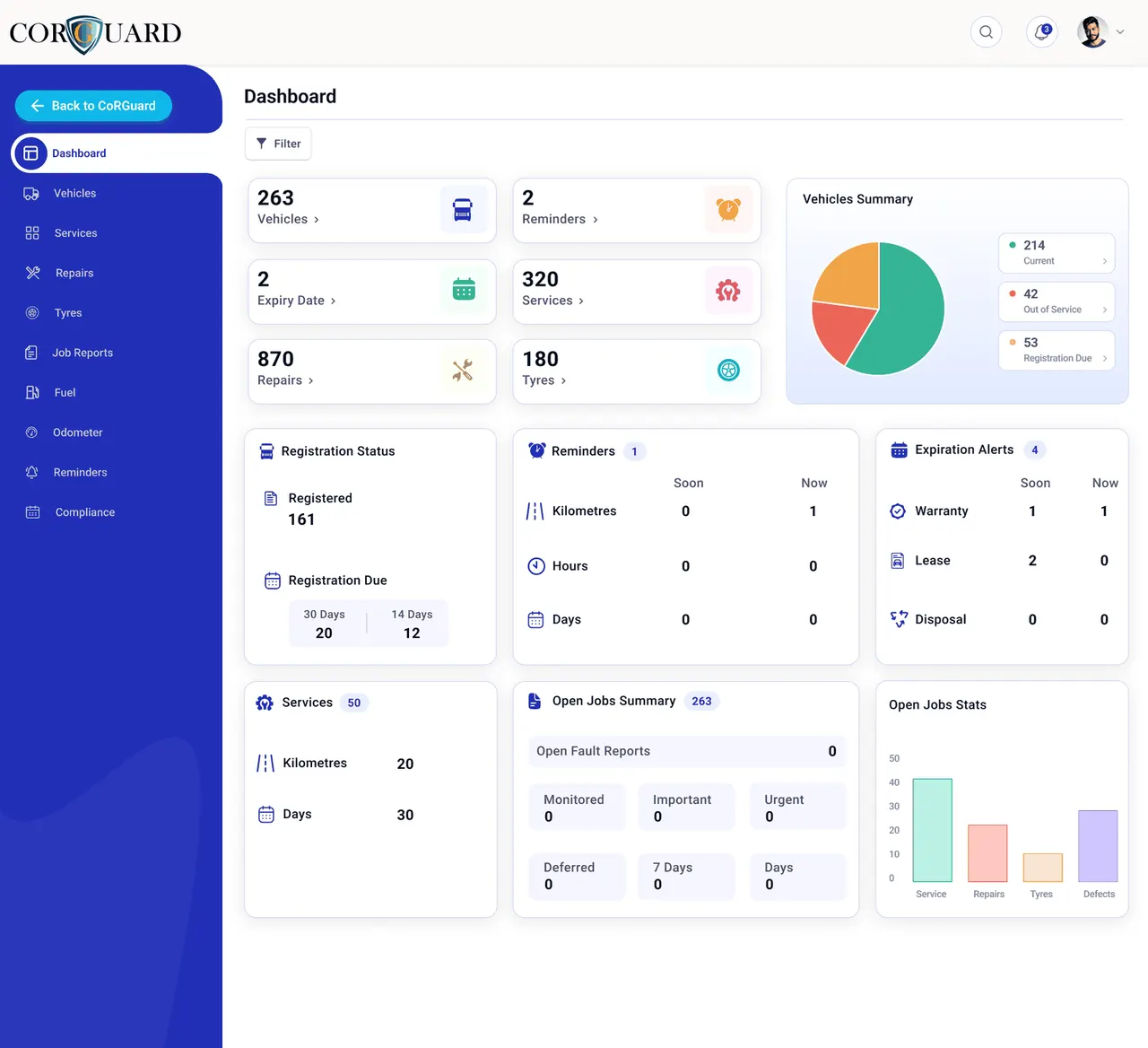
Daily fleet activity has to connect back to duties, controls, and review.

Due diligence means knowing whether the safety system is actually working.

Proof that freight promises do not create unsafe transport pressure.
Consignors
Freight terms, delivery windows, and KPIs must not push drivers into speed, fatigue, or mass breaches.
Consignees
Receiving rules, site access, and unloading delays are CoR controls that need to be set and evidenced.
Loaders
Mass, dimension, and load restraint decisions need documented checks, not assumptions.
Managers
Executives and managers need due-diligence evidence that the Safety Management System is actually working.
What Is a Safety Management System?
A structured framework to proactively identify hazards and protect workers.
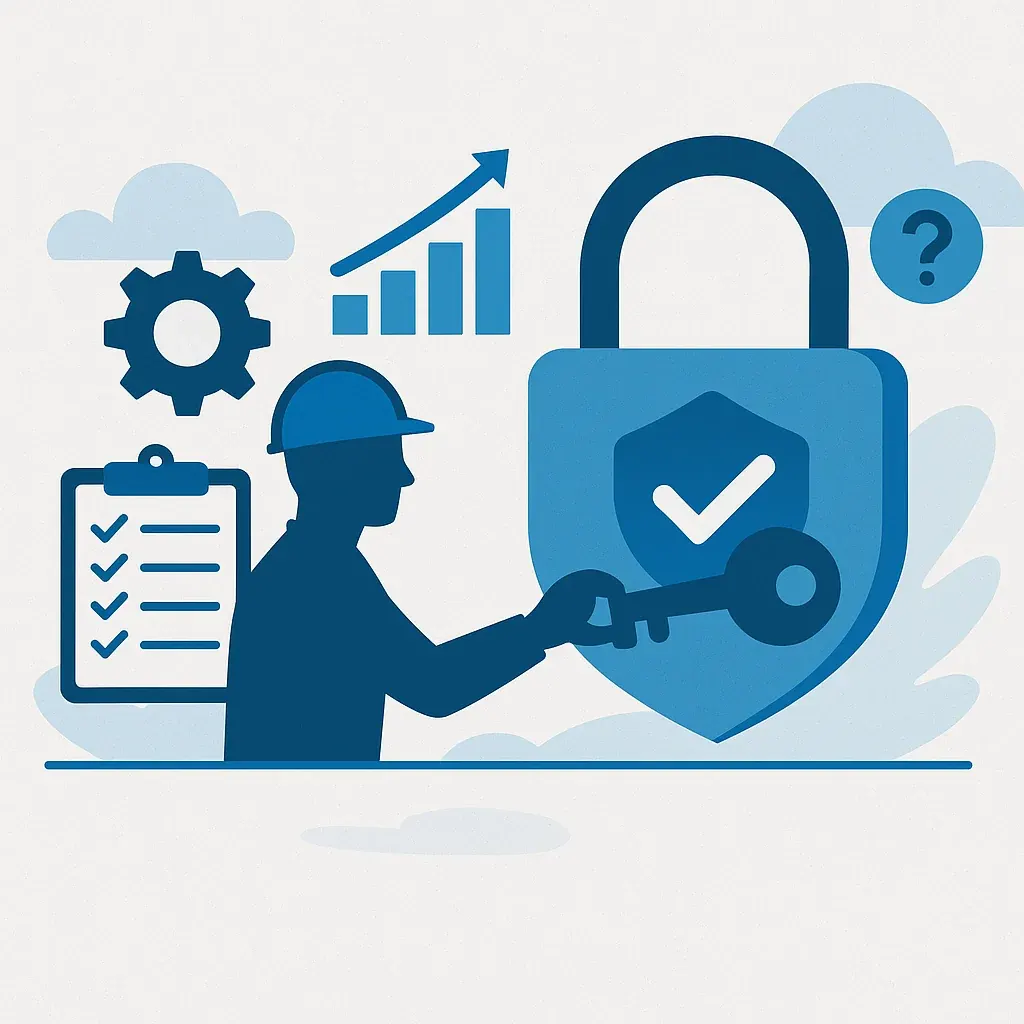
A safety management system (SMS) is a structured framework that helps organisations proactively identify workplace hazards, implement controls, and protect workers before incidents occur. For Australian transport operators, an effective SMS reduces operational costs, ensures compliance with safety regulations, and builds a culture where employees feel valued and engaged in their work.
Beyond protecting workers, an SMS delivers measurable business advantages. Companies with mature safety management systems experience fewer workplace accidents, lower insurance premiums, and stronger employee morale. When safety integrates into core business practices, organisations gain competitive advantages that directly impact their bottom line.
An SMS establishes formal processes for identifying hazards, assessing risks, and implementing controls. The system creates accountability at all organisational levels.
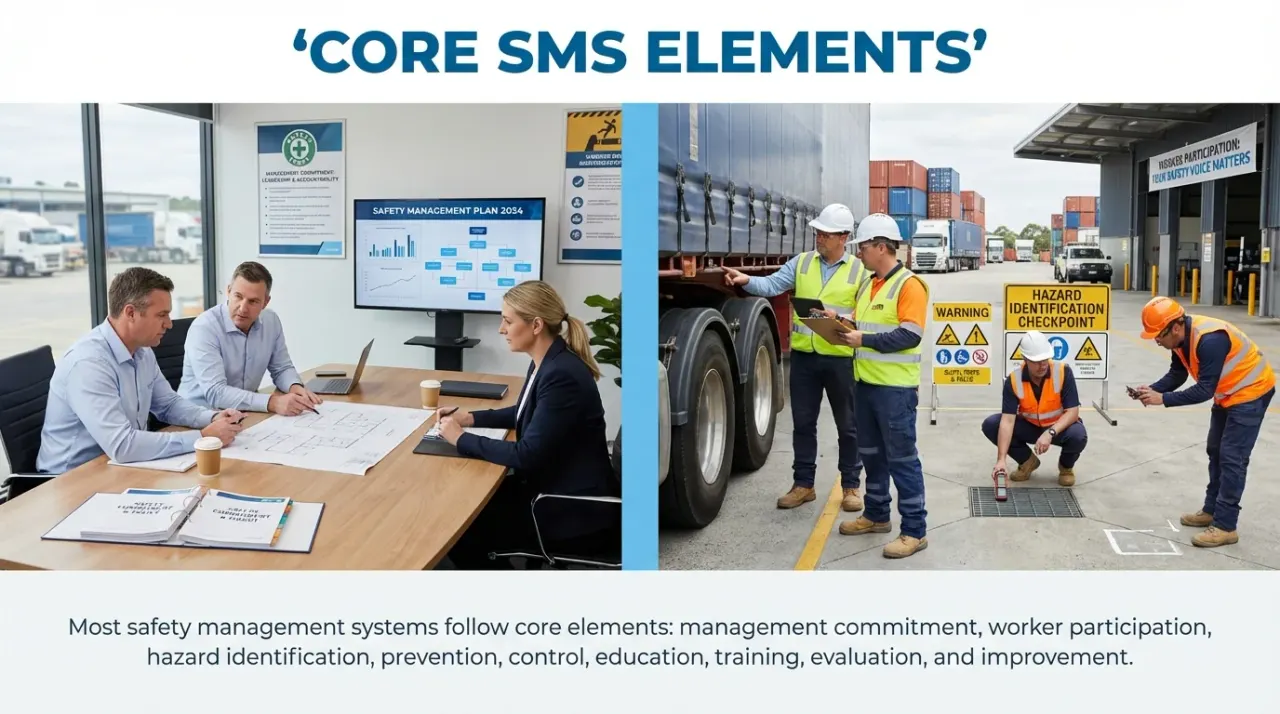
Core SMS elements
- Management commitment
- Worker participation
- Hazard identification
- Hazard prevention and control
- Education and training
- Continual improvement
Organisations often customise their SMS to address industry-specific risks while maintaining these fundamental principles. For Australian transport operators, aligning an SMS with Chain of Responsibility duties ensures safety practices meet regulatory expectations.
How an SMS Reduces Workplace Accidents and Injuries
Systematic hazard identification prevents incidents before they happen.
The most immediate benefit of a safety management system is fewer workplace accidents and injuries. An effective SMS instils a strong safety culture that reduces accidents through systematic hazard identification and control measures.
Risk management begins with understanding where dangers exist. An SMS requires regular assessments that examine equipment, processes, and work environments for potential hazards. This proactive approach contrasts sharply with reactive methods that only respond after incidents occur.
The systematic nature of hazard identification ensures consistency. Every work area receives regular attention. New processes undergo safety reviews before implementation. Changes to equipment or procedures trigger fresh risk assessments. Organisations track leading and lagging indicators to measure safety performance.
Measurable safety indicators
- Leading indicators: Near-miss reports, safety training completion rates, and hazard correction timelines.
- Lagging indicators: Actual injuries and illnesses.
When both indicator types show improvement, organisations can attribute these gains to their SMS rather than luck. Fewer injuries mean fewer disruptions to operations, allowing management to focus on core business objectives.
Ensuring Compliance with Safety Regulations
Map regulatory requirements to specific policies and controls.
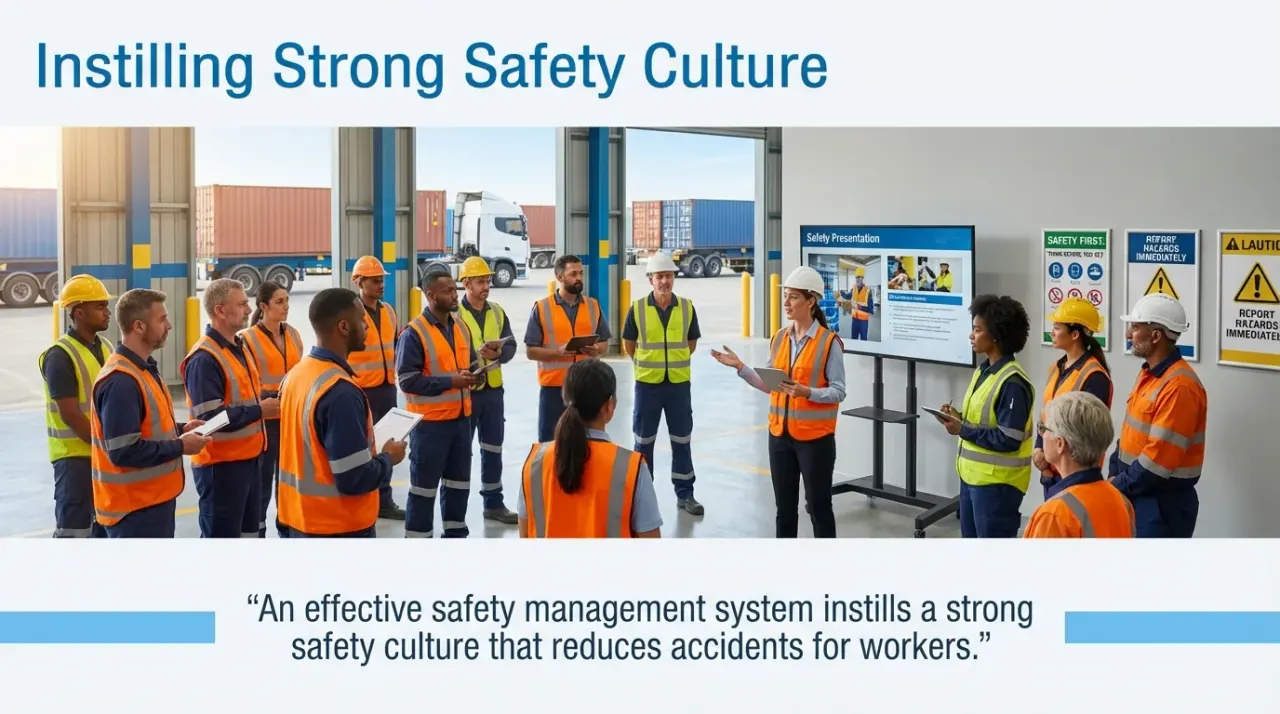
Following local and international laws for health, safety, and environment helps prevent personal and company financial losses through systematic compliance management built into SMS frameworks. Compliance protects people and finances.
Safety regulations exist in every jurisdiction where organisations operate. Meeting these requirements without a systematic approach becomes increasingly difficult as operations grow or expand into new locations. A safety management system maps regulatory requirements to specific policies, procedures, and controls. This documentation demonstrates how the organisation meets each applicable regulation.
When inspectors visit or auditors review compliance status, organisations with robust SMS frameworks can quickly demonstrate adherence to regulations. The systematic documentation creates clear audit trails showing what controls exist and how they function.
Keeping current with changing requirements
Regulations evolve as new research emerges and workplace hazards change. For Australian transport operators, the Heavy Vehicle National Law (HVNL) establishes primary duties and principles applying to duties, including the principle of shared responsibility across the supply chain (HVNL Part 1A.1). An SMS includes processes for monitoring these regulatory developments and updating procedures accordingly. Organisations designate responsibility for tracking regulation changes, and the SMS framework provides structured methods for evaluating impacts and implementing necessary adjustments. This prevents compliance gaps that occur when relying on informal methods. Practical CoR training helps operators understand how these duties apply day to day.
Lowering Costs and Increasing Financial Savings
Avoid cascading expenses through proactive risk management.
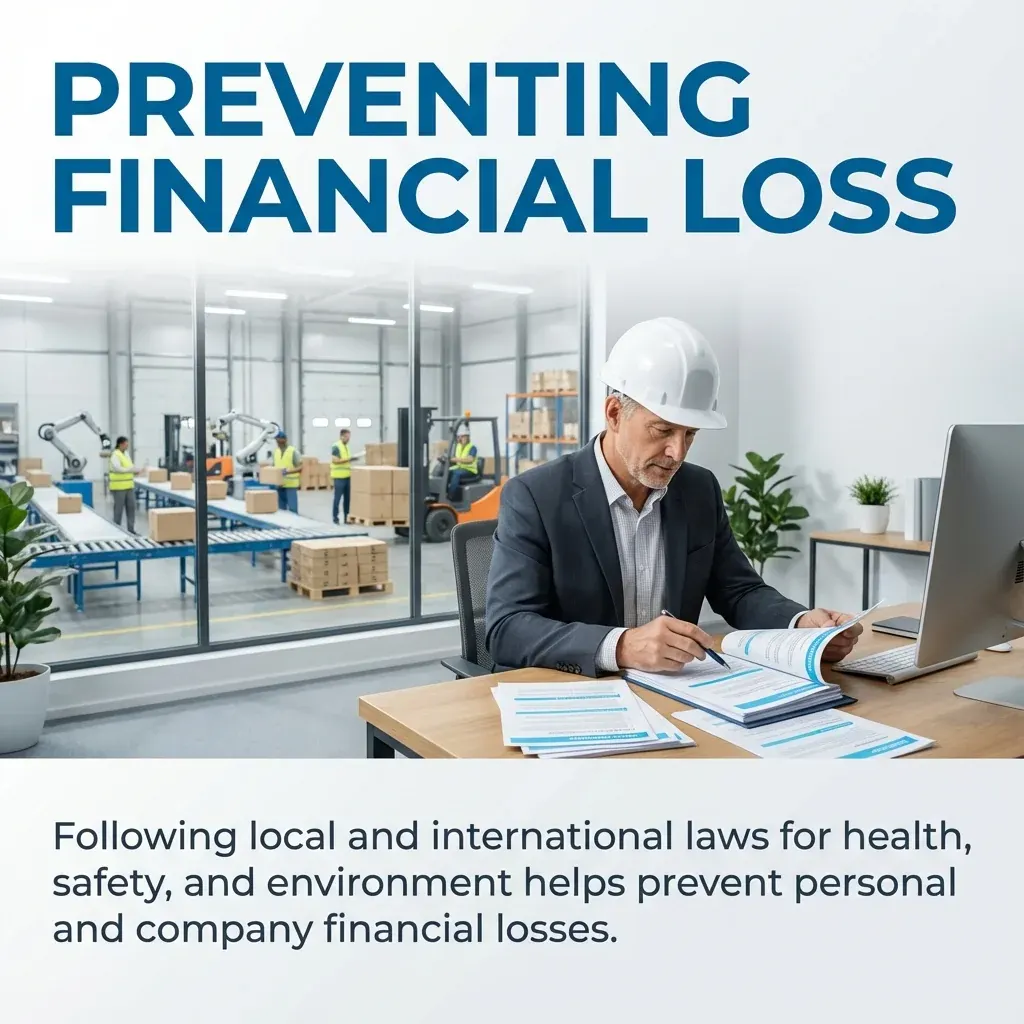
Financial benefits from safety management systems come from multiple sources. Direct cost reductions include lower workers' compensation premiums, reduced medical expenses, and decreased property damage.
Indirect savings often exceed direct costs. When workplace accidents decrease, organisations avoid productivity losses from injured worker absences. They eliminate costs associated with training replacement workers and prevent overtime expenses that occur when teams must cover for injured colleagues.
Insurance carriers recognise the value of systematic safety management. Organisations with mature SMS frameworks often qualify for lower workers' compensation premiums based on their safety performance records. Over time, these savings become substantial.
Incident-related expenses an SMS helps avoid
- Medical treatment: Immediate care expenses prevented through hazard elimination.
- Lost productivity: Absent worker output loss prevented through injury prevention.
- Investigation time: Management hours saved through proactive risk management.
- Equipment damage: Repair or replacement costs prevented through proper safety controls.
- Regulatory fines: Penalties avoided through systematic compliance.
The cumulative financial impact over time justifies SMS implementation costs many times over.
Improving Employee Engagement and Morale
Build trust through visible management commitment.
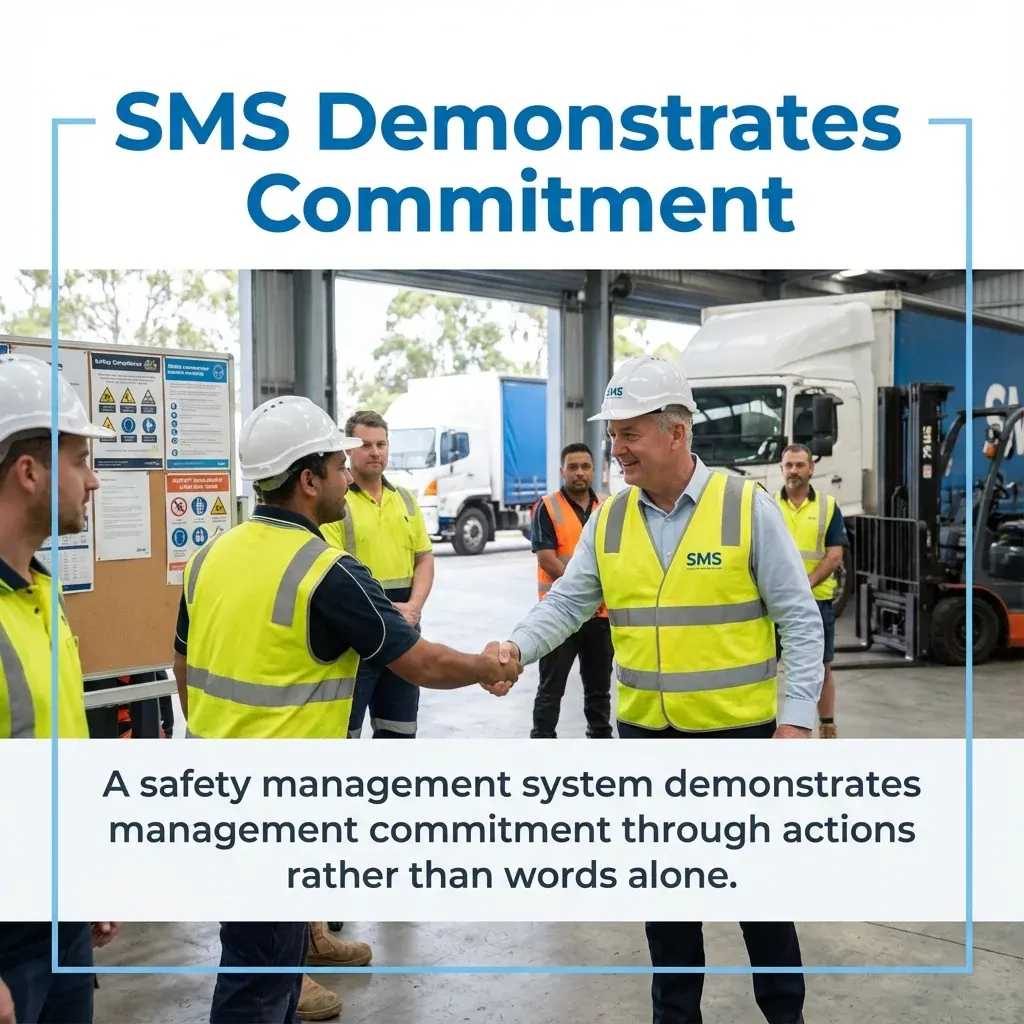
Workers notice when organisations prioritise their safety and wellbeing. A safety management system demonstrates management commitment through actions rather than words alone.
Employee engagement increases when workers participate in hazard identification and safety improvement processes. Their frontline knowledge contributes valuable insights that management might otherwise miss. A workplace safety culture emerges when organisations consistently demonstrate that worker wellbeing matters.
Safety management systems formalise this commitment through policies, resources, and management accountability. Workers become more willing to report hazards and near-misses when they trust that management will respond constructively.
Safety management systems also include structured training programs that develop worker capabilities. Employees gain knowledge and skills that protect them at work and often in their personal lives. Organisations that invest in employee training and safety awareness demonstrate respect for their workforce. This investment builds loyalty and improves retention.
Enhancing Company Reputation and Brand Image
Gain a competitive edge with verified safety practices.
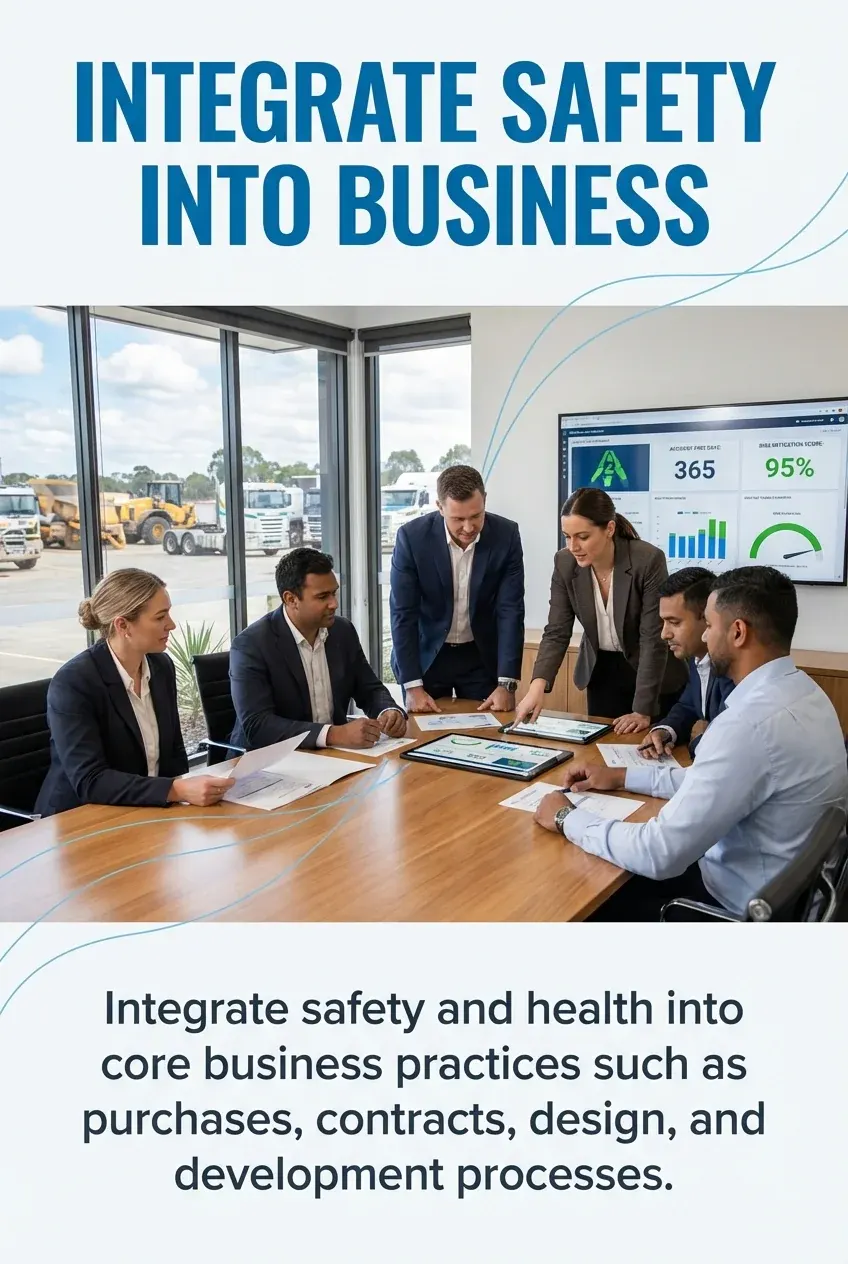
Organisations known for strong safety performance gain competitive advantages in multiple ways. Clients increasingly require evidence of systematic safety management before awarding contracts. A robust safety management system becomes a differentiator when competing for business.
Meeting international standards, such as ISO 45001 certification requirements, demonstrates commitment to occupational health and safety standards. This certification can open doors to new business opportunities with clients who require verified safety management practices.
Beyond contractual advantages, a strong safety record enhances brand image with customers, suppliers, and the broader community. Companies that protect their workers earn trust and respect, which translates into long-term business stability and growth.
To see how MAEZ helps operators build practical evidence, explore our CoR consulting services or contact us for a practical review of the controls, evidence, training, and SMS gaps that matter most.
How MAEZ works
Find the gaps. Fix the system. Prove the controls.
MAEZ helps transport operators deal with the compliance risk they already know is there. We help get the Safety Management System in order, protect NHVAS accreditation, reduce fine exposure, and connect training, evidence, and CoRGuard workflows where software is needed.
Find
Identify what is exposed before an auditor or regulator does.
Fix
Build the SMS controls around how the transport business actually runs.
Prove
Use CoRGuard where records, reminders, diaries, audits, and evidence need structure.
From advice to evidence
From MAEZ advice to a working Safety Management System
Advisory work should leave a practical implementation trail. These examples show how CoRGuard supports records, fatigue and driver diary checks, maintenance, audits, document control, inductions, corrective actions, and evidence review after MAEZ identifies the gaps.
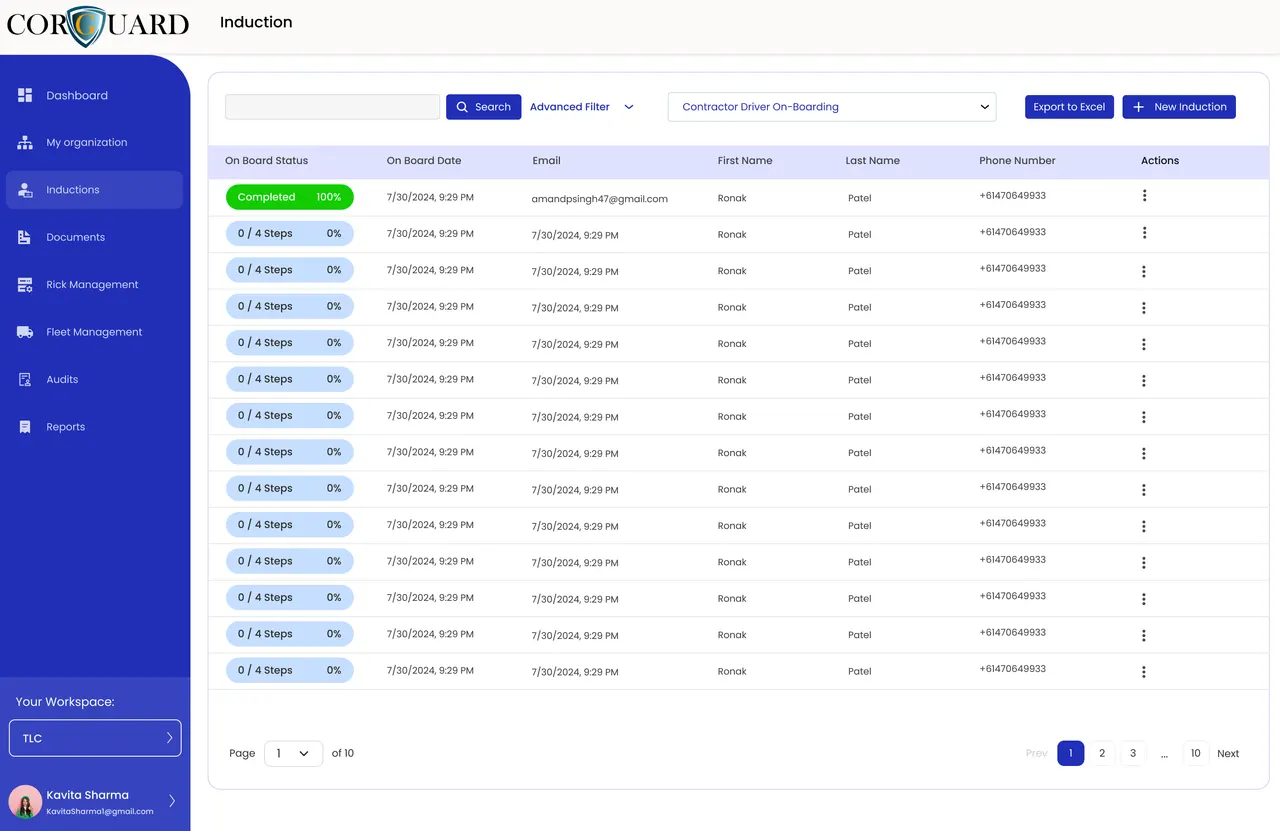
Training records
Connect training completion from cortraining.com.au to evidence and follow-up.
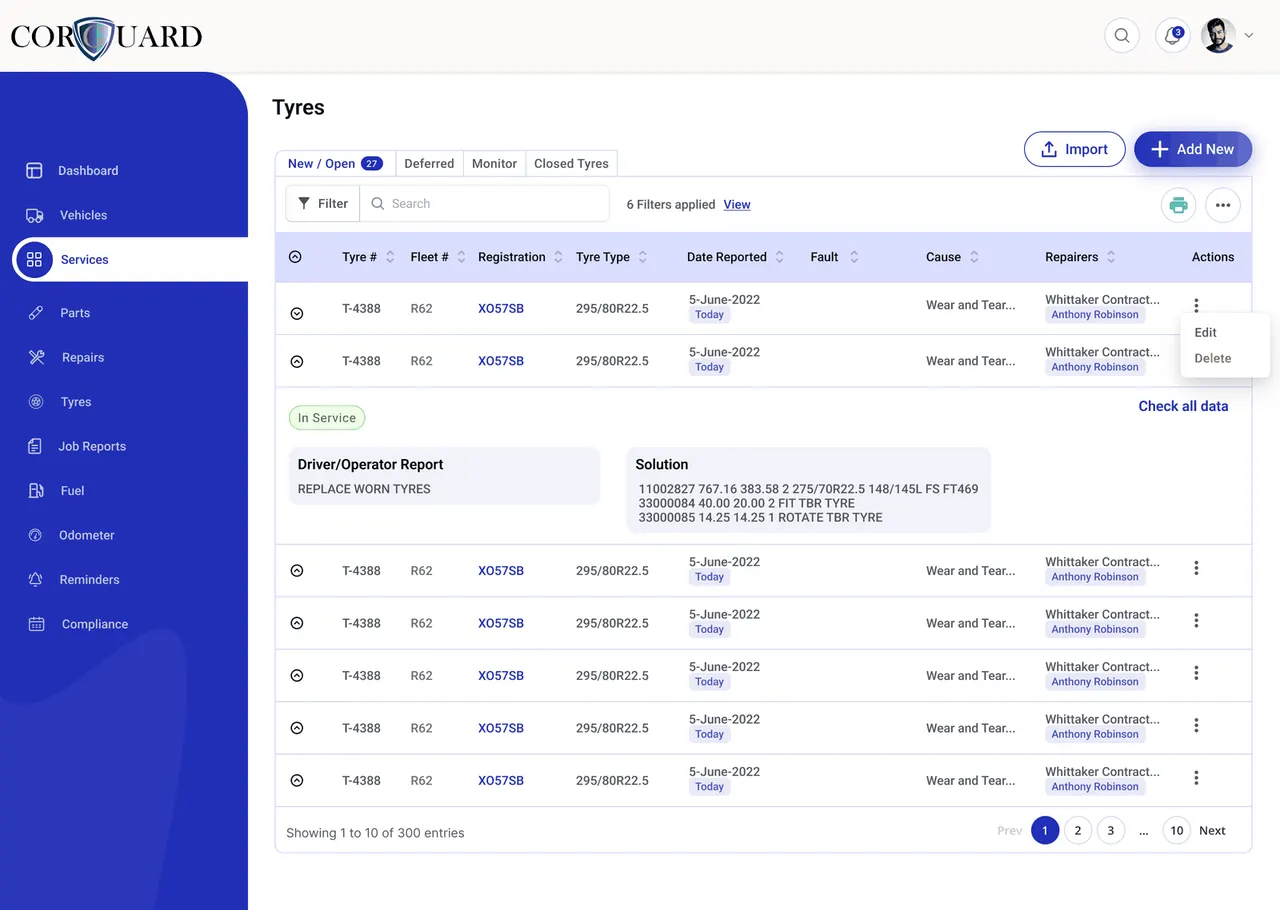
Driver diary checks
Connect fatigue and driver diary review back to manager visibility.
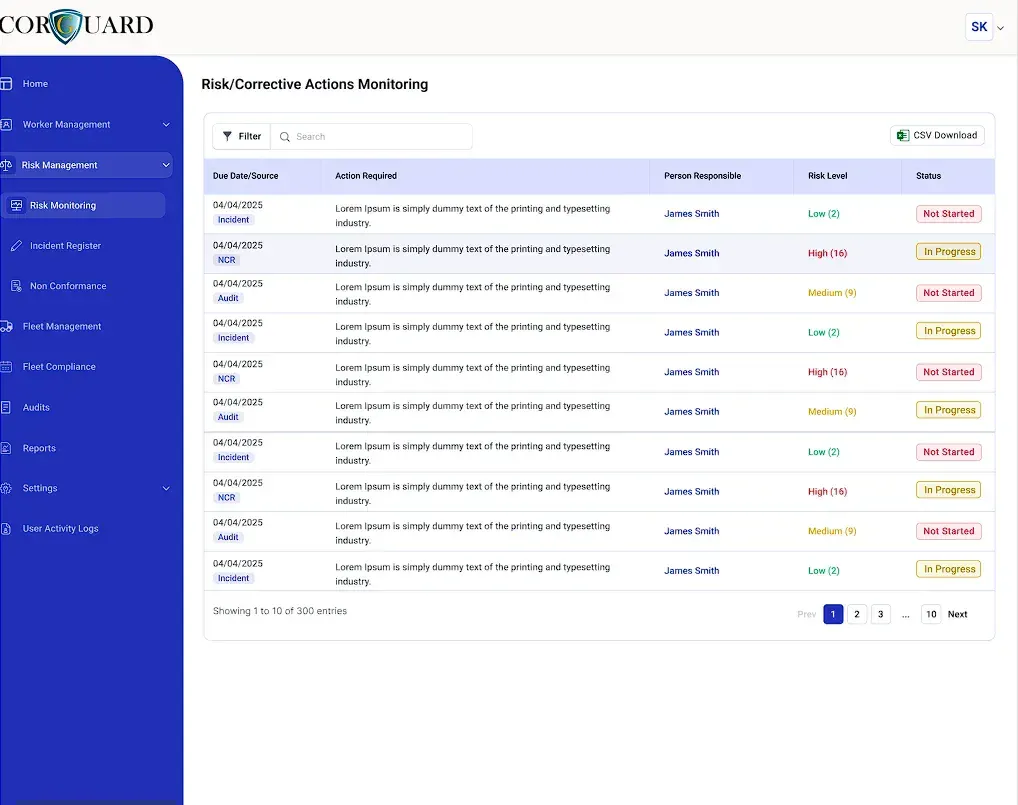
Corrective actions
Turn audit findings, hazards and incidents into tracked actions.
Keep exploring
Related Chain of Responsibility reading
MAEZ insight
Understanding Safety Management System Software Essentials
Discover the essentials of Safety Management System software and how it enhances compliance, risk assessment, and operational efficiency.
MAEZ insight
Implementing a Safety Management System: A Comprehensive Guide
Learn how to implement a safety management system effectively to reduce workplace incidents and enhance operational safety. Your comprehensive guide awaits!
MAEZ insight
HVNL 2026 CoR Changes
Discover how the HVNL 2026 amendments transform CoR obligations with new Safety Management Systems for heavy vehicle compliance. Learn more here!
MAEZ insight
Mitigating Risks in Global Supply Chains: Key Strategies
Explore effective global supply chain risk management strategies to mitigate disruptions and maintain operational continuity in 2025 and beyond.
MAEZ insight
Collisions: in the Early Hours of the Morning
Collisions in the early hours are a critical safety concern in the Australian supply chain, magnified by factors like driver fatigue and low visibility.
MAEZ insight
Exploring Effective Safety Management System Examples
Discover effective Safety Management System examples across industries to enhance workplace safety. Learn how to implement these structured frameworks today.
Frequently asked questions
Questions people ask about this topic
What is a safety management system (SMS)?
A safety management system is a structured framework that proactively identifies workplace hazards, implements controls, and protects workers before incidents occur. It establishes formal processes for hazard identification, risk assessment, control implementation, education, and continual improvement, creating accountability at all organisational levels.
How does an SMS help Australian transport operators with Chain of Responsibility compliance?
Aligning an SMS with Chain of Responsibility duties ensures safety practices meet regulatory expectations under the Heavy Vehicle National Law, which establishes primary duties and the principle of shared responsibility across the supply chain. The SMS maps regulatory requirements to specific policies and controls, creating audit trails that demonstrate compliance.
What financial benefits does a safety management system deliver?
An SMS reduces direct costs such as workers' compensation premiums, medical expenses, and property damage, while also preventing indirect costs like lost productivity, replacement training, overtime, investigation time, and regulatory fines. Organisations with mature SMS frameworks often qualify for lower insurance premiums based on their safety performance records.
What are the core elements of a safety management system?
The core elements of an SMS include management commitment, worker participation, hazard identification, hazard prevention and control, education and training, and continual improvement. Organisations typically customise these elements to address industry-specific risks while maintaining these fundamental principles.
How does an SMS improve employee engagement?
An SMS increases employee engagement by demonstrating visible management commitment to safety, involving workers in hazard identification and improvement processes, and providing structured training that builds skills and knowledge. When workers trust that management will respond constructively to safety concerns, they become more willing to report hazards and near-misses.