
MAEZ insight
What Causes Collisions & How Can Fleets Prevent Them?
Practical guidance for Australian transport operators on preventing fleet collisions, covering fatigue management, driver training, telematics, and Chain of Responsibility risk controls under the HVNL.
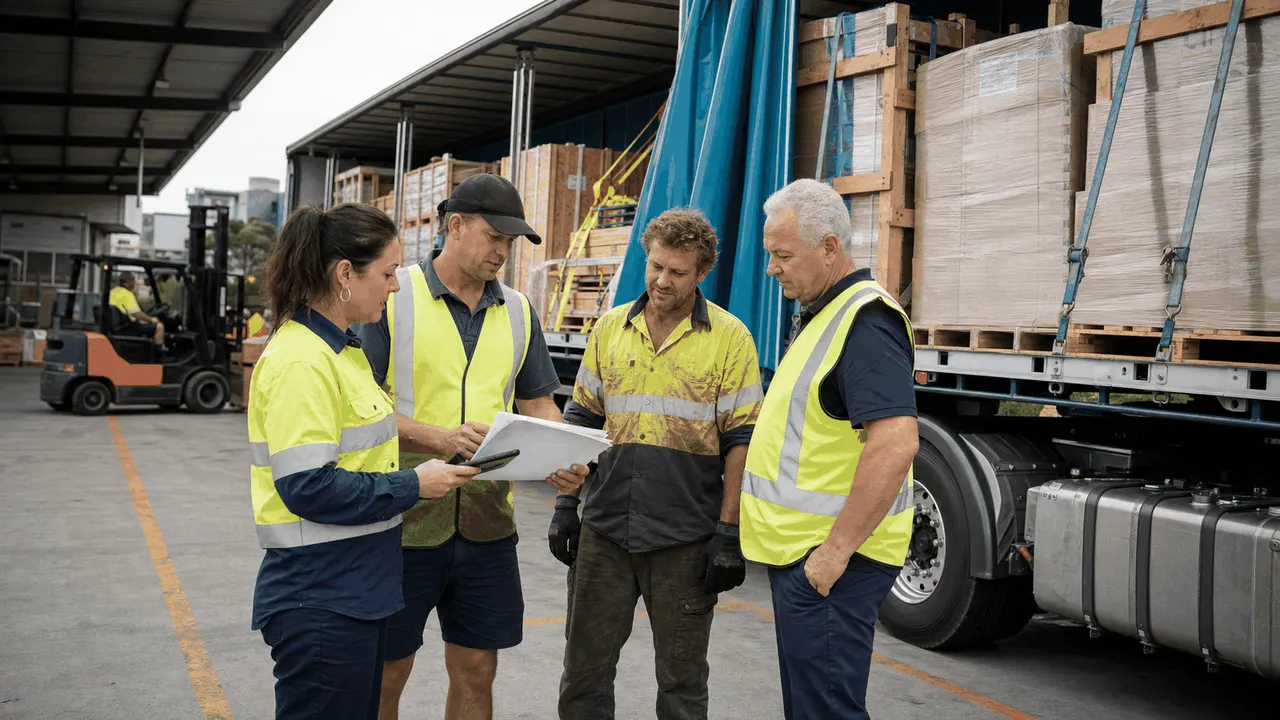
Receiving windows, site rules, and unloading delays can all shape the transport task.
Unloading decisions can affect safety, scheduling, and responsibility.
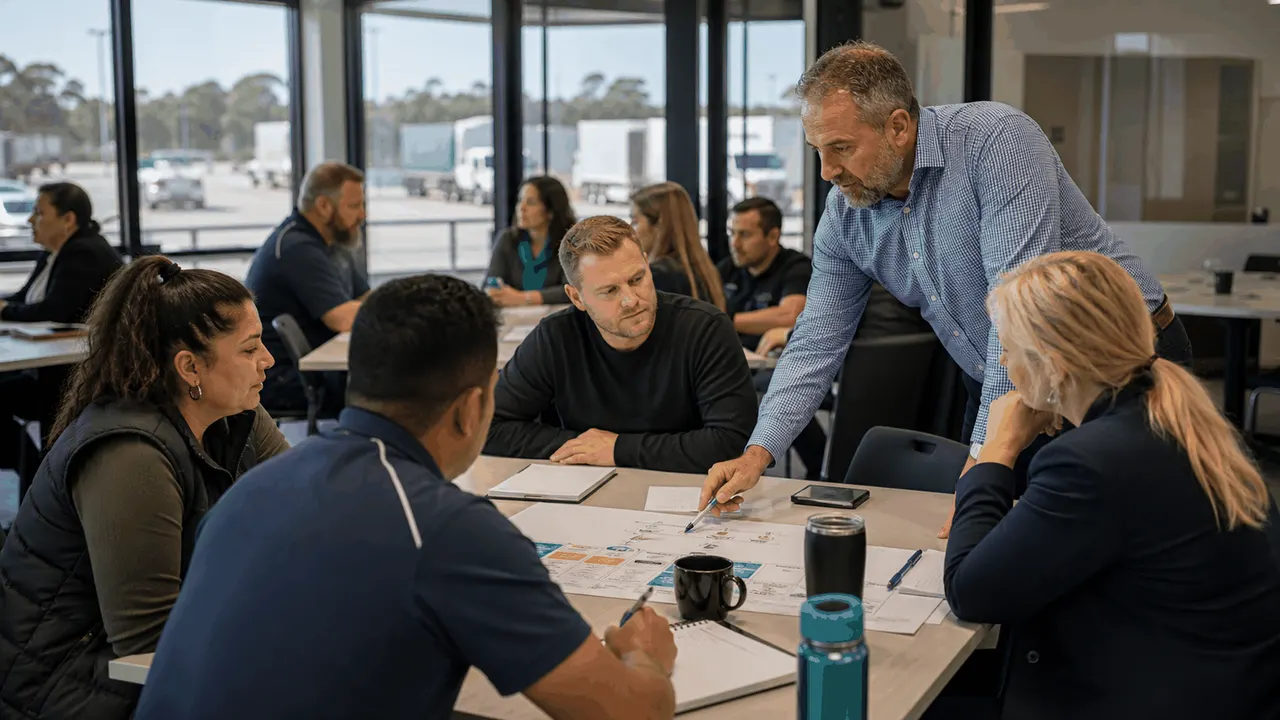
Managers need a clear view of gaps before audit or enforcement pressure arrives.

Contractor controls should be verified before the work starts.
Consignors
Freight terms, delivery windows, and KPIs must not push drivers into speed, fatigue, or mass breaches.
Consignees
Receiving rules, site access, and unloading delays are CoR controls that need to be set and evidenced.
Loaders
Mass, dimension, and load restraint decisions need documented checks, not assumptions.
Managers
Executives and managers need due-diligence evidence that the Safety Management System is actually working.
What counts as a preventable collision?
Understanding the baseline definition fleet managers should work from
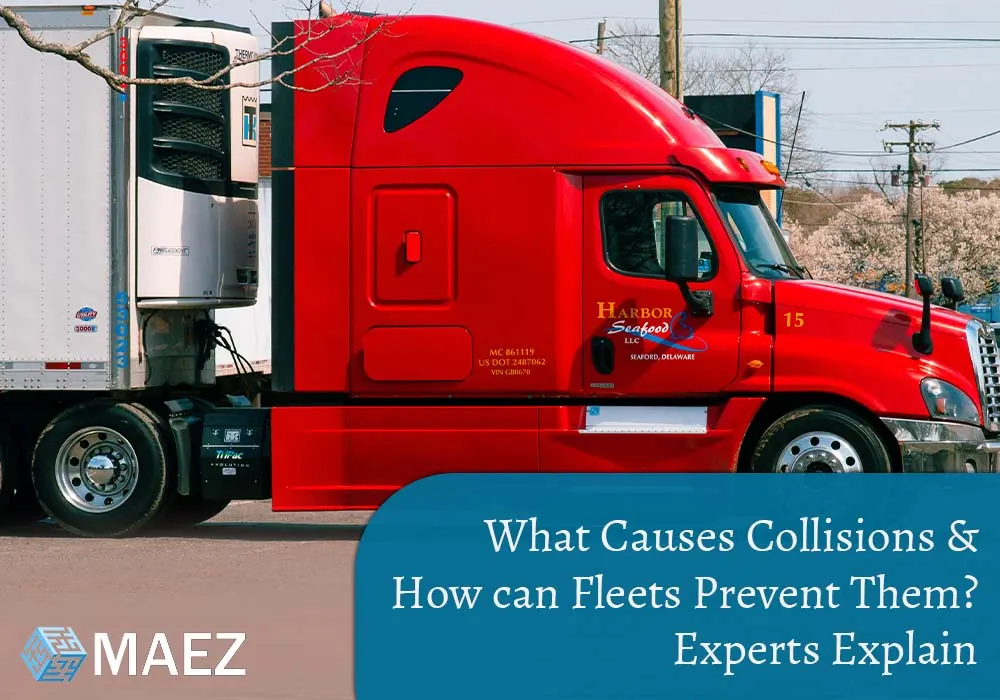
A preventable collision is one where the driver fails to take all reasonable precautions to avoid it. The concept centres on whether the driver — and by extension the business — could reasonably have done something differently to stop the incident from occurring. If a driver cannot react promptly to avoid a collision, they are likely to carry a significant share of responsibility.
But the question for fleet operators is broader: did the business provide the right training, scheduling, vehicle condition, and supervision to give the driver a fair chance of avoiding it? Determining whether an accident was genuinely preventable can be difficult. Knowing how to recognise preventable incidents — and addressing the underlying causes — goes a long way toward preventing them entirely.
For Australian operators, these questions sit alongside Chain of Responsibility duties under the Heavy Vehicle National Law (HVNL). The business must be able to show it took reasonable steps to manage the risks that contributed to the incident.
How can fleets prevent collisions?
Four practical areas that reduce preventable incident risk

Fleet safety specialists consistently point to a handful of core strategies for analysing and preventing avoidable incidents. The four areas below are where Australian transport operators can focus their effort:
- Proper fleet management and route planning — matching drivers to vehicles and routes based on risk
- Attentive training and safety policy — building a documented safety culture backed by ongoing driver training
- Fatigue management for drivers — ensuring schedules are realistic and drivers can recognise fatigue signs
- Using telematics to verify safe driving behaviour — confirming that training and policy actually translate to on-road outcomes
When these elements are documented and reviewed, they also support NHVAS accreditation readiness and provide evidence that the business is managing its transport task responsibly.
Proper fleet management and route planning
Fleet management gives you the information needed to assign risk to operators based on vehicle type, availability, and other operational criteria. Risk profiles for vehicles include class, amenities, technology, and how driver risk correlates to vehicle risk.
Key operational factors include:
- Staffing decisions and driver assignment
- Route planning and optimisation
- Managing distractions at work and in operational dispatch
- Ensuring vehicle maintenance schedules are current
When these elements are documented and reviewed, they also support NHVAS accreditation readiness and provide evidence that the business is managing its transport task responsibly.
Attentive training and safety policy
Establishing a strong safety policy is the principle most commonly emphasised by fleet safety professionals. A critical feature of any safety policy is training drivers in defensive driving and making sure that training is reinforced over time.
A fleet safety policy should address questions such as:
- How many avoidable accidents are permitted per year?
- What is the policy on drug testing (pre-employment, post-accident, random)?
- How many speeding offences (personal and commercial vehicles) are allowed per year?
- What moving violations preclude someone from driving for the fleet?
- When and how should all accidents be reported?
At a minimum, each driver's motor vehicle record (MVR) should be reviewed annually. For Australian operators, Chain of Responsibility training helps managers, executives, and supply-chain parties understand their role in maintaining these controls.
Fatigue management for drivers
Tired drivers cannot react quickly or spot hazards. Drivers who are tired or exhausted are far less capable of reacting rapidly to changes in the driving environment. A fatigued driver may take much longer to detect an approaching intersection or railway crossing. Another serious danger is that an exhausted driver may fall asleep behind the wheel.
Under the HVNL, a driver is considered impaired by fatigue if their ability to drive a heavy vehicle safely is compromised. Courts may consider the causes of fatigue, the signs of fatigue, and any relevant body of fatigue knowledge when deciding whether a driver was impaired.
Drivers can take several steps to lower their risk of a fatigue-related incident:
- Pausing to take a short nap if they notice signs of exhaustion or sleepiness
- Avoiding driving at times of day when they usually sleep
- Obtaining enough sleep before getting behind the wheel
Managers and schedulers also carry a duty to ensure fatigue-related schedules are realistic. CoR consulting can help operators close the gaps between policy and on-road practice.
Using telematics to verify safe driving behaviour
Telematics data is another critical aspect of a fleet safety policy. It allows fleets to monitor whether drivers are following company policies on the road. Telematics can help detect inattentive driving, speeding, risky manoeuvres, harsh braking, and rapid acceleration.
As one fleet safety specialist noted, the only way to know whether training programs are genuinely effective is to look at the telematics habits of the individual driver who was trained. Simply avoiding an accident may not mean the training worked — it may only mean the driver was lucky. If bad driving behaviours have not changed, the risk remains.
This is where the evidence trail matters. Telematics data, combined with documented training records and corrective actions, gives operators something to show an auditor or regulator. Where structured records are needed, MAEZ's advisory work identifies the gaps and the evidence pathway follows through implementation.
How this connects to Chain of Responsibility
Collision prevention is a shared duty, not just a driver problem
Collision prevention in Australian transport is not solely the driver's responsibility. Under the HVNL's Chain of Responsibility framework, every party who influences the transport task — consignors, consignees, loaders, schedulers, managers, and contractors — has a duty to take reasonable steps to prevent breaches of speed, fatigue, mass, dimension, loading, and vehicle standards laws.
That means the fleet safety measures above are not optional extras. They are the practical controls that demonstrate a business is meeting its HVNL obligations. A business that trains its drivers, plans routes sensibly, monitors fatigue, and reviews telematics is building the evidence it needs.
MAEZ helps Australian transport operators turn these obligations into practical training, advisory, and audit pathways. If you need a review of the controls and evidence gaps that matter most, contact MAEZ for a practical assessment.
How MAEZ works
Find the gaps. Fix the system. Prove the controls.
MAEZ helps transport operators deal with the compliance risk they already know is there. We help get the Safety Management System in order, protect NHVAS accreditation, reduce fine exposure, and connect training, evidence, and CoRGuard workflows where software is needed.
Find
Identify what is exposed before an auditor or regulator does.
Fix
Build the SMS controls around how the transport business actually runs.
Prove
Use CoRGuard where records, reminders, diaries, audits, and evidence need structure.
From advice to evidence
From MAEZ advice to a working Safety Management System
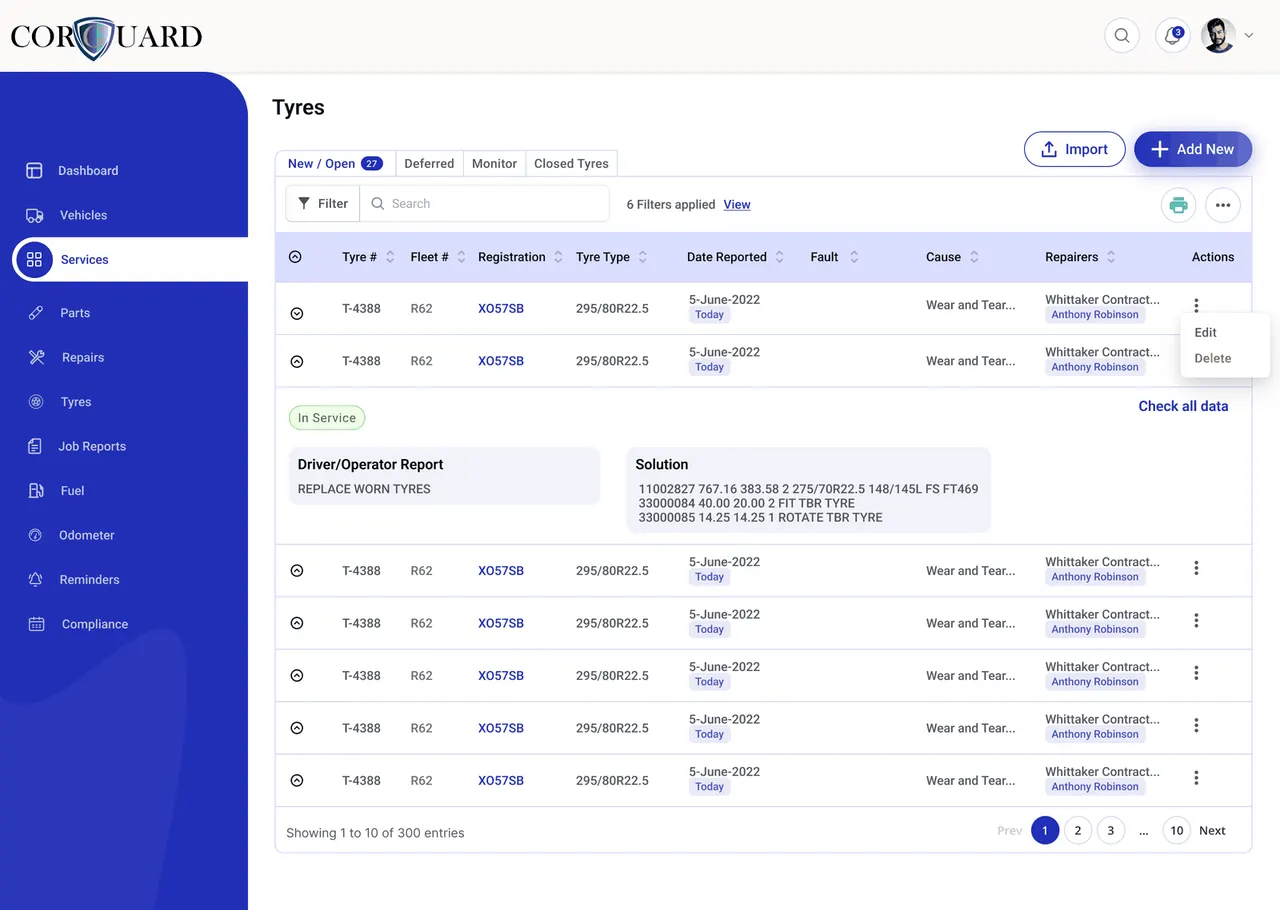
Advisory work should leave a practical implementation trail. These examples show how CoRGuard supports records, fatigue and driver diary checks, maintenance, audits, document control, inductions, corrective actions, and evidence review after MAEZ identifies the gaps.
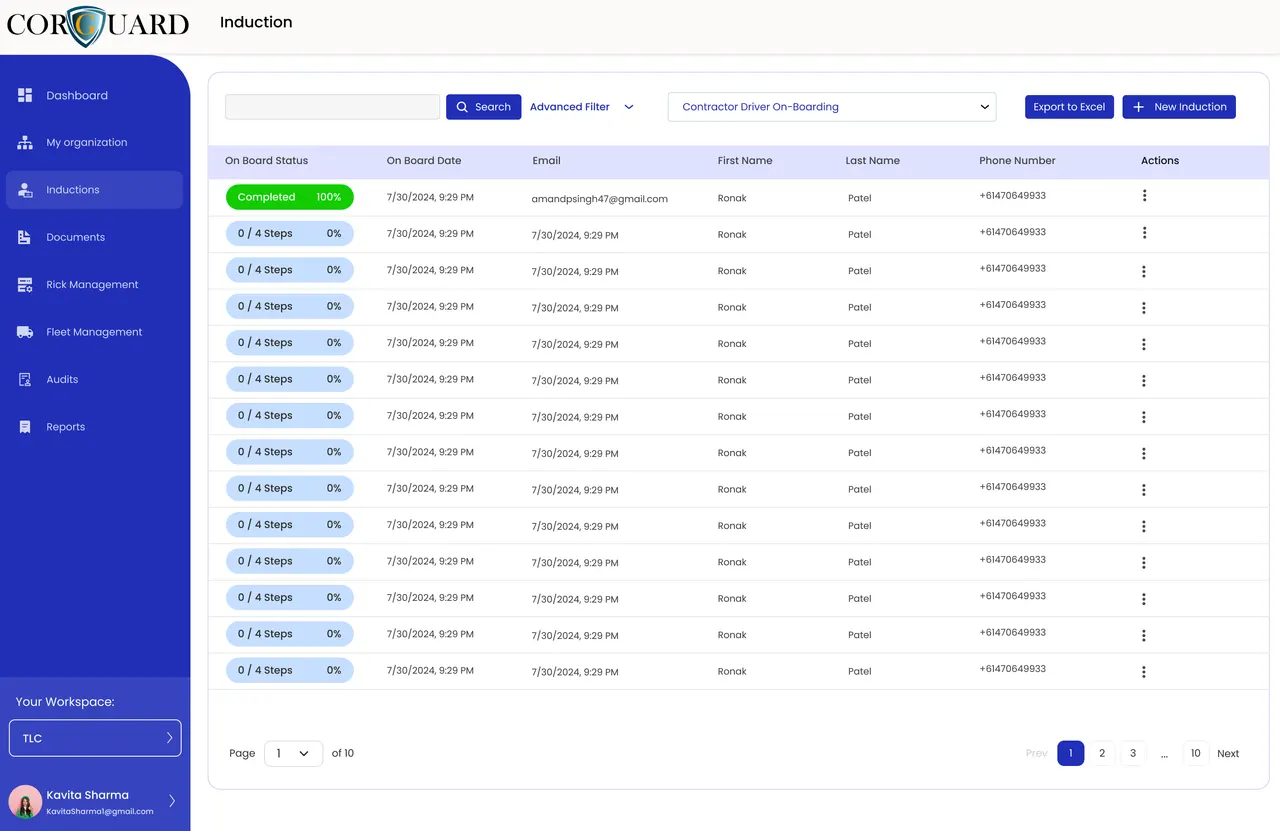
Training records
Connect training completion from cortraining.com.au to evidence and follow-up.
Driver diary checks
Connect fatigue and driver diary review back to manager visibility.
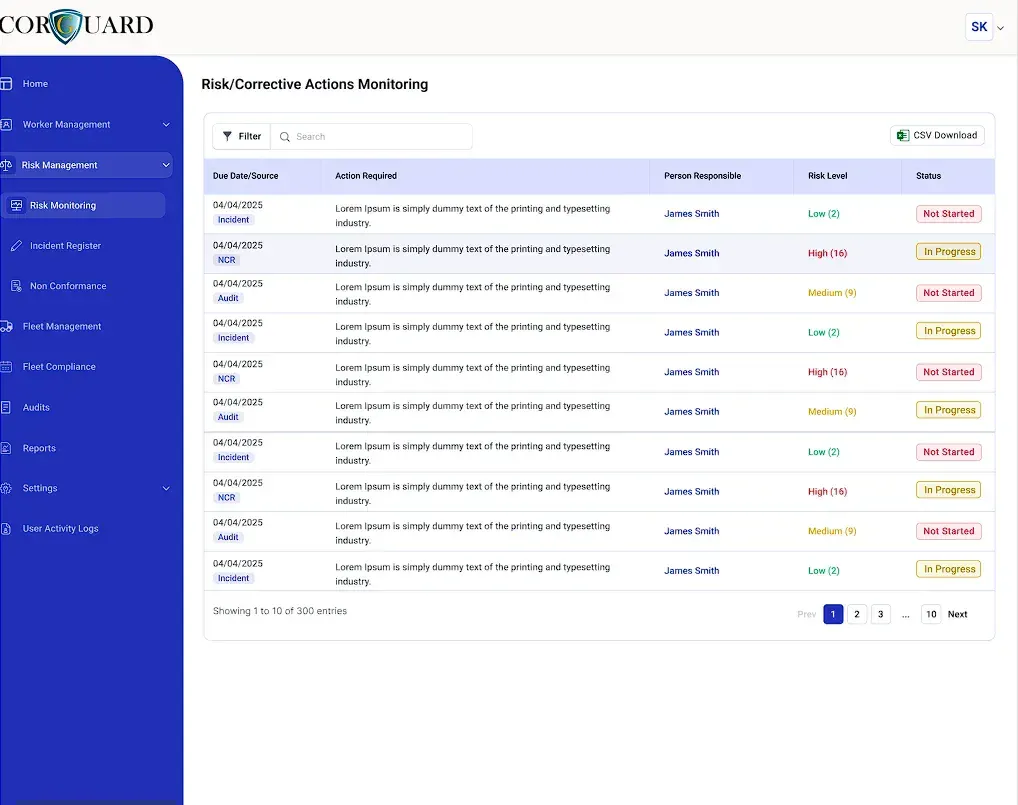
Corrective actions
Turn audit findings, hazards and incidents into tracked actions.
Keep exploring
Related Chain of Responsibility reading
MAEZ insight
The Impact of Driver-Facing Cameras on Road Safety and the Transport Sector in Australia
The safety of our roads is of paramount importance, particularly in the transport sector. In Australia, the safety of the transport sector relies heavily on the Heavy Vehicle National Law (HVNL) and state-based workplace safety legislation. One key area of focus for transport safety is the use of driver-facing cameras.
MAEZ resource
Chain of Responsibility Training Sydney
Practical Chain of Responsibility training for Sydney transport operators, schedulers, loaders and executives — delivered on-site across Sydney or online, mapped to the current HVNL.
MAEZ resource
Chain of Responsibility Training Melbourne
Practical Chain of Responsibility training for Melbourne transport operators, schedulers, loaders and executives — delivered on-site across Melbourne or online, mapped to the current HVNL.
MAEZ resource
Chain of Responsibility Training Brisbane
Practical Chain of Responsibility training for Brisbane transport operators, schedulers, loaders and executives — delivered on-site across Brisbane or online, mapped to the current HVNL.
MAEZ resource
Chain of Responsibility Training Perth
Practical Chain of Responsibility training for Perth and WA transport operators, schedulers, loaders and executives — delivered on-site across Perth or online, covering WA's heavy vehicle laws and the HVNL for interstate work.
MAEZ resource
Chain of Responsibility Training Adelaide
Practical Chain of Responsibility training for Adelaide and South Australian transport operators, schedulers, loaders and executives — delivered on-site across Adelaide or online, mapped to the current HVNL.
Frequently asked questions
Questions people ask about this topic
What is a preventable collision in fleet management?
A preventable collision is one where the driver — and by extension the business — could reasonably have done something differently to avoid the incident. Fleet operators should ask whether the business provided adequate training, scheduling, vehicle condition, and supervision to give the driver a fair chance of avoiding it.
How does fatigue contribute to heavy vehicle collisions under the HVNL?
Under the HVNL, a driver is impaired by fatigue if their ability to drive a heavy vehicle safely is compromised. Courts may consider the causes of fatigue, the signs of fatigue, and any relevant body of fatigue knowledge when deciding whether a driver was impaired. Managers and schedulers also carry a duty to ensure fatigue-related schedules are realistic.
Why is telematics data important for collision prevention?
Telematics data confirms whether driver training and safety policies are actually working on the road. It can detect speeding, harsh braking, rapid acceleration, and risky manoeuvres, giving operators verifiable evidence that behaviours have changed — or highlighting where corrective action is still needed.
How does Chain of Responsibility relate to fleet collision prevention?
Under the HVNL's Chain of Responsibility framework, every party who influences the transport task — consignors, consignees, loaders, schedulers, managers, and contractors — has a duty to take reasonable steps to prevent breaches of speed, fatigue, mass, dimension, loading, and vehicle standards laws. Fleet safety measures are the practical controls that demonstrate compliance with those obligations.
What should a fleet safety policy include to help prevent collisions?
A fleet safety policy should set thresholds for avoidable accidents, speeding offences, drug testing protocols, and disqualifying moving violations. It should also require annual motor vehicle record reviews, documented accident reporting procedures, and ongoing defensive driving training reinforced over time.