
MAEZ insight
Understanding ISO 45001 for Workplace Safety
How ISO 45001 helps Australian transport operators build proactive safety management systems, reduce workplace incidents, and strengthen Chain of Responsibility compliance evidence.

Due diligence means knowing whether the safety system is actually working.

Proof that freight promises do not create unsafe transport pressure.

Loading controls need evidence, not assumptions.
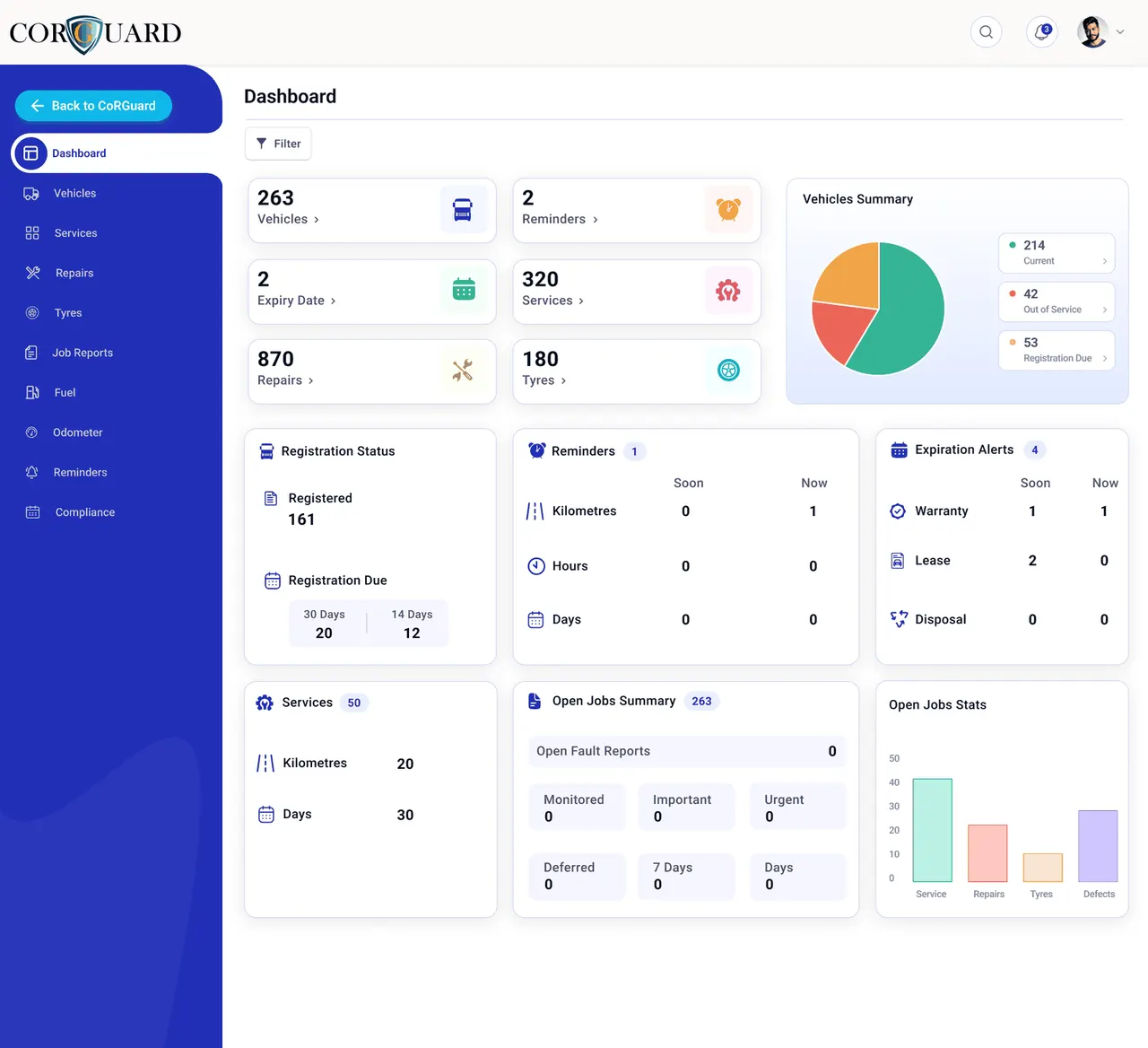
Daily fleet activity has to connect back to duties, controls, and review.
Consignors
Freight terms, delivery windows, and KPIs must not push drivers into speed, fatigue, or mass breaches.
Consignees
Receiving rules, site access, and unloading delays are CoR controls that need to be set and evidenced.
Loaders
Mass, dimension, and load restraint decisions need documented checks, not assumptions.
Managers
Executives and managers need due-diligence evidence that the Safety Management System is actually working.
What is ISO 45001 and why does it matter?
The global standard for occupational health and safety management systems
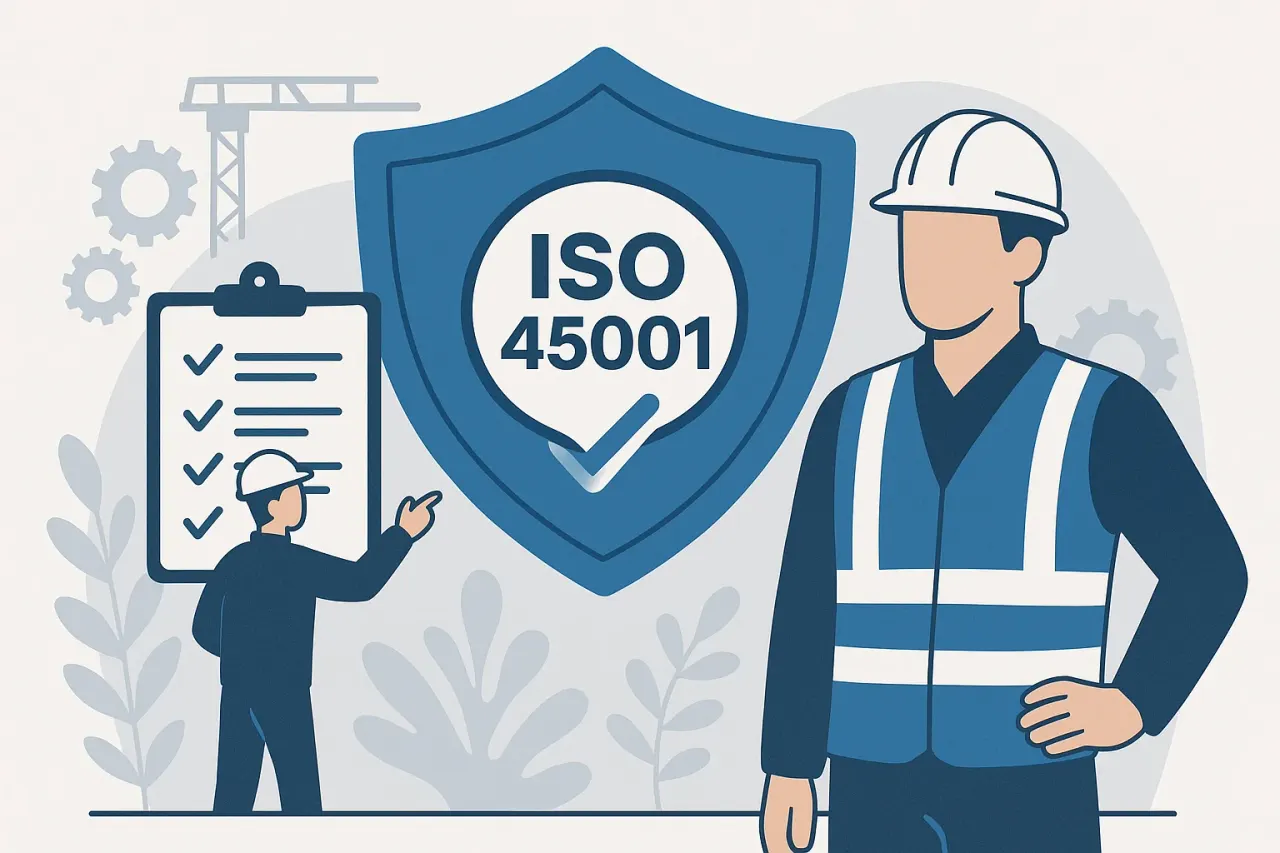
ISO 45001 is the international standard for occupational health and safety management systems, giving organisations a structured, proactive approach to preventing workplace injuries and illnesses. It succeeded OHSAS 18001 and applies to organisations of all sizes and industries, including transport and logistics operators.
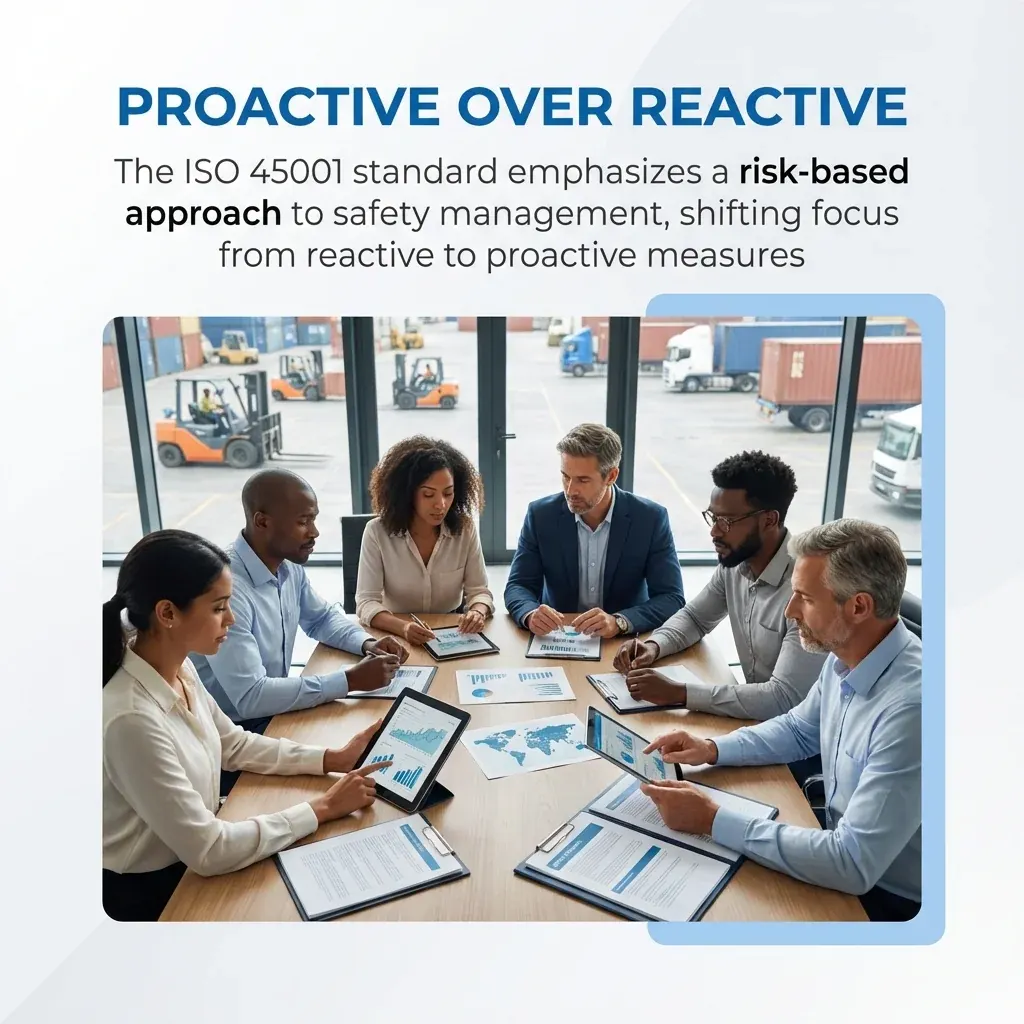
Unlike reactive safety approaches that respond after an incident occurs, ISO 45001 emphasises proactive risk identification and control measures before workers get hurt. The standard provides practical tools for protecting workers while improving overall safety performance.
For Australian transport operators, systematic safety management also supports Chain of Responsibility obligations. Understanding how these frameworks connect helps organisations build resilient, sustainable operations that satisfy both workplace safety duties and heavy vehicle compliance requirements.
How the ISO 45001 framework operates
A Plan-Do-Check-Act cycle for continuous improvement
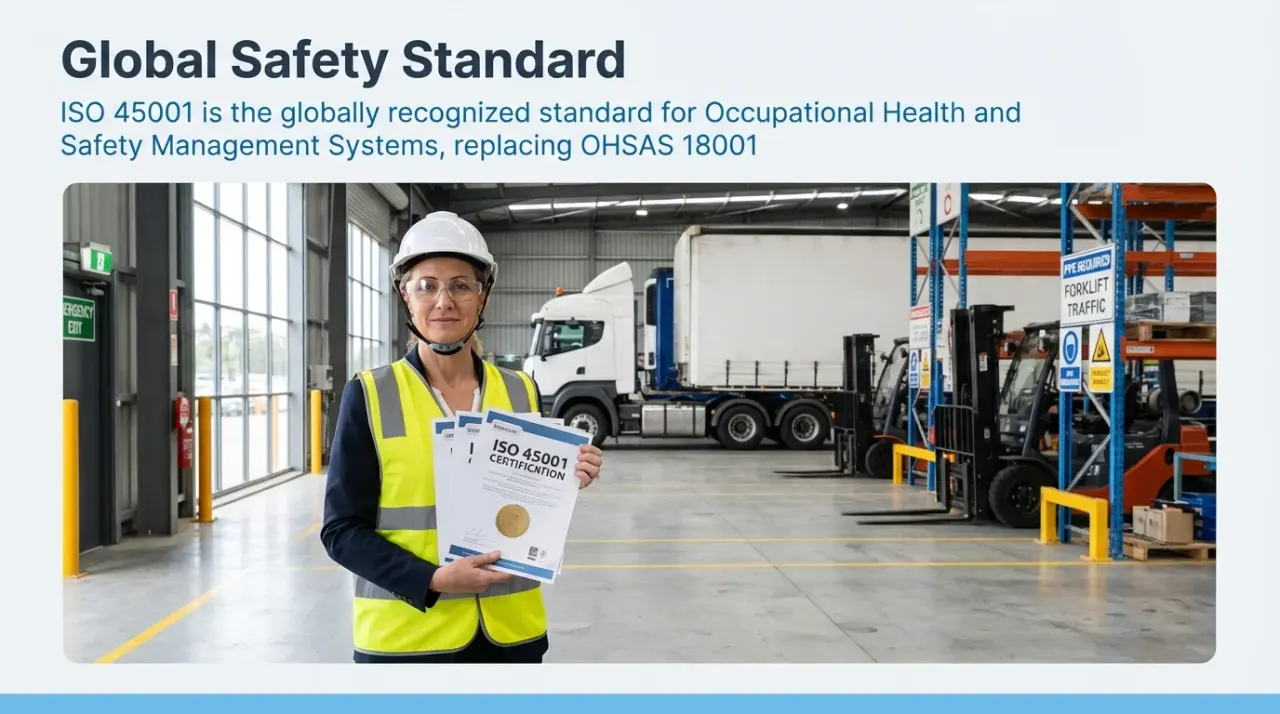
The standard operates through a Plan-Do-Check-Act methodology, ensuring continuous improvement rather than static compliance.
Planning
Organisations begin by understanding their internal context (structure, resources) and external context (regulatory requirements, industry pressures). They identify interested parties and their safety expectations, then establish safety policies and objectives.
Implementation
Leadership defines roles, responsibilities, and accountability structures. Workers participate in identifying hazards and developing solutions. Implementation involves operational controls, emergency preparedness, and competence development. Organisations document procedures, train workers, and communicate requirements throughout their operations.
Checking and acting
Internal audits verify that the management system is working. Organisations evaluate compliance with procedures and the effectiveness of controls. Management reviews examine audit results, incident data, and stakeholder feedback, then make decisions about resource allocation and strategic direction.
What ISO 45001 delivers to your organisation
Structured risk assessment and operational controls
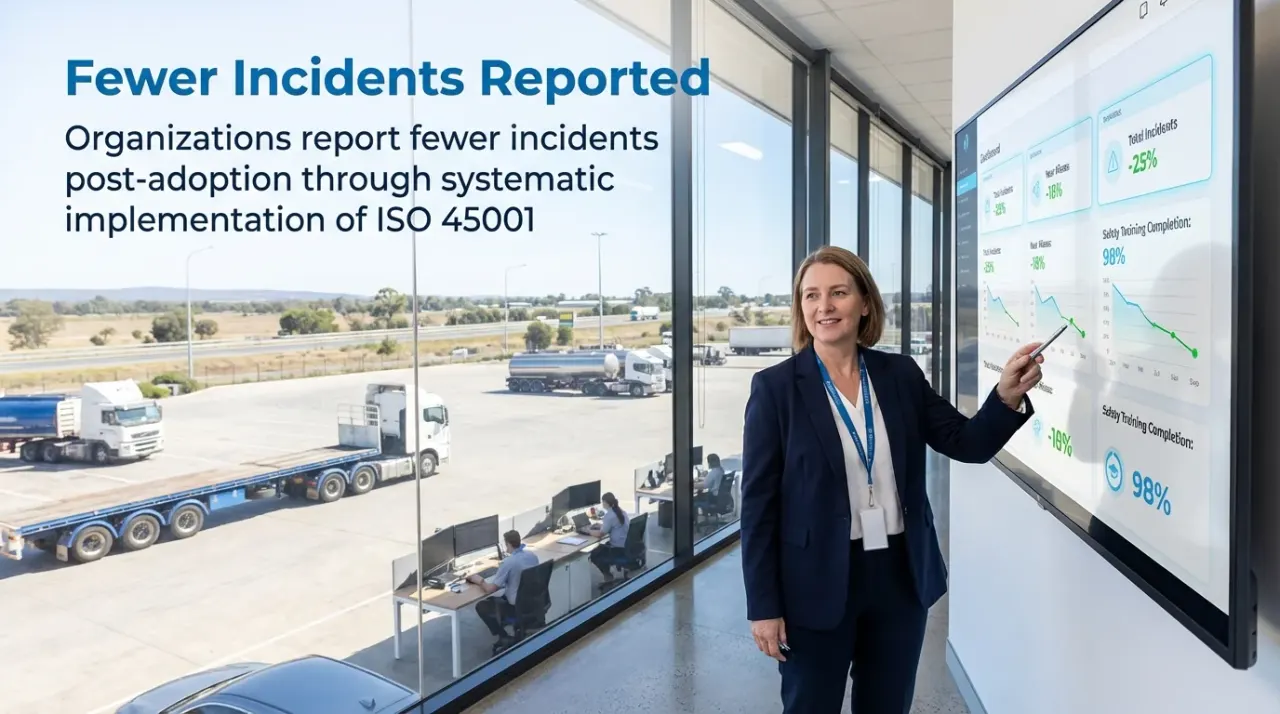
ISO 45001 provides a structured framework for managing occupational health and safety risks. The standard helps organisations identify hazards, assess risks, and implement controls before workers get hurt. Organisations typically see incident rates drop after implementing ISO 45001 because the management system requires regular hazard identification, risk assessment, and control verification.
Risk assessment happens at multiple levels. Organisations evaluate routine operations, non-routine activities, and emergency situations. They consider physical, chemical, biological, and psychosocial hazards, then prioritise controls based on risk severity.
Hierarchy of controls
- Elimination removes the hazard completely.
- Substitution replaces hazardous materials or processes with safer alternatives.
- Engineering controls isolate workers from hazards.
- Administrative controls and personal protective equipment provide additional protection layers.
For transport operators, this structured approach to risk aligns with the proactive duties expected under the Heavy Vehicle National Law, where parties in the chain must take all reasonably practicable steps to manage safety risks.
Business and compliance benefits of implementation
Measurable improvements across multiple dimensions
Workplace injuries create direct costs through medical expenses and compensation claims, plus indirect costs through productivity losses, replacement worker training, and damaged equipment. ISO 45001 helps organisations reduce both categories while enhancing process efficiency by eliminating hazards that cause production disruptions.
Key benefit areas
- Worker protection — injury and illness reduction leading to a healthier workforce with fewer lost-time incidents.
- Cost management — lower insurance premiums and compensation claims.
- Operational efficiency — fewer production stoppages from safety incidents.
- Market access — qualification for contracts requiring certification, as major contractors increasingly specify ISO 45001 compliance in tender requirements.
- Stakeholder confidence — enhanced brand value and public perception.
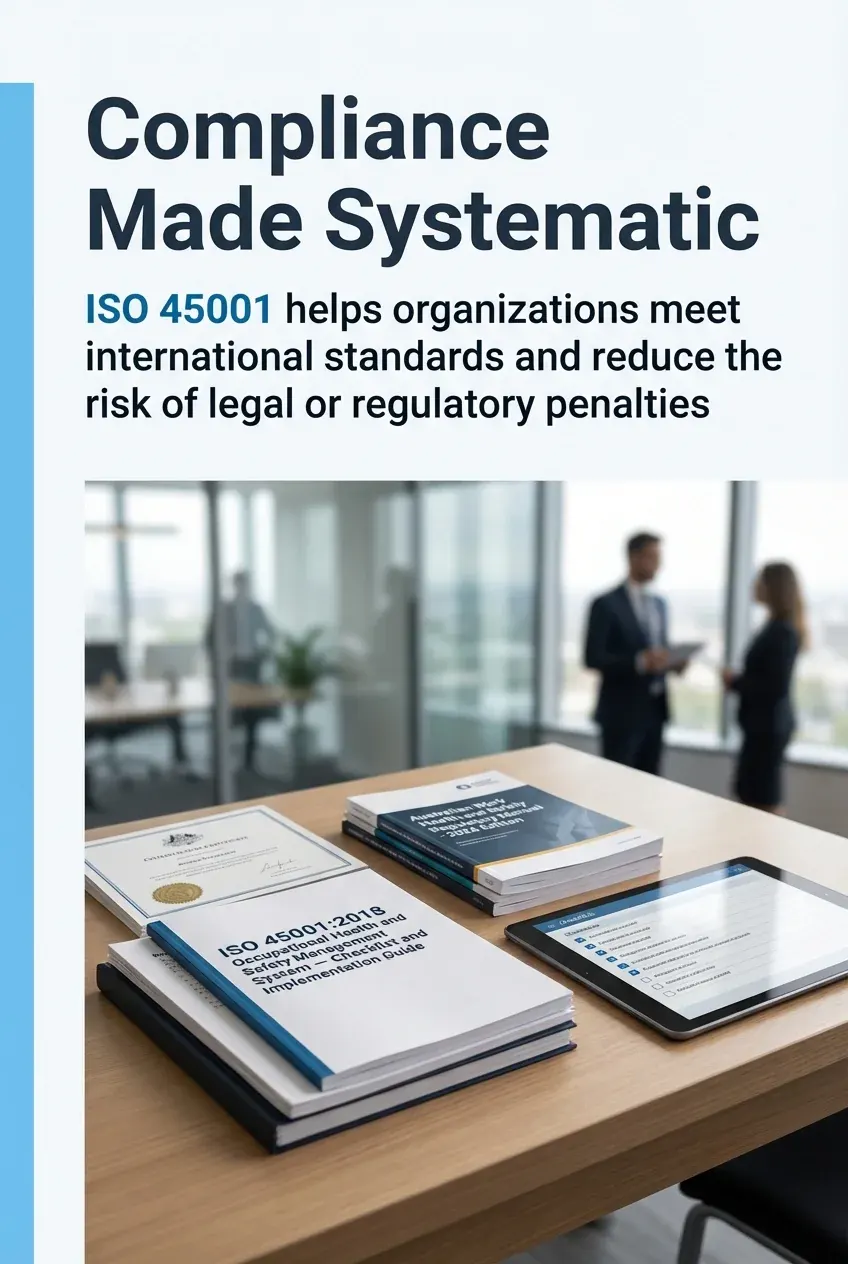
ISO 45001 also helps organisations meet international standards and reduce the risk of legal or regulatory penalties. The management system provides structured processes for identifying applicable legal requirements and ensuring compliance. Documentation demonstrates due diligence efforts, which proves particularly valuable during regulatory inspections.
For transport operators, this documented evidence of proactive safety management supports broader Chain of Responsibility consulting goals and strengthens your position when regulators ask for proof.
Building a safety culture through leadership and participation
Commitment from the top down and involvement from the ground up
ISO 45001 requires leadership commitment and worker participation. Top management must demonstrate active involvement in safety management, which creates cultural change within organisations. Workers gain consultation rights throughout the management system and participate in hazard identification, incident investigation, and improvement planning.
How participation works in practice
- Workers can report hazards without fear of reprisal.
- Workers are involved in change management affecting safety.
- Safety committees combine management and worker representatives.
- Regular meetings address emerging concerns and review performance data.
- Communication flows both upward and downward through organisational structures.
For executives, this aligns closely with due diligence expectations. Under the HVNL, executives of legal entities have specific duties to ensure the business manages safety risks. A documented ISO 45001 system provides the evidence that leadership is actively engaged, not just signing policies. Practical Chain of Responsibility training for executives and managers can help connect these safety system requirements to executive duty-holder obligations.
Integration with other management systems
Streamlined compliance across quality, environment, and safety
ISO 45001 shares a common structure with ISO 9001 (quality) and ISO 14001 (environmental) standards. Organisations can integrate these management systems efficiently, with shared processes reducing documentation requirements and combined audits minimising disruption to operations.
Why integration matters for transport operators
Supply chain operations often require quality, environmental, and safety certifications simultaneously. Integrated systems streamline implementation and maintenance, reducing the administrative burden on operators who already manage NHVAS accreditation, fatigue management, and mass/dimension requirements.
This compatibility is particularly valuable for organisations managing multiple compliance frameworks. Processes established for one management system support others, and training programs can address common elements once rather than repeatedly.
ISO 45001 compared to OHSAS 18001
What changed and why it matters
OHSAS 18001 served as the primary occupational health and safety standard before ISO 45001. Organisations holding OHSAS 18001 certification transitioned to ISO 45001 by the March 2021 deadline. The new standard brought significant enhancements.
ISO 45001 emphasises organisational context and interested party requirements. It strengthens leadership accountability and worker participation provisions.
Broader risk perspective
ISO 45001 adopts a broader risk perspective than OHSAS 18001. Organisations consider risks and opportunities affecting management system outcomes, not just occupational health and safety risks. This expanded view addresses strategic risks, operational dependencies, and resource constraints that might prevent the organisation from achieving safety objectives, aligning safety management with business planning.
Structural alignment
ISO 45001 uses the Annex SL high-level structure, a common framework that applies across all ISO management system standards. Organisations benefit from consistent terminology and requirements, unified documentation, combined audits, and streamlined management reviews.
Who benefits from ISO 45001?
Any organisation employing workers can apply the standard
Any organisation employing workers can benefit from ISO 45001 implementation. The standard scales to fit small owner-operators and large enterprises alike. For Australian transport businesses, the standard's emphasis on proactive risk management, documented controls, and leadership accountability complements existing obligations under the Heavy Vehicle National Law.
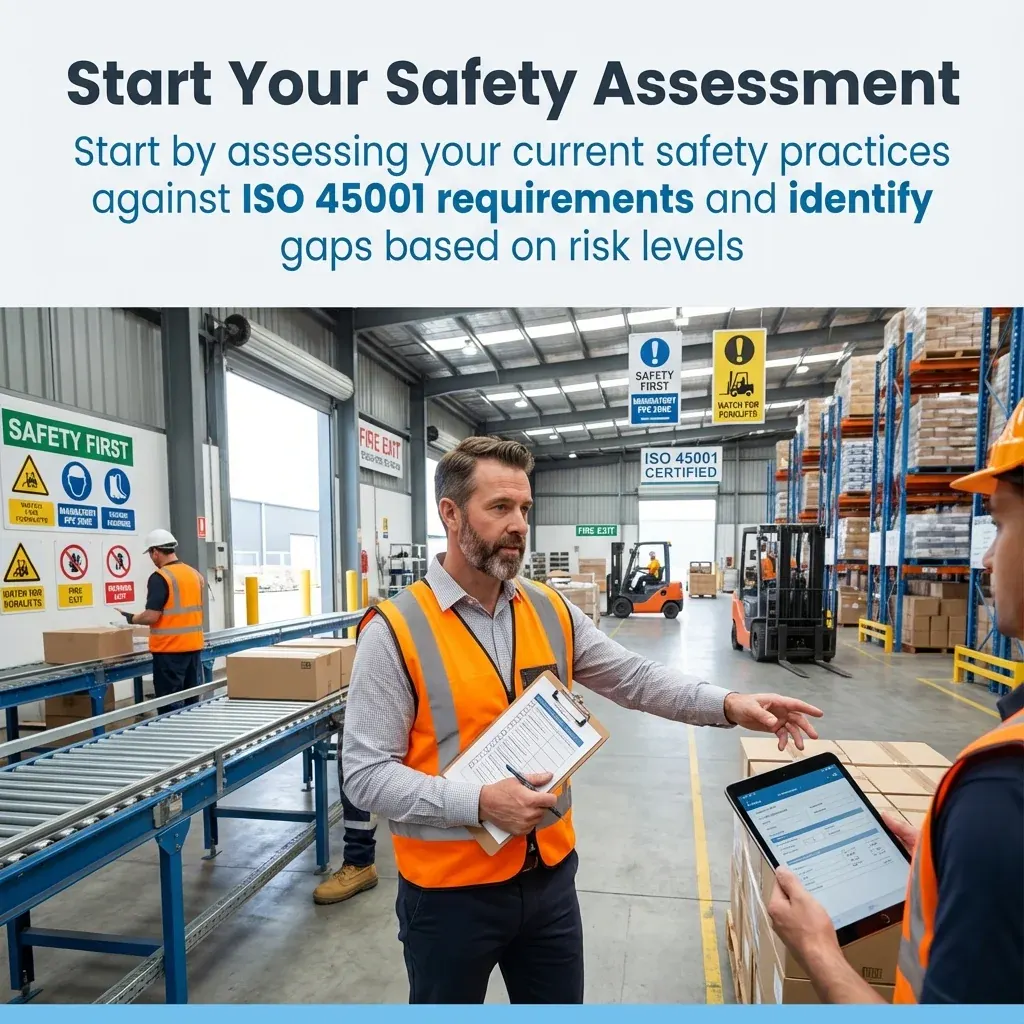
Rather than treating safety and transport compliance as separate work streams, ISO 45001 provides a unified framework that supports both. If you are reviewing your current safety system or preparing for Chain of Responsibility training, understanding ISO 45001 helps you see where your existing practices fit within a recognised international framework.
To discuss how a structured safety management system can strengthen your transport compliance position, contact MAEZ for practical advisory support.
How MAEZ works
Find the gaps. Fix the system. Prove the controls.
MAEZ helps transport operators deal with the compliance risk they already know is there. We help get the Safety Management System in order, protect NHVAS accreditation, reduce fine exposure, and connect training, evidence, and CoRGuard workflows where software is needed.
Find
Identify what is exposed before an auditor or regulator does.
Fix
Build the SMS controls around how the transport business actually runs.
Prove
Use CoRGuard where records, reminders, diaries, audits, and evidence need structure.
From advice to evidence
From MAEZ advice to a working Safety Management System
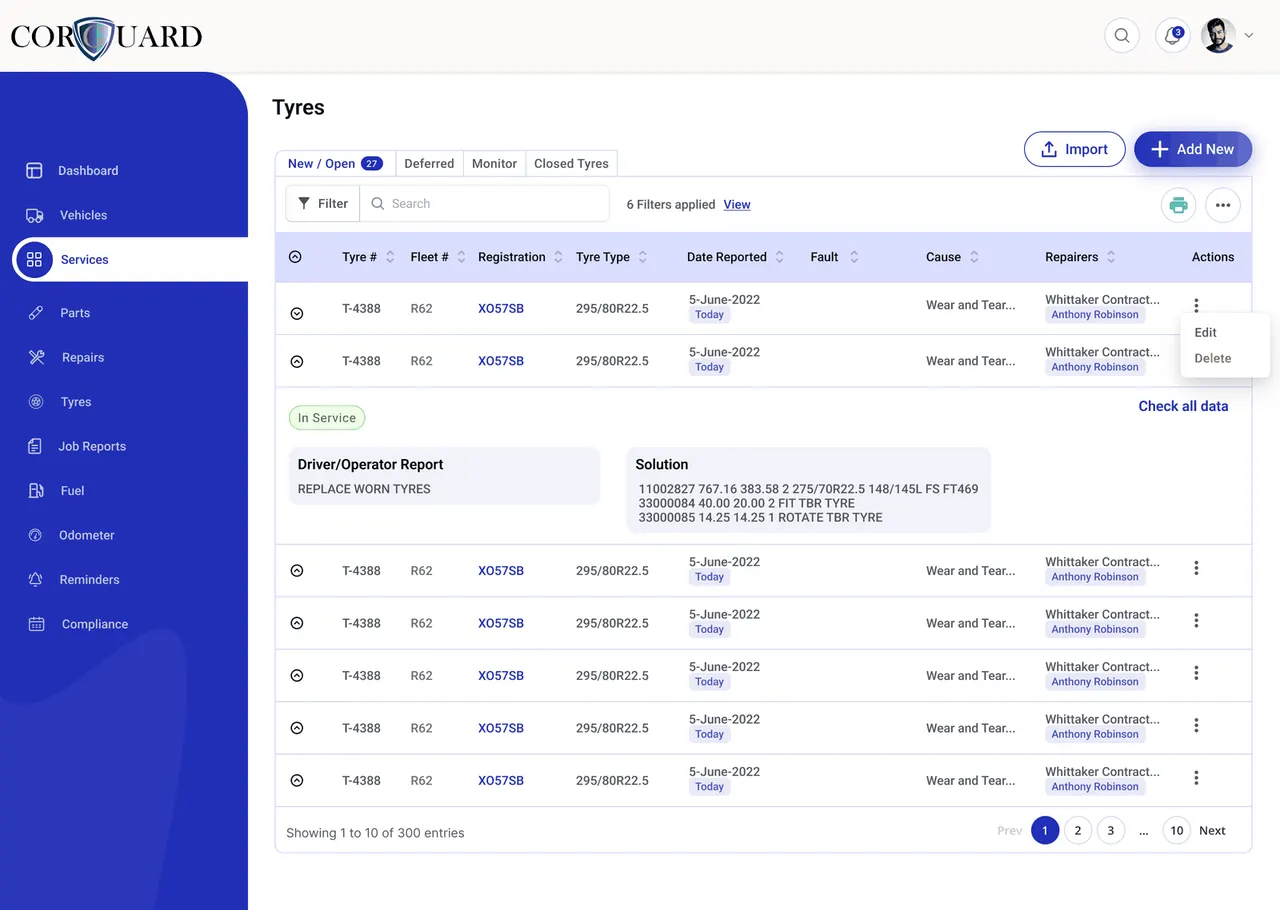
Advisory work should leave a practical implementation trail. These examples show how CoRGuard supports records, fatigue and driver diary checks, maintenance, audits, document control, inductions, corrective actions, and evidence review after MAEZ identifies the gaps.
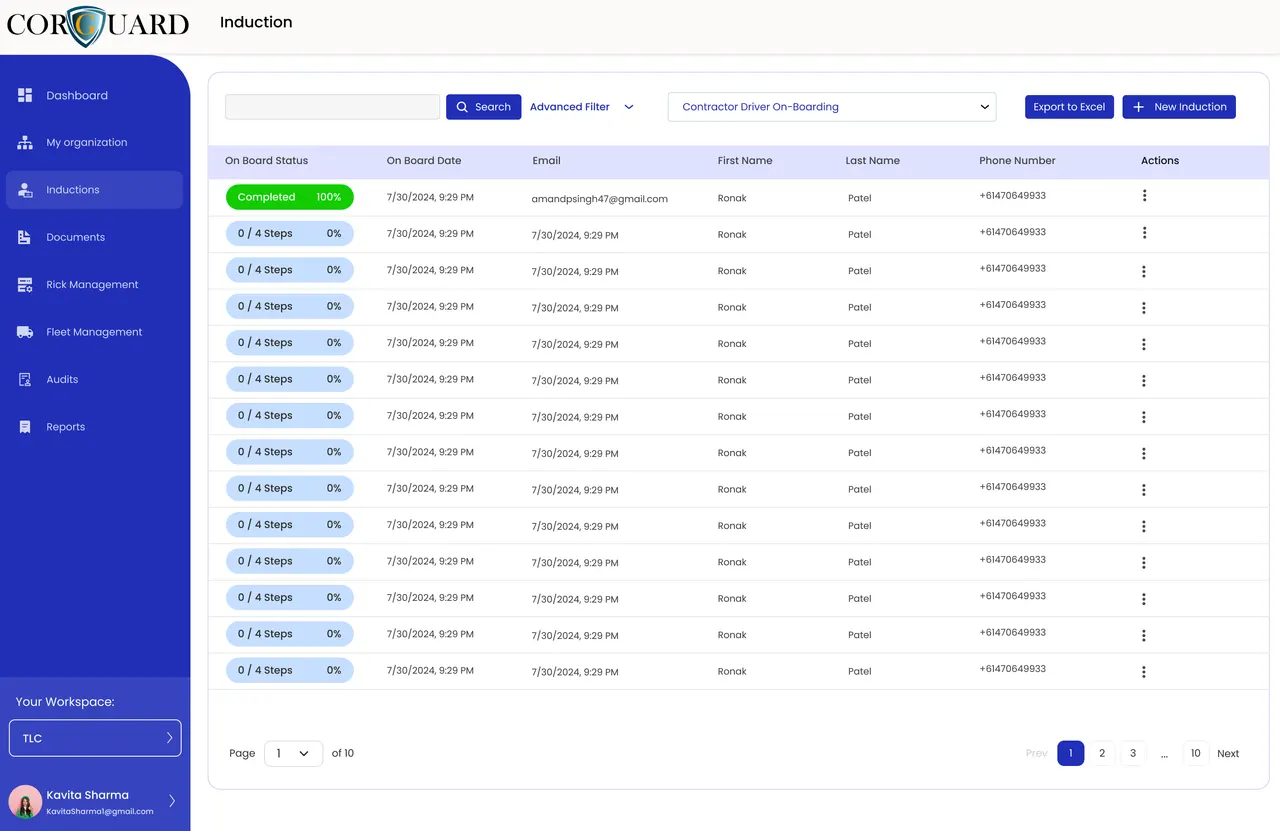
Training records
Connect training completion from cortraining.com.au to evidence and follow-up.
Driver diary checks
Connect fatigue and driver diary review back to manager visibility.
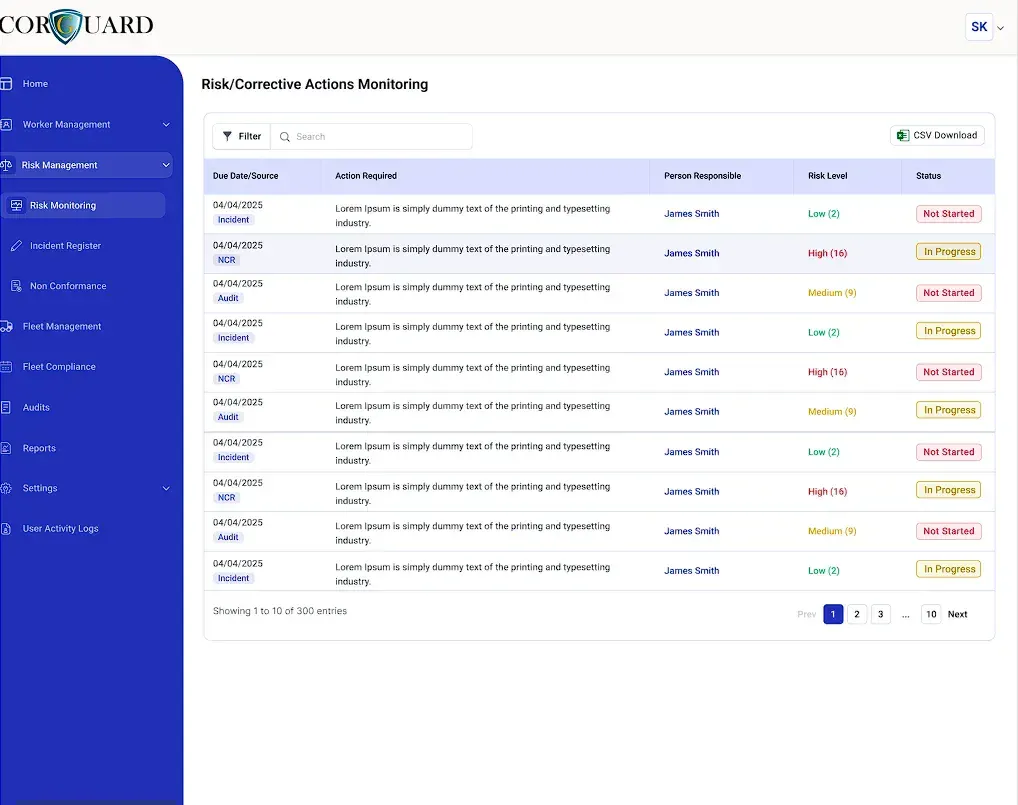
Corrective actions
Turn audit findings, hazards and incidents into tracked actions.
Keep exploring
Related Chain of Responsibility reading
MAEZ insight
Effective Strategies for Managing Supply Chain Risks
Learn how to manage supply chain risks effectively with structured strategies. Discover vulnerabilities and safeguard operations from disruptions.
MAEZ insight
Effective Risk Mitigation Strategies for Supply Chains
Discover effective risk mitigation strategies in supply chain to manage disruptions, enhance resilience, and ensure operational continuity.
MAEZ insight
Effective Strategies to Mitigate Supplier Risk
Learn how to mitigate supplier risk with effective strategies. Protect your supply chain from disruptions and ensure operational continuity today.
MAEZ insight
Understanding the Key Benefits of ISO 45001 Management Systems
Discover the key benefits of ISO 45001 management systems, including reduced incidents and enhanced compliance. Boost safety and efficiency today!
MAEZ insight
Unlocking the Benefits of ISO 45001 for Workplace Safety
Discover the benefits of 45001 for workplace safety. ISO 45001 offers a proactive risk management framework to reduce injuries and build safety cultures.
MAEZ insight
Unlocking the Benefits of a Safety Management System
Discover the benefits of a safety management system that boosts employee safety, reduces costs, and enhances workplace culture. Learn more now.
Frequently asked questions
Questions people ask about this topic
What is ISO 45001 and how does it apply to Australian transport operators?
ISO 45001 is the international standard for occupational health and safety management systems. For Australian transport operators, it provides a proactive framework for identifying hazards, implementing controls, and documenting safety performance that complements Chain of Responsibility obligations under the Heavy Vehicle National Law.
How does ISO 45001 differ from OHSAS 18001?
ISO 45001 succeeded OHSAS 18001 and introduced a broader risk perspective, stronger leadership accountability, enhanced worker participation provisions, and the Annex SL high-level structure shared across all ISO management system standards. Organisations holding OHSAS 18001 certification transitioned to ISO 45001 by March 2021.
Can ISO 45001 be integrated with ISO 9001 and ISO 14001?
Yes. ISO 45001 shares a common Annex SL structure with ISO 9001 (quality) and ISO 14001 (environmental), allowing organisations to integrate management systems, share documentation, conduct combined audits, and streamline management reviews across all three standards.
How does ISO 45001 support Chain of Responsibility compliance?
ISO 45001's structured approach to proactive risk management, documented controls, and leadership accountability aligns with the duties expected of parties in the chain under the Heavy Vehicle National Law. The documented evidence it produces demonstrates due diligence when regulators request proof of safety management.
Does ISO 45001 apply to small transport owner-operators?
Yes. The standard scales to fit organisations of all sizes, from small owner-operators to large enterprises. Any organisation employing workers can benefit from its framework for proactive risk identification, control implementation, and documented safety management.