
MAEZ insight
Would You Sign Off a Cheque for $18m? Chain of Responsibility Lessons from a Landmark Case
A large grain manufacturer faced an $18m fine for 330 Chain of Responsibility breaches. Learn what the court decided and what it means for your transport compliance obligations.
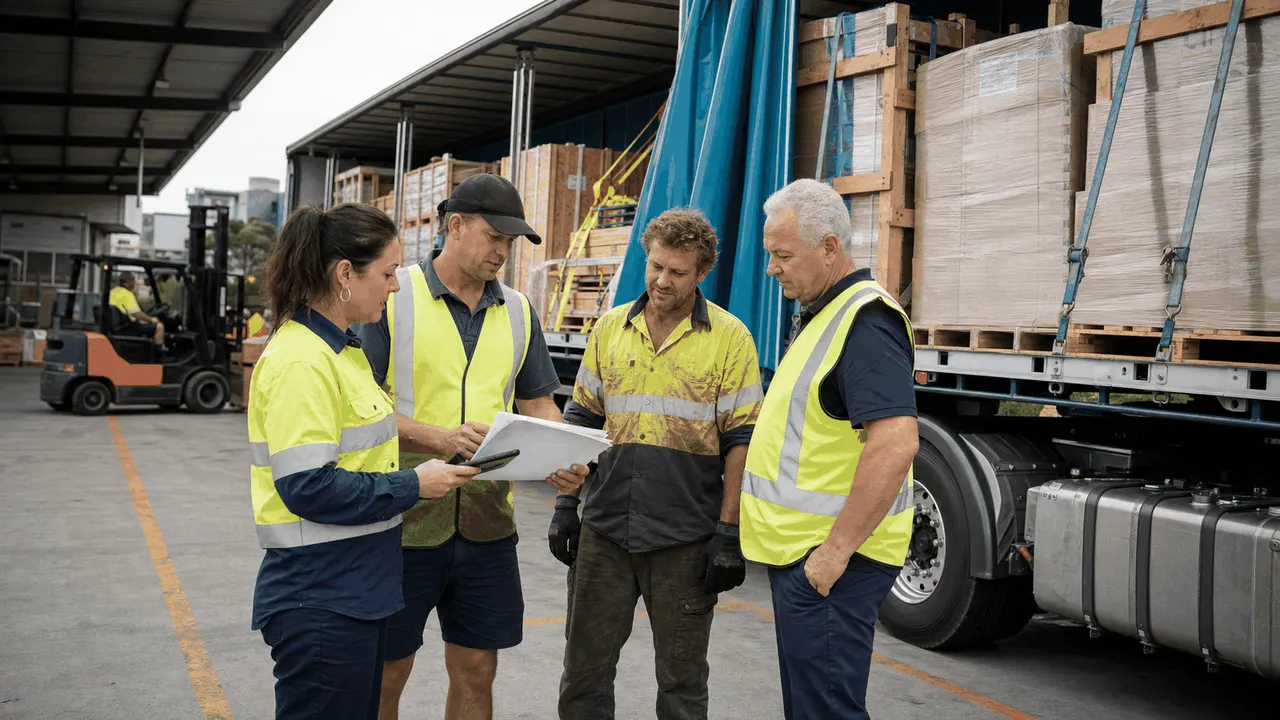
Unloading decisions can affect safety, scheduling, and responsibility.
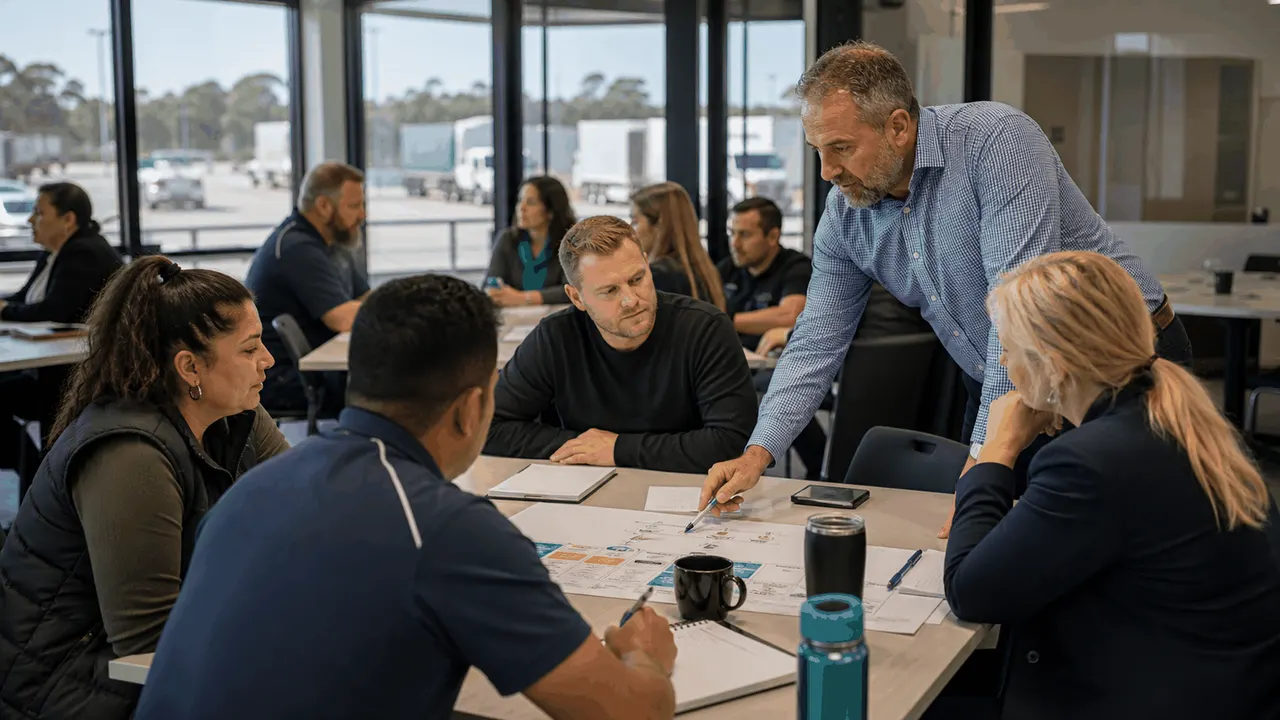
Managers need a clear view of gaps before audit or enforcement pressure arrives.

Contractor controls should be verified before the work starts.
Receiving windows, site rules, and unloading delays can all shape the transport task.
Consignors
Freight terms, delivery windows, and KPIs must not push drivers into speed, fatigue, or mass breaches.
Consignees
Receiving rules, site access, and unloading delays are CoR controls that need to be set and evidenced.
Loaders
Mass, dimension, and load restraint decisions need documented checks, not assumptions.
Managers
Executives and managers need due-diligence evidence that the Safety Management System is actually working.
What happened in the $18m Chain of Responsibility case?
A landmark CoR test case involving a grain manufacturer and 330 overloaded-vehicle offences

An $18m fine exposure shows how a single investigation can stack hundreds of individual Chain of Responsibility offences against one business. In 2009, a large grain manufacturer was hit with an $18m fine by the then RTA, covering 330 breaches — roughly $55,000 per offence — for accepting grossly overloaded vehicles at its receival sites.
When vehicles were loaded at farms in remote parts of Australia, there were no measures, no checks, and no engineered controls — a lack of duty of care at the loading point. The transport companies contracted to move the goods, both large and small, were found to be grossly overloaded at times. The farmer had no control measures in place, raising the question of what responsibility sits with the receiver in the middle of this section of the chain.
This case remains one of the earliest real-world tests of Chain of Responsibility obligations under what is now the Heavy Vehicle National Law (HVNL). It highlights that every party in the supply chain — consignor, loader, transporter, and consignee — can be examined for their role in a transport task gone wrong. For a broader understanding of how these duties work in practice, see About Chain of Responsibility.
Why it's not the size of one fine that should worry you
The real risk is the volume of offences a single investigation can generate
Many people advocate for compliance by pointing to maximum penalties — up to $5m for a corporation and jail time post-July 2018. In reality, a single fine at that level is likely to be rare within the CoR scope. The bigger concern is the number of offences that can flow from a single investigation.
In this case, 330 individual breaches stacked into an $18m exposure. Each overloaded vehicle, each unchecked load, each missing control contributed another offence. While lesser per-offence fines may seem manageable, they accumulate quickly across a fleet or a receival operation.
The businesses most at risk are those that assume a single breach will only ever result in a single penalty. When a regulator examines your operation, they are not looking for one incident — they are looking for patterns, systems failures, and repeated conduct across the supply chain. For operators preparing for regulatory change, the HVNL 2026 changes and Chain of Responsibility training readiness resource provides practical guidance.
What duty does a receiver or consignee hold?
Larger businesses carry a larger share of the compliance burden
As a receiver, you have a duty of care to ensure compliance across the transport task. The court made it clear: the larger your business, the larger the role you must play in ensuring that duty is applied within the supply chain. You cannot simply contract out of that responsibility.
You also cannot guarantee that every vehicle loaded at a remote site will be within mass limits unless you send a representative to each loading site — a costly and impractical approach for most operators. So the question becomes: how do you manage overweight vehicles entering your chain when the upstream party has no controls?
Key steps a receiver should take include:
- Establish receival-site checks that detect non-compliant loads before they are accepted
- Provide written warnings to suppliers found moving goods overweight
- Ensure site-level supervisors understand their obligations through Chain of Responsibility training
- Document every control so you can demonstrate active risk management if enforcement action arises
For a structured review of your receival-site controls, CoR consulting can help identify where your obligations are not yet backed by evidence.
How the court viewed 'actively working towards improvement'
The business had controls in place — and that mattered
In this case, the corporation was handing out written warnings to suppliers found moving goods overweight, which meant they had checks in place. They also had training at the site level, ensuring supervisors knew their obligations and were actively enforcing a safe workplace.
The corporation was found to be "actively working towards improvement." This was to the dismay of the RTA, which was disgruntled by the outcome. The case was dismissed at the local court level, although the business was waiting for an appeal decision at the time.
The key takeaway: the court recognised that the business was not ignoring its obligations. It had systems, it had training, and it was taking action — even if those systems were not perfect. This principle is central to how duty holders are assessed under the HVNL and Work Health and Safety legislation. The law expects reasonable, practicable steps — not flawless systems.
What does 'the more you do' mean for your business?
Continual improvement matters more than a perfect audit score
It's not about hitting an audit score of 100%. It's about continually working on your systems towards improvement — the principle of continual improvement. Ignorance of your role will not make anything go away. Even as a sole trader, you can receive a hefty fine if you disregard your part in the chain.
The one big message from this case: the more you chip away at safety within your organisation — big or small — under CoR or WHS legislation, the less likely you are to endure any significant fine.
Practical actions include:
- Identify gaps before an auditor or regulator does
- Build Safety Management System controls around how your transport business actually runs
- Use structured records and evidence to prove your controls are active
- Connect CoR training completion to evidence and follow-up so nothing falls through the gaps
For executives and managers seeking to understand their specific duties, the Chain of Responsibility training guide for executives and managers breaks down what active oversight looks like in practice.
How MAEZ helps you build that evidence
Practical advisory, training, and implementation pathways for transport compliance
MAEZ helps Australian businesses turn Chain of Responsibility, HVNL, WHS, transport safety, and chartered risk obligations into practical training, advisory, audit, and implementation pathways. We help transport operators deal with the compliance risk they already know is there — getting the Safety Management System in order, protecting NHVAS accreditation, reducing fine exposure, and connecting training and evidence workflows.
If you want a practical review of the controls, evidence, training, and SMS gaps that matter most to your operation, contact MAEZ or explore our CoR consulting services for a structured risk review. For operators who want to understand how a chartered risk lens can close CoR gaps, see using a chartered risk lens to close Chain of Responsibility gaps.
How MAEZ works
Find the gaps. Fix the system. Prove the controls.
MAEZ helps transport operators deal with the compliance risk they already know is there. We help get the Safety Management System in order, protect NHVAS accreditation, reduce fine exposure, and connect training, evidence, and CoRGuard workflows where software is needed.
Find
Identify what is exposed before an auditor or regulator does.
Fix
Build the SMS controls around how the transport business actually runs.
Prove
Use CoRGuard where records, reminders, diaries, audits, and evidence need structure.
From advice to evidence
From MAEZ advice to a working Safety Management System
Advisory work should leave a practical implementation trail. These examples show how CoRGuard supports records, fatigue and driver diary checks, maintenance, audits, document control, inductions, corrective actions, and evidence review after MAEZ identifies the gaps.
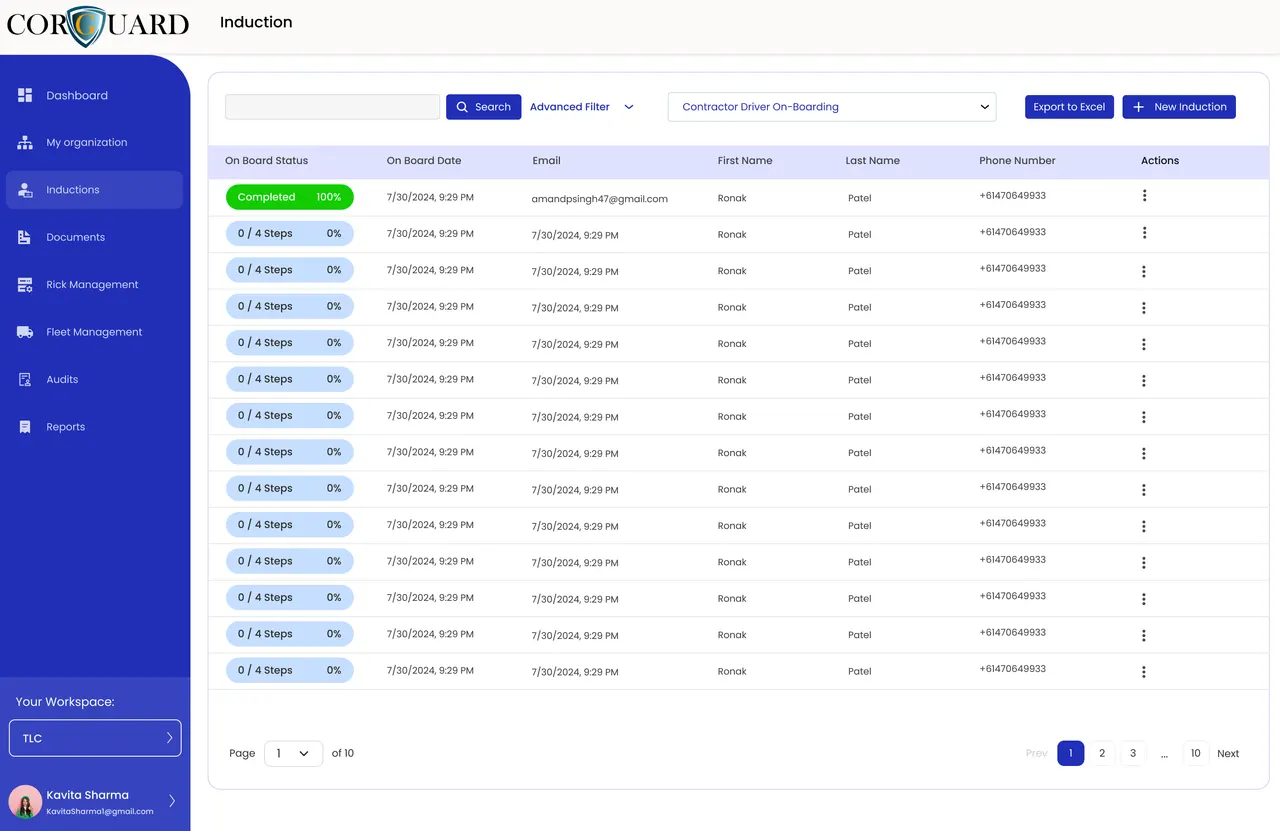
Training records
Connect training completion from cortraining.com.au to evidence and follow-up.
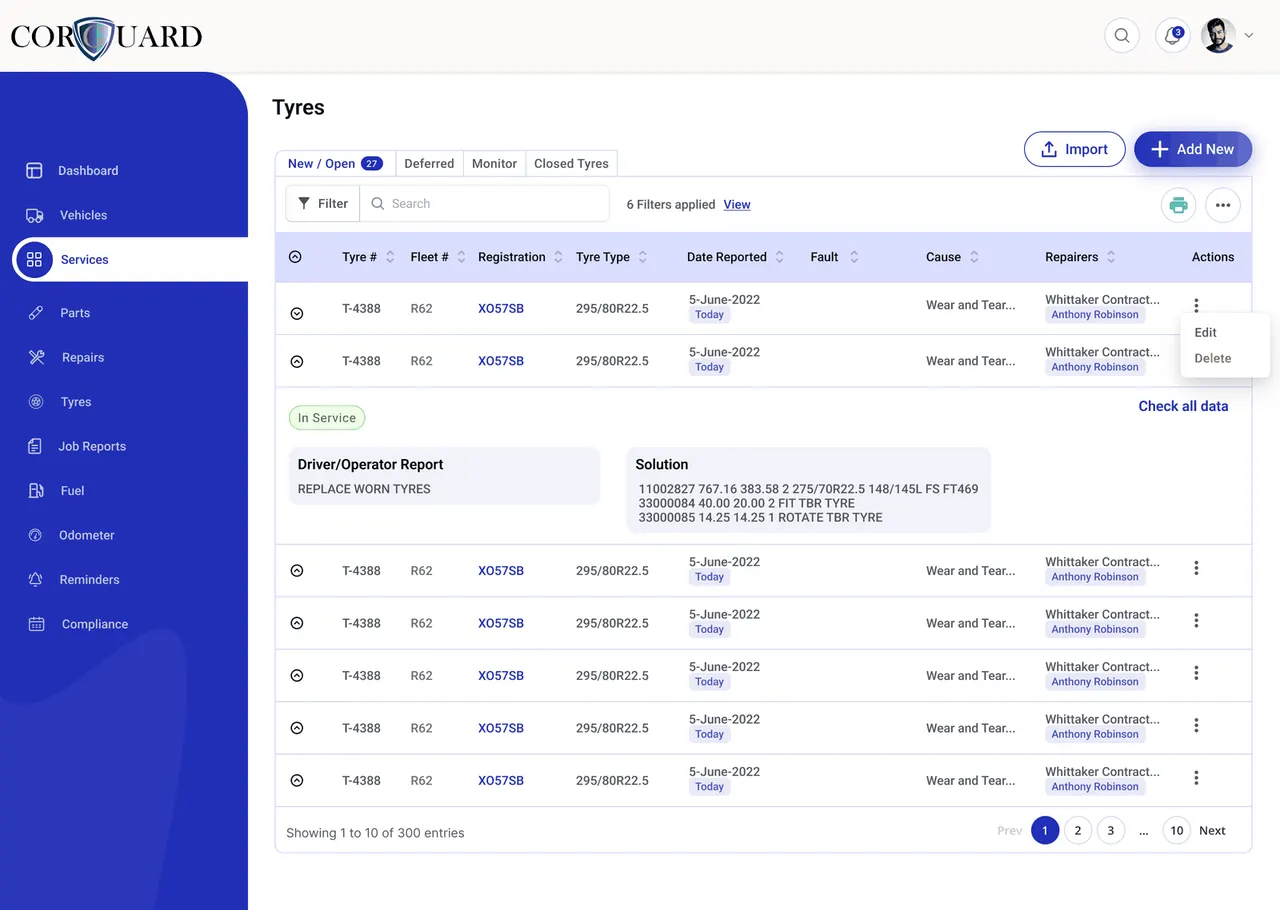
Driver diary checks
Connect fatigue and driver diary review back to manager visibility.
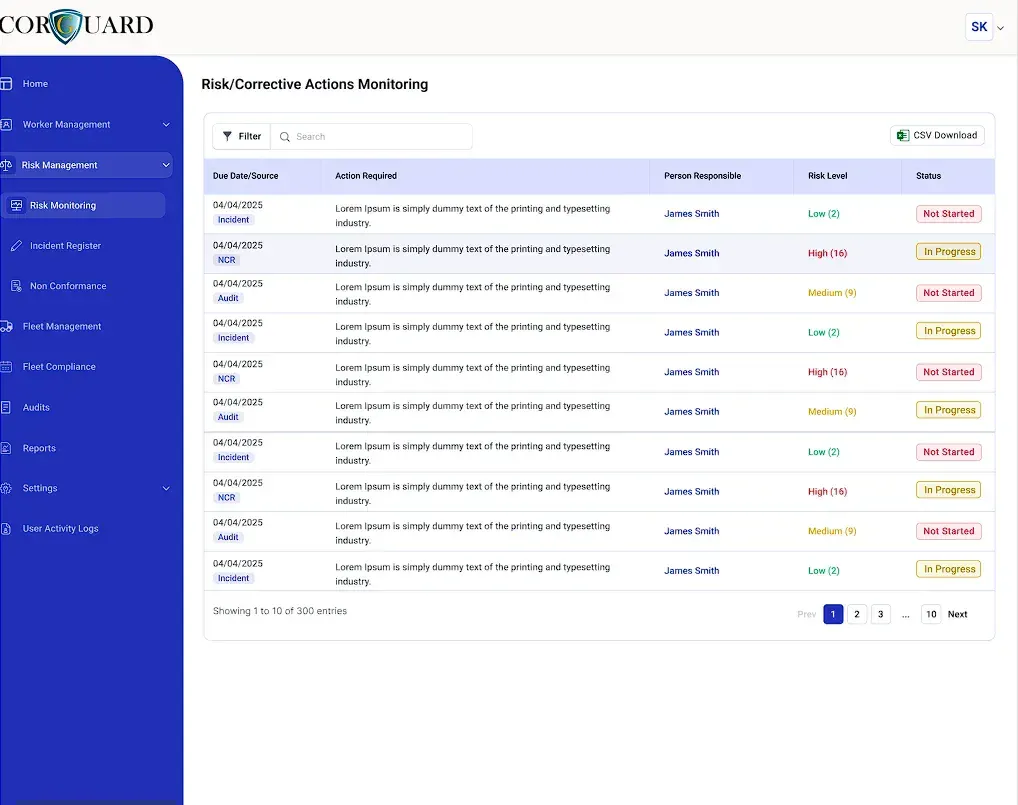
Corrective actions
Turn audit findings, hazards and incidents into tracked actions.
Keep exploring
Related Chain of Responsibility reading
MAEZ insight
Responsibility; Who’s at fault in the Chain of Responsibility?
Late last week on the NSW Police FB blog, it reported that a transport company (Many people will know who) was caught with unsafe loads coming out of a major retailers distribution centre.
MAEZ insight
Trucks Crash Too
I know what you’re all possibly saying to yourself now. Something along the lines of, “We’re fine, we have our drivers sign a fitness to drive form”. Let me explain to you further, that this is not good enough, it won’t save you from a potential prosecution.
MAEZ insight
Spend Less on Fuel
Motormouth, the brand that has always tried to help us spend less on fuel has delivered a cool new app for everyone to use. The best part is though, you can choose whatever fuel you want, including Diesel.
MAEZ insight
The Root Cause & How To Get There
You had an incident and many things may have happened, but you need to work through each one in a RCA (root cause analysis) one by one.
MAEZ insight
Is CoR a pain for you? Here’s 5 quick tips to help you in your business today
Chain of Responsibility is fast becoming the next ‘Work Place Health and Safety’. It’s daunting, new and no-one seems to know what to do.
MAEZ insight
Chain of Responsibility (or CoR) Training
Chain of Responsibility under the HVNL places a primary duty on anyone involved in a transport activity — training helps every duty holder understand and manage that risk.
Frequently asked questions
Questions people ask about this topic
What was the $18m Chain of Responsibility case about?
In 2009, a large grain manufacturer faced an $18m fine from the then RTA for 330 overloaded-vehicle offences — roughly $55,000 per breach — after accepting grossly overloaded vehicles at receival sites where upstream loading points had no mass checks or control measures in place.
Why does the number of offences matter more than a single maximum penalty?
A single maximum penalty is rare in CoR enforcement. The greater risk is that one investigation can stack hundreds of individual offences — each overloaded vehicle, unchecked load, or missing control contributing a separate breach — which accumulates into far higher total exposure than any one fine.
What duty does a consignee or receiver hold under Chain of Responsibility?
A receiver has a duty of care to ensure compliance across the transport task and cannot contract out of it. Larger businesses are expected to play a larger role, including receival-site checks, written warnings to non-compliant suppliers, supervisor training, and documented evidence of active risk management.
What does 'actively working towards improvement' mean for a court?
The court recognised that a business with written warnings, site-level training, and active enforcement was 'actively working towards improvement' — even if its systems were not perfect. Continual improvement and demonstrable action matter more than a flawless audit score.
Does this case apply to sole traders and small operators?
Yes. The principle applies regardless of business size — even a sole trader can receive a significant fine for disregarding their part in the chain. The more you actively work on safety and compliance, the less likely you are to face substantial penalties.