
MAEZ insight
Eifers Pty Ltd | NHVR Enforceable Undertaking for Mass and Load Restraint Breach
A case study of the NHVR enforceable undertaking imposed on Eifers Pty Ltd after a severe mass breach and unsafe load restraint, with practical lessons for Australian transport operators on Chain of Responsibility compliance.
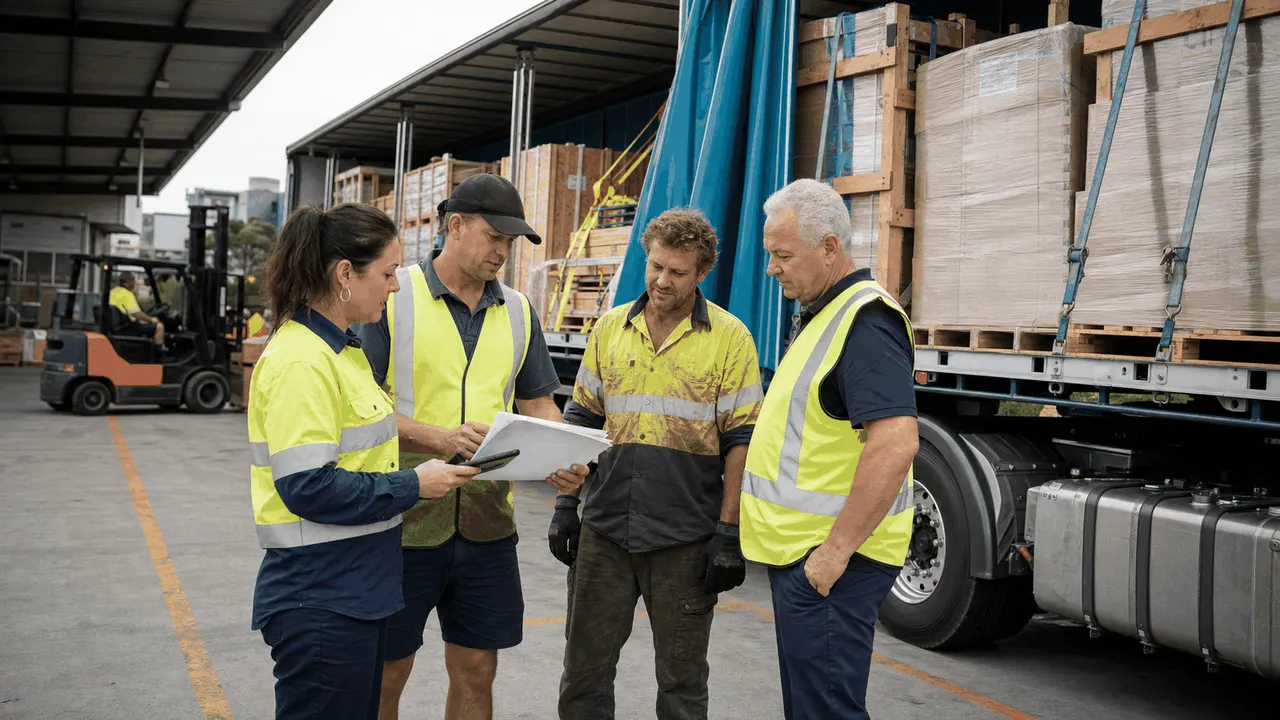
Receiving windows, site rules, and unloading delays can all shape the transport task.
Unloading decisions can affect safety, scheduling, and responsibility.
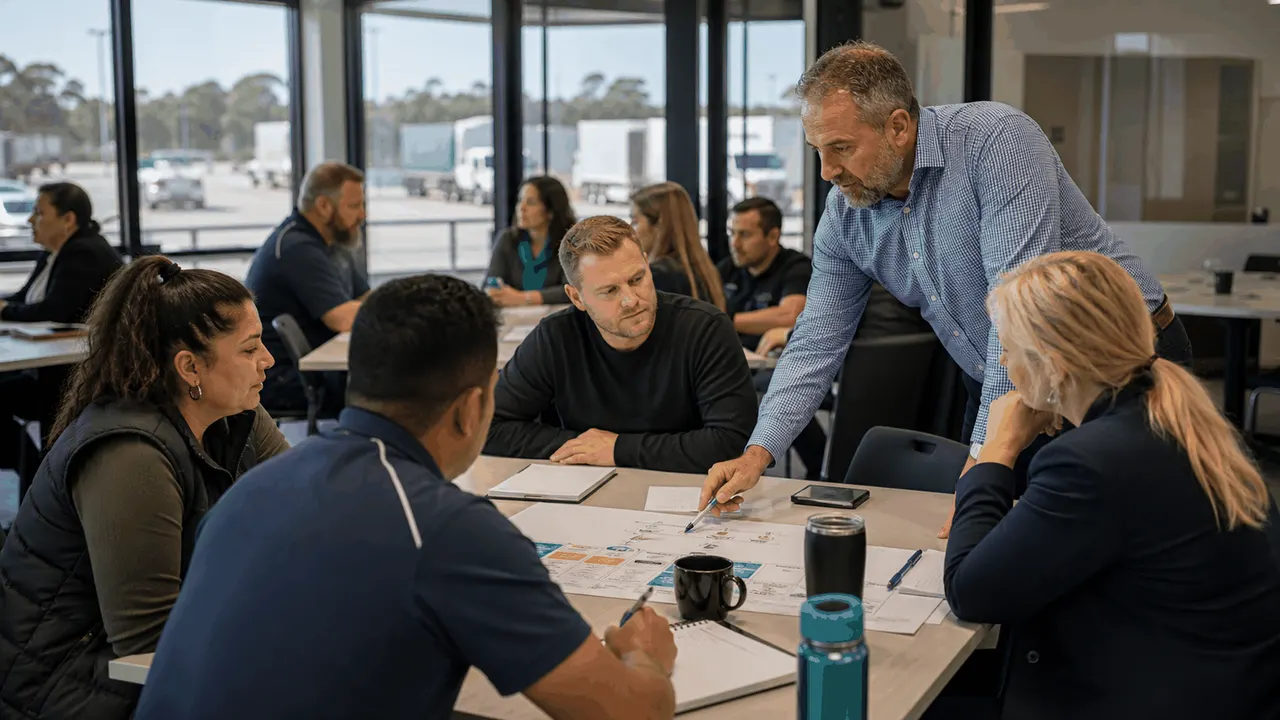
Managers need a clear view of gaps before audit or enforcement pressure arrives.

Contractor controls should be verified before the work starts.
Consignors
Freight terms, delivery windows, and KPIs must not push drivers into speed, fatigue, or mass breaches.
Consignees
Receiving rules, site access, and unloading delays are CoR controls that need to be set and evidenced.
Loaders
Mass, dimension, and load restraint decisions need documented checks, not assumptions.
Managers
Executives and managers need due-diligence evidence that the Safety Management System is actually working.
What happened with Eifers Pty Ltd?
A severe risk mass breach intercepted in Victoria
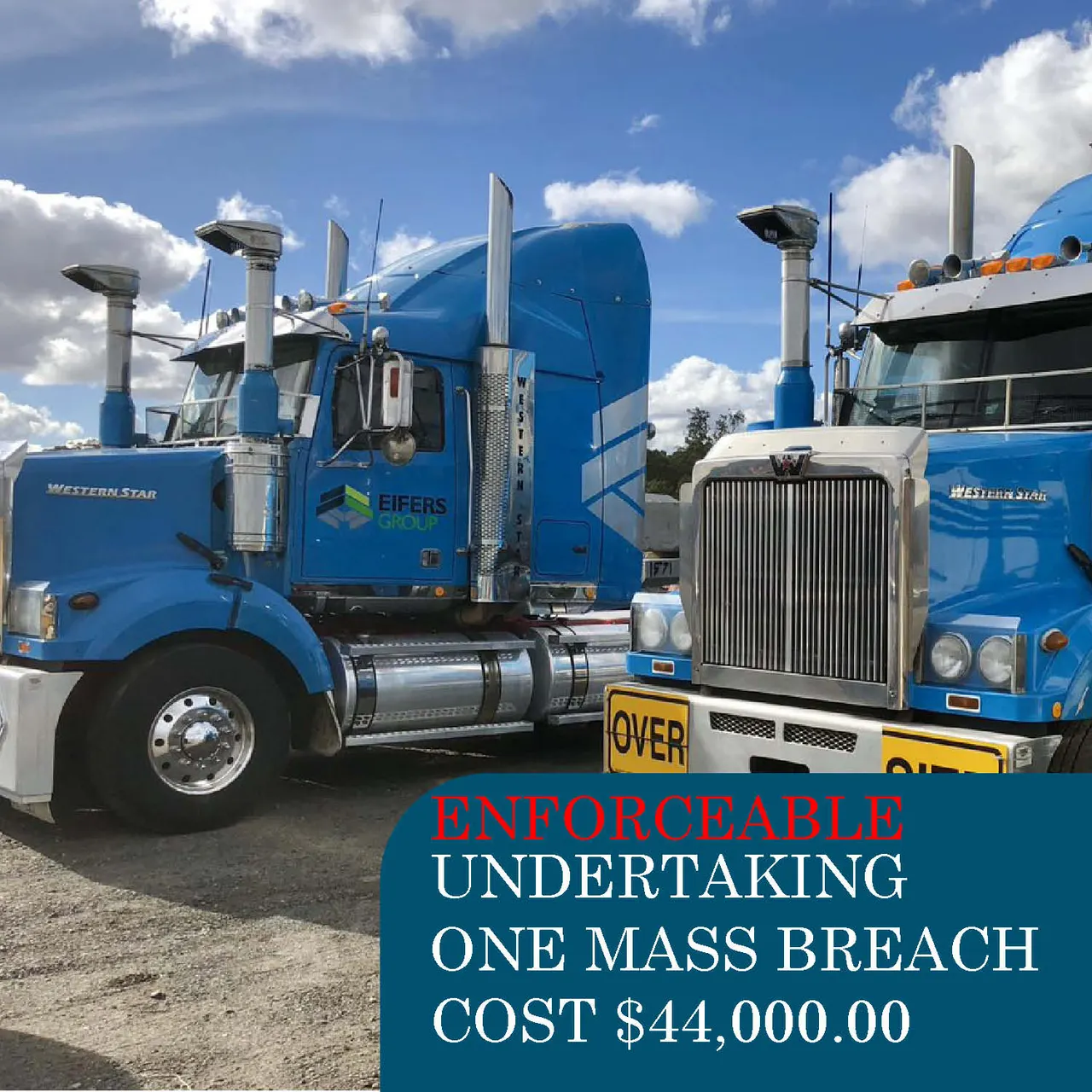
On 22 October 2020 at Rosedale, Victoria, a heavy three-axle low loader vehicle combination was intercepted by the National Heavy Vehicle Regulator (NHVR). The statutory axle group limit on the vehicle's tri-axle group was 20,000 kg. The actual mass loaded was 28,650 kg — 143.25% of statutory capacity. This breach was classified as a severe risk breach under the Heavy Vehicle National Law (HVNL).
Roadside enforcement officers also detected unsafe load restraint on the excavator being transported at the time, which compounded the regulatory outcome.
The NHVR used an enforceable undertaking rather than criminal prosecution, giving the body corporate an opportunity to improve its systems and continue trading while still being held publicly accountable. The estimated value of the enforceable undertaking imposed on Eifers Pty Ltd (Construction) was $44,000.
An enforceable undertaking is an alternative to prosecution that requires a company to commit to specific, documented improvements — typically training, policy reviews, certification, and public safety promotion — while remaining publicly accountable for the breach.
What did the NHVR require Eifers to do?
The agreed undertakings covered training, policy, certification, and promotion
The regulator agreed to a proposal from Eifers that included the following commitments:
- Training: Purchase and delivery of training awareness courses to all employees involved in loading heavy vehicles, covering load restraint and mass loading requirements for all stakeholders deemed loading manager and loader duty holders.
- Webinar directive: All employees directed to view the 'Effective Load Restraint' webinar provided by Safe Work Australia.
- Policy and procedures: A review of loading and mass procedures, with implementation of a written policy and procedure manual for workers to use when loading heavy vehicles, including their Chain of Responsibility requirements. Employees were directed to read the manual and be bound by it.
- Certification: A commitment by Eifers to continue ISO 9001, ISO 45001, and ISO 14001 certification.
- Public safety promotion: Procurement of a promotional video to promote heavy vehicle road safety and the Australian Road Safety Foundation's 'Take the Pledge' program, placed prominently on the Eifers website and promoted to all workers.
These measures reflect the kind of practical, documented controls that the HVNL expects duty holders to maintain — not just at the point of enforcement, but as part of everyday operations.
Why mass control matters across your supply chain
Many businesses still lack basic mass controls, even when mass is central to their revenue
Over many years of advisory work, MAEZ has repeatedly found a lack of mass control across a wide range of businesses. Interestingly, businesses whose revenue depends on mass-related products — for example, iron ore — tend to be very specific about mass control. Others are not.
A similar NHVR undertaking was issued in 2020 to Laing O'Rourke for a breach in the same industry. The same learnings and opportunities available from that case were missed by Eifers on this occasion.
If you have a supply chain with a transport task operating within it, you have a direct responsibility to ensure the safety of your entire supply chain. You cannot sub-contract out or remove that risk through a process. It is also now illegal in most states to insure against Chain of Responsibility outcomes that may cost a business its hard-earned EBIT result.
It is not up to your transport operator to mitigate your risks — a point MAEZ consultants are often confronted with when reviewing supply-chain controls. A practical CoR risk review can surface these gaps before a regulator does.
What this means for executives and managers
Accessorial liability can bring criminal action to the person behind the desk
The HVNL is designed to protect the general public and public infrastructure. If an incident like this causes an accident or death on public roads, the penalties are significantly worse — and jail time can be applied.
For senior executives, the implications are especially serious. Accessorial liability can be applied, meaning criminal action can be undertaken against an executive sitting behind a desk at the time of an incident that occurs on a public road.
This is why Chain of Responsibility training for executives and managers is not optional — it is a core part of demonstrating that executives have exercised due diligence over their transport safety duties. Education across your supply chains is critical to raise awareness and confront the changes required to improve safety standards.
How to prevent this happening to your business
Practical audit, training, and evidence pathways
MAEZ helps Australian businesses turn Chain of Responsibility, HVNL, WHS, transport safety, and chartered risk obligations into practical training, advisory, audit, and implementation pathways. A registered code of industry practice audit program is a cost-effective way to identify and mitigate supply-chain risks — particularly against the kind of enforcement cost imposed on this body corporate.
Key steps MAEZ recommends:
- Find the mass, load restraint, and CoR gaps in your supply chain before an auditor or regulator does.
- Fix your Safety Management System controls around how the transport business actually runs.
- Prove the controls are in place through practical Chain of Responsibility training and documented evidence.
For businesses that need structured records, reminders, audits, maintenance checks, driver diary reviews, inductions, and corrective action tracking, CoRGuard supports the evidence workflow once MAEZ has identified the gaps.
To get a practical review of the controls, evidence, training, and SMS gaps that matter most to your operation, contact MAEZ.
How MAEZ works
Find the gaps. Fix the system. Prove the controls.
MAEZ helps transport operators deal with the compliance risk they already know is there. We help get the Safety Management System in order, protect NHVAS accreditation, reduce fine exposure, and connect training, evidence, and CoRGuard workflows where software is needed.
Find
Identify what is exposed before an auditor or regulator does.
Fix
Build the SMS controls around how the transport business actually runs.
Prove
Use CoRGuard where records, reminders, diaries, audits, and evidence need structure.
From advice to evidence
From MAEZ advice to a working Safety Management System
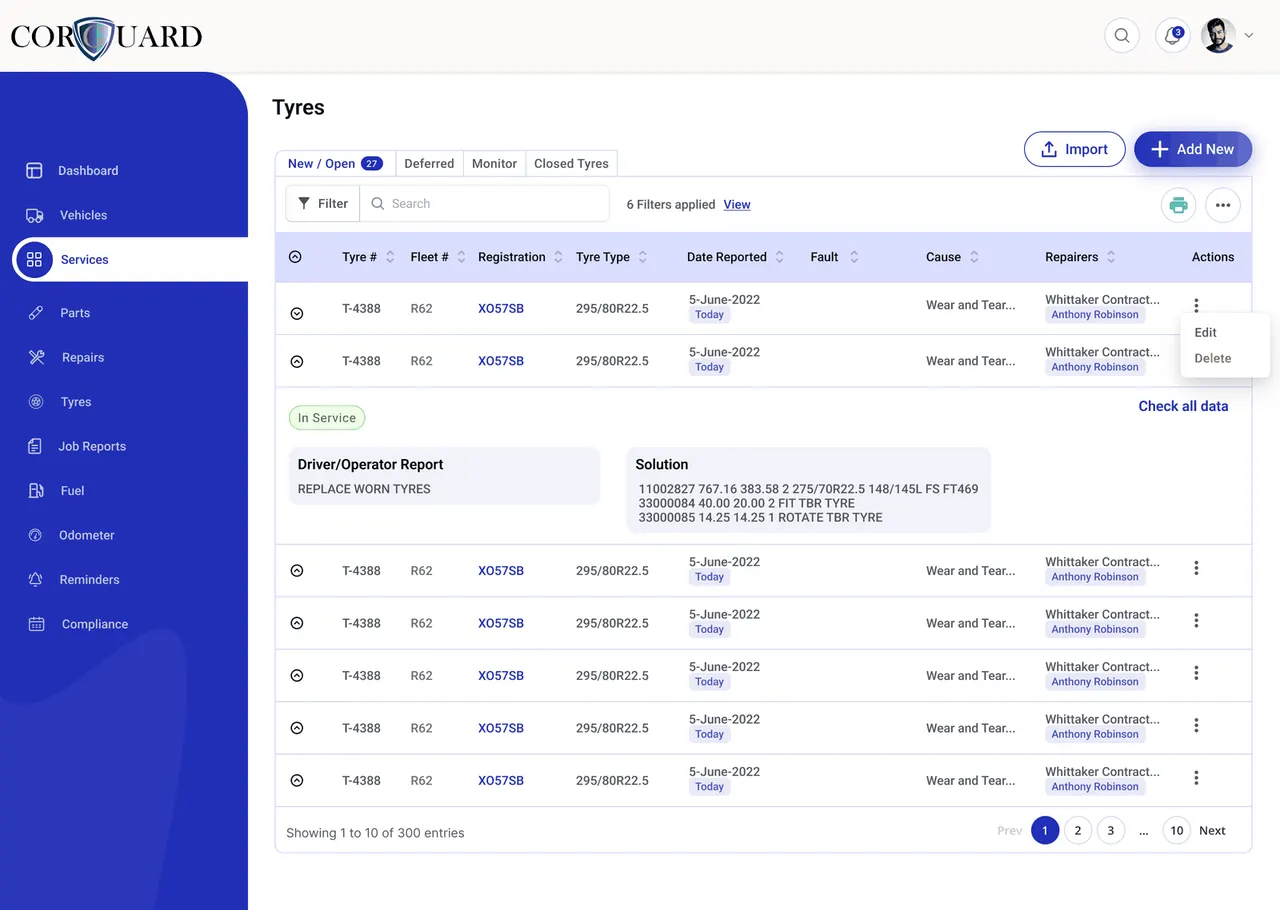
Advisory work should leave a practical implementation trail. These examples show how CoRGuard supports records, fatigue and driver diary checks, maintenance, audits, document control, inductions, corrective actions, and evidence review after MAEZ identifies the gaps.
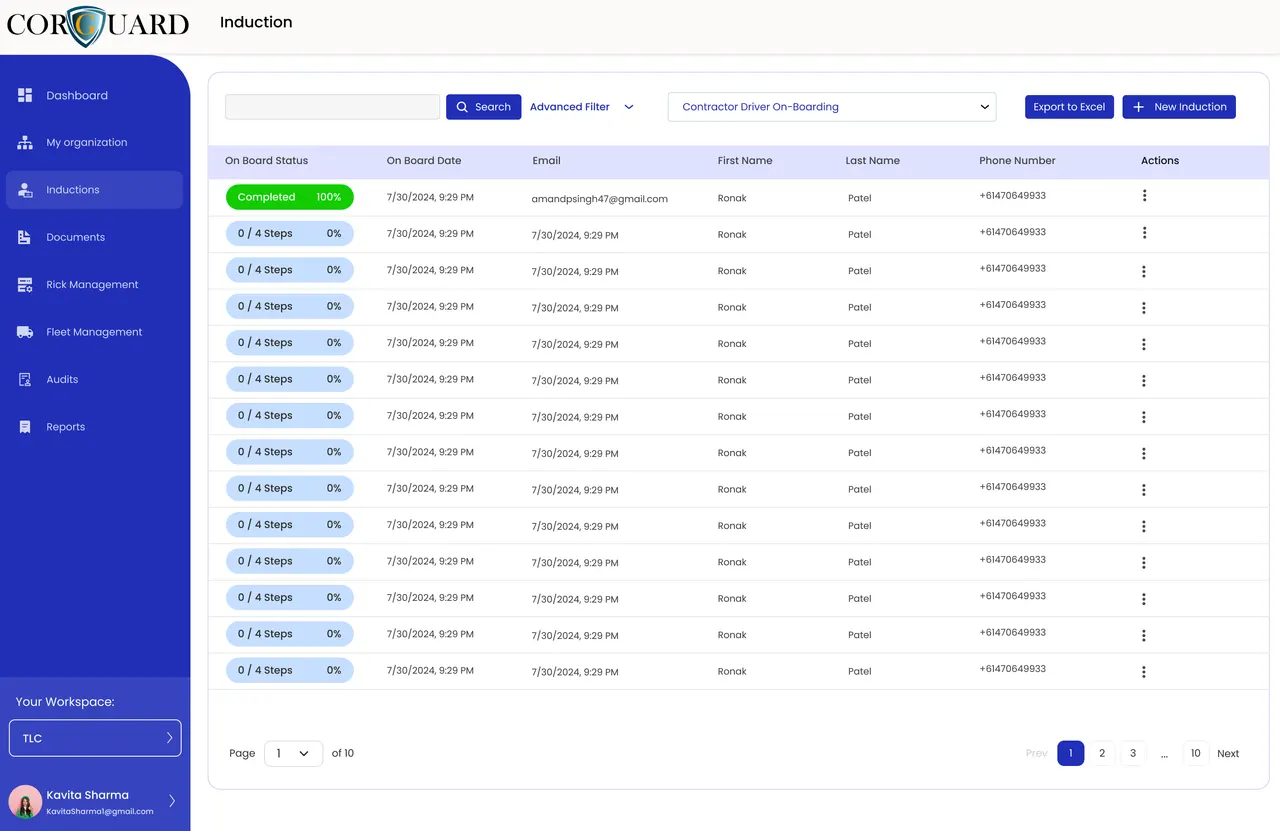
Training records
Connect training completion from cortraining.com.au to evidence and follow-up.
Driver diary checks
Connect fatigue and driver diary review back to manager visibility.
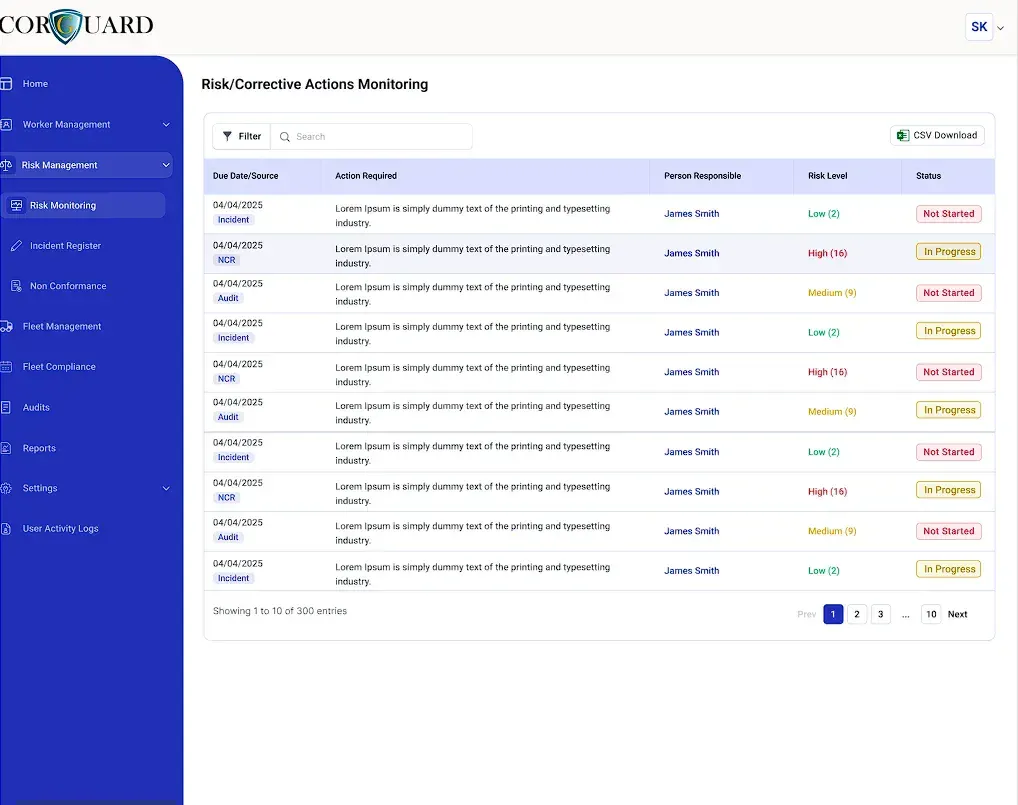
Corrective actions
Turn audit findings, hazards and incidents into tracked actions.
Keep exploring
Related Chain of Responsibility reading
MAEZ insight
What Causes Collisions & How can Fleets Prevent Them? Experts Explain
A preventable accident is one in which the driver failed to do everything reasonably possible to avoid it — understanding collision causes is the first step in fleet prevention.
MAEZ insight
The Impact of Driver-Facing Cameras on Road Safety and the Transport Sector in Australia
The safety of our roads is of paramount importance, particularly in the transport sector. In Australia, the safety of the transport sector relies heavily on the Heavy Vehicle National Law (HVNL) and state-based workplace safety legislation. One key area of focus for transport safety is the use of driver-facing cameras.
MAEZ resource
Chain of Responsibility Training Sydney
Practical Chain of Responsibility training for Sydney transport operators, schedulers, loaders and executives — delivered on-site across Sydney or online, mapped to the current HVNL.
MAEZ resource
Chain of Responsibility Training Melbourne
Practical Chain of Responsibility training for Melbourne transport operators, schedulers, loaders and executives — delivered on-site across Melbourne or online, mapped to the current HVNL.
MAEZ resource
Chain of Responsibility Training Brisbane
Practical Chain of Responsibility training for Brisbane transport operators, schedulers, loaders and executives — delivered on-site across Brisbane or online, mapped to the current HVNL.
MAEZ resource
Chain of Responsibility Training Perth
Practical Chain of Responsibility training for Perth and WA transport operators, schedulers, loaders and executives — delivered on-site across Perth or online, covering WA's heavy vehicle laws and the HVNL for interstate work.
Frequently asked questions
Questions people ask about this topic
What was the mass breach committed by Eifers Pty Ltd?
On 22 October 2020 at Rosedale, Victoria, Eifers' vehicle was intercepted with 28,650 kg loaded on a tri-axle group with a statutory limit of 20,000 kg — 143.25% of capacity. The NHVR classified this as a severe risk breach under the HVNL, and unsafe load restraint on the excavator compounded the outcome.
What is an NHVR enforceable undertaking?
An enforceable undertaking is an alternative to criminal prosecution where the regulator requires a company to commit to specific, documented improvements — such as training, policy reviews, certification, and public safety promotion — while remaining publicly accountable for the breach. The estimated value of the undertaking imposed on Eifers was $44,000.
Can an executive be personally held liable for a transport mass breach?
Yes. Under the HVNL, accessorial liability can be applied, meaning criminal action can be taken against an executive who was responsible for transport safety at the time of an incident on a public road. This is why Chain of Responsibility training for executives and managers is a core due-diligence requirement, not an optional extra.
What steps can a business take to prevent a similar mass and load restraint breach?
Businesses should find mass, load restraint, and CoR gaps before a regulator does, fix Safety Management System controls around how the transport task actually runs, and prove the controls are in place through practical training and documented evidence. A registered code of industry practice audit is a cost-effective way to identify and mitigate these supply-chain risks.
Who should read this Eifers case study?
This page is useful for owner-operators, transport managers, executives, consignors, consignees, loaders, schedulers, contractors, and anyone who influences a heavy vehicle transport task and needs to understand practical Chain of Responsibility obligations.