
MAEZ insight
Chain of Responsibility Policy for Enterprises
Why every Australian transport business needs a Chain of Responsibility policy: accountability, risk management, legal compliance, team communication, and ongoing training.
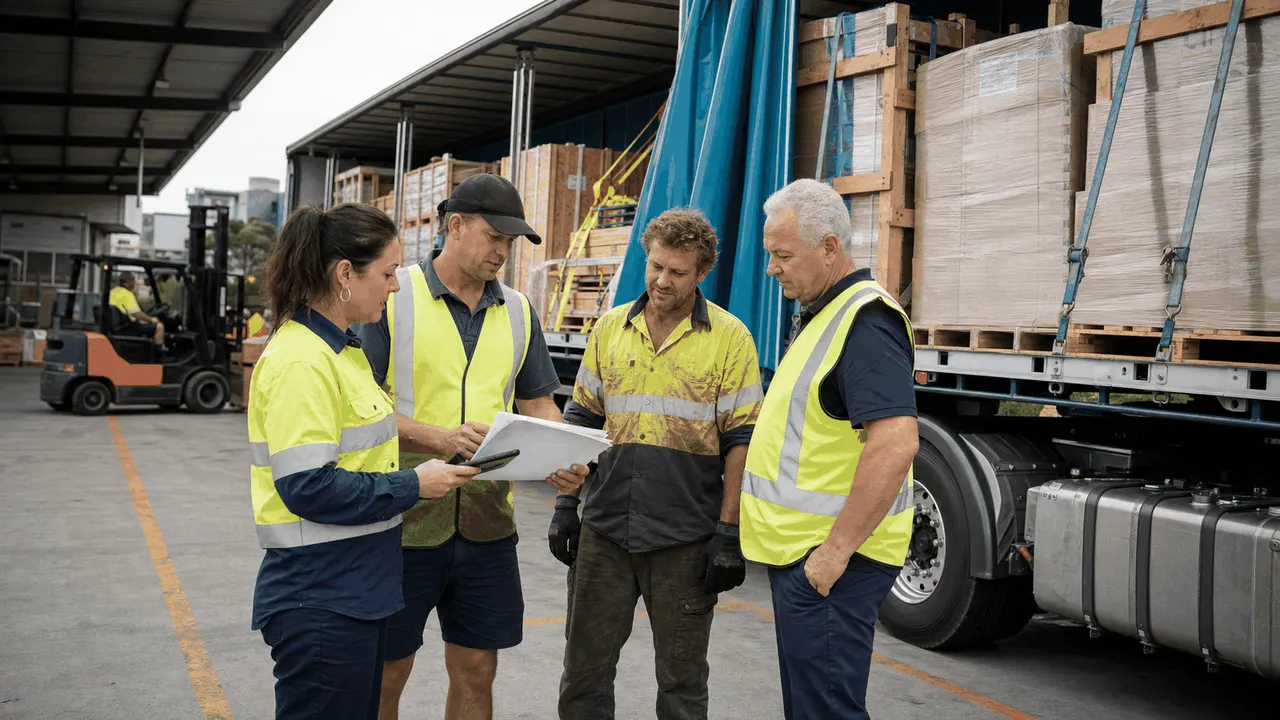
Unloading decisions can affect safety, scheduling, and responsibility.
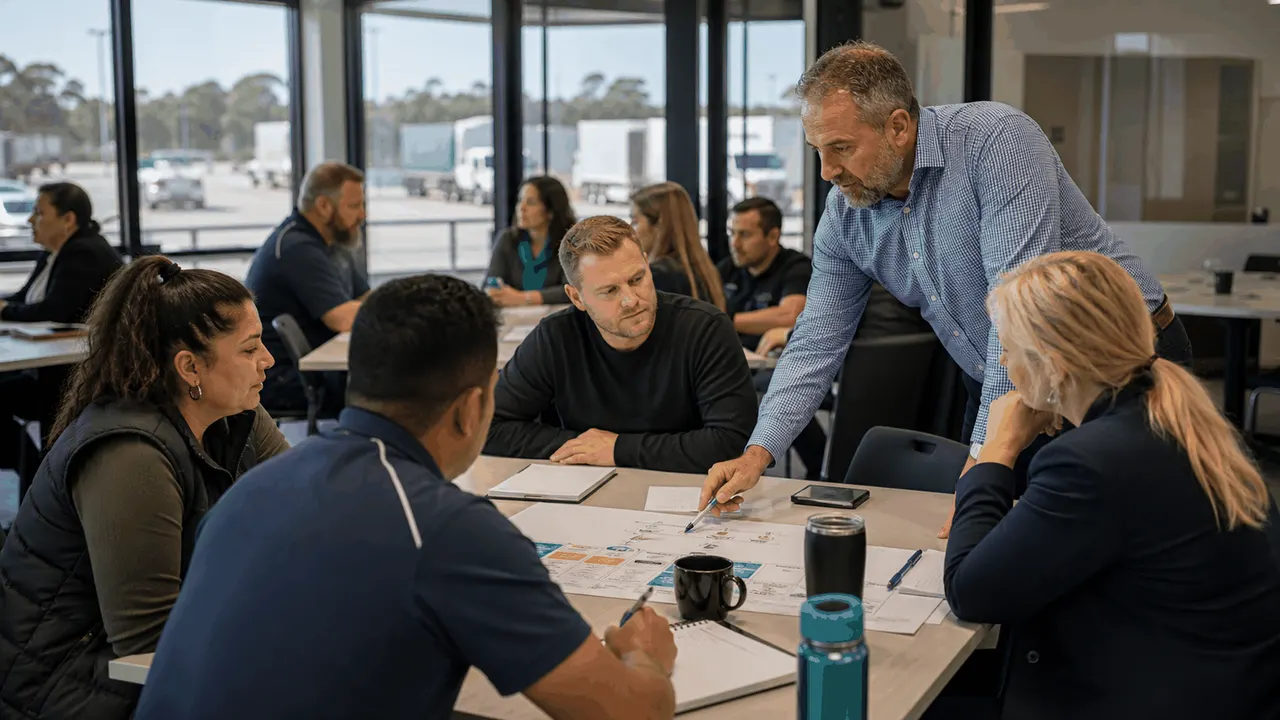
Managers need a clear view of gaps before audit or enforcement pressure arrives.

Contractor controls should be verified before the work starts.
Receiving windows, site rules, and unloading delays can all shape the transport task.
Consignors
Freight terms, delivery windows, and KPIs must not push drivers into speed, fatigue, or mass breaches.
Consignees
Receiving rules, site access, and unloading delays are CoR controls that need to be set and evidenced.
Loaders
Mass, dimension, and load restraint decisions need documented checks, not assumptions.
Managers
Executives and managers need due-diligence evidence that the Safety Management System is actually working.
Why your enterprise needs a Chain of Responsibility policy
Safety on Australian roads starts with shared accountability across the supply chain
A Chain of Responsibility (CoR) policy is a structured framework that defines the roles, responsibilities, and safety obligations of every party in a transport supply chain. It is a practical necessity for Australian transport businesses to comply with the Heavy Vehicle National Law (HVNL) and workplace safety legislation, ensuring shared accountability for road safety.
Implementing a comprehensive CoR policy is no longer optional — it is essential. The policy is not merely a document; it is a structured way to bring your organisation into compliance with transport safety regulations and ensure the highest levels of safety and operational integrity.
The framework defines the roles and responsibilities of each party in the transport and logistics cycle, laying the foundation for accountability. A well-defined policy brings transparency and fairness to the process, helping businesses delegate and follow through with responsibilities so that everyone — from top management to front-line drivers — understands their role in maintaining road safety.
To understand the broader obligations that a CoR policy supports, see About Chain of Responsibility | MAEZ.
Accountability and responsibility: the core of a CoR policy
Clear roles reduce confusion and create a culture of integrity
A CoR policy defines who is responsible for what at every stage of the transport task. This clarity reduces confusion, prevents gaps in accountability, and helps each person understand how their actions affect overall safety and compliance.
Key elements a well-structured CoR policy should cover
- Defined roles for each party in the chain — consignors, consignees, loaders, packers, drivers, schedulers, and managers
- Clear responsibility for speed, fatigue, mass, dimension, load restraint, and vehicle standards
- Documented processes for identifying and reporting risks
- Mechanisms for resolving conflicts over scheduling pressures or unsafe requests
By making responsibilities explicit, the policy shifts the conversation from blame to prevention. It helps teams focus on what each person can control and influence within the transport activity.
Under the HVNL, a duty cannot be transferred to another person, and each party's responsibility is proportionate to their capacity to influence and control the transport activity. This means a policy must reflect real operational influence — not just contractual titles.
A risk management powerhouse
Identify, address, and prevent risks before they escalate
In the fluid landscape of transport and logistics, unexpected challenges are par for the course. A CoR policy plays a pivotal role in managing those risks effectively by providing clear guidelines to ensure compliance with health and safety standards.
For instance, a loading manager guarantees vehicles are not overloaded and all loads are properly restrained, reducing accident risk. Beyond individual roles, the policy helps businesses handle unexpected incidents through a structured approach to identifying and addressing risks.
What a structured risk approach includes
- Regular audits to surface hidden compliance gaps
- Performance tracking through analytics and reporting
- Contingency planning for incidents and breaches
- Proactive schedule adjustments to remove speeding pressure
Consider a logistics operator that rolled out a CoR policy and began internal audits. An audit revealed a pattern of delivery delays — a known risk factor that can lead to speeding. Through schedule adjustments and flexible delivery windows, they resolved the issue before it escalated, demonstrating the preemptive power of an effective CoR policy.
For a structured risk review tailored to your operation, explore Chain of Responsibility Consulting | Practical CoR Risk Review | MAEZ.
Legal compliance and protection
A CoR policy is your shield against enforcement action and reputational damage
Every business in the supply chain that carries out a transport task — regardless of its size or role — is legally obliged to comply with the Heavy Vehicle National Law (HVNL). Violating these rules can lead to severe penalties, including fines and imprisonment, and can tarnish a business's reputation, leading to financial losses and damaged client relationships.
The HVNL establishes a primary duty: each party in the chain of responsibility must ensure, so far as is reasonably practicable, the safety of transport activities relating to a heavy vehicle. A duty cannot be transferred to another person, and each party's responsibility is proportionate to their capacity to influence and control the transport activity.
A CoR policy offers a clear framework for ensuring that every operation within your business meets the required standards, reducing the risk of non-compliance. It provides documented evidence that your business has taken reasonable steps to manage safety.
Advantages beyond legal compliance
- Demonstrating a strong commitment to safety, efficiency, and integrity
- Improving your reputation in the marketplace and building customer trust
- Giving you a competitive edge when bidding for contracts, as many clients now demand evidence of comprehensive safety and compliance measures
For a deeper look at what duty holders need to understand, see Chain of Responsibilities: What Australian HVNL Duty Holders Need to Understand.
Building stronger teams and effective communication
A CoR policy unites departments, clarifies expectations, and fosters collaboration
A well-defined CoR policy goes beyond managing risks — it has the power to unite your team and promote a cohesive work environment. By establishing clear roles and responsibilities, the policy reduces confusion and inefficiencies, increasing the strength of both your business and your team.
It encourages each member to understand their unique contribution to the chain of responsibility, promoting a sense of individual accountability and teamwork. The policy also stimulates open, transparent communication between various departments, roles, and management levels, helping to bridge gaps that may exist.
How open communication strengthens your operation
- Clarifies expectations across the supply chain
- Encourages the sharing of ideas, feedback, and concerns
- Strengthens team dynamics and fosters a culture of collaboration
- Allows team members to learn together and develop a mutual understanding of operational processes
When a team collaboratively works towards a common safety goal, it becomes more resilient, adaptable, and capable of responding effectively to unforeseen circumstances.
Regular training and policy updates
Staying ahead of regulatory change requires ongoing education and policy review
In the constantly changing world of transport and logistics, continuous education and policy updates are essential. When it comes to CoR, ignorance is not a defence — it can be a liability. Comprehensive, interactive training demystifies CoR, making it accessible and understandable for all stakeholders.
Training programs should equip your team with up-to-date knowledge so they feel confident and capable of managing their responsibilities, with emphasis on each individual's role in the chain. But training is only one piece of the puzzle — as regulations and industry practices evolve, so should your CoR policy.
What ongoing policy maintenance looks like
- Regular policy reviews to identify gaps or outdated elements
- Staying informed about HVNL updates and industry best practices
- Aligning the policy with the latest legal requirements
- Revising procedures when business operations or supply chain relationships change
With the HVNL 2026 changes on the horizon, operators should assess their training readiness now. See HVNL 2026 Changes and Chain of Responsibility Training Readiness for a practical guide. For managers and executives, Chain of Responsibility Training for Executives and Managers covers the leadership obligations that drive a compliant culture.
Get your team trained in Chain of Responsibility
Start with a single seat or train your whole team
If you are unsure of your requirements under the HVNL, online training is a practical place to start. You can purchase as little as one seat, or arrange bulk training for your team. Don't let a fine ruin your business or your life — learn about CoR today and build the evidence you need to demonstrate a proactive safety culture.
- Explore Chain of Responsibility Training for Australian Operators | MAEZ
- Take the Chain of Responsibility Course | Practical CoR Training
- Browse more resources on the MAEZ Insights page
Ready to talk? Contact MAEZ for a practical review of your controls, evidence, training, and SMS gaps.
How MAEZ works
Find the gaps. Fix the system. Prove the controls.
MAEZ helps transport operators deal with the compliance risk they already know is there. We help get the Safety Management System in order, protect NHVAS accreditation, reduce fine exposure, and connect training, evidence, and CoRGuard workflows where software is needed.
Find
Identify what is exposed before an auditor or regulator does.
Fix
Build the SMS controls around how the transport business actually runs.
Prove
Use CoRGuard where records, reminders, diaries, audits, and evidence need structure.
From advice to evidence
From MAEZ advice to a working Safety Management System
Advisory work should leave a practical implementation trail. These examples show how CoRGuard supports records, fatigue and driver diary checks, maintenance, audits, document control, inductions, corrective actions, and evidence review after MAEZ identifies the gaps.
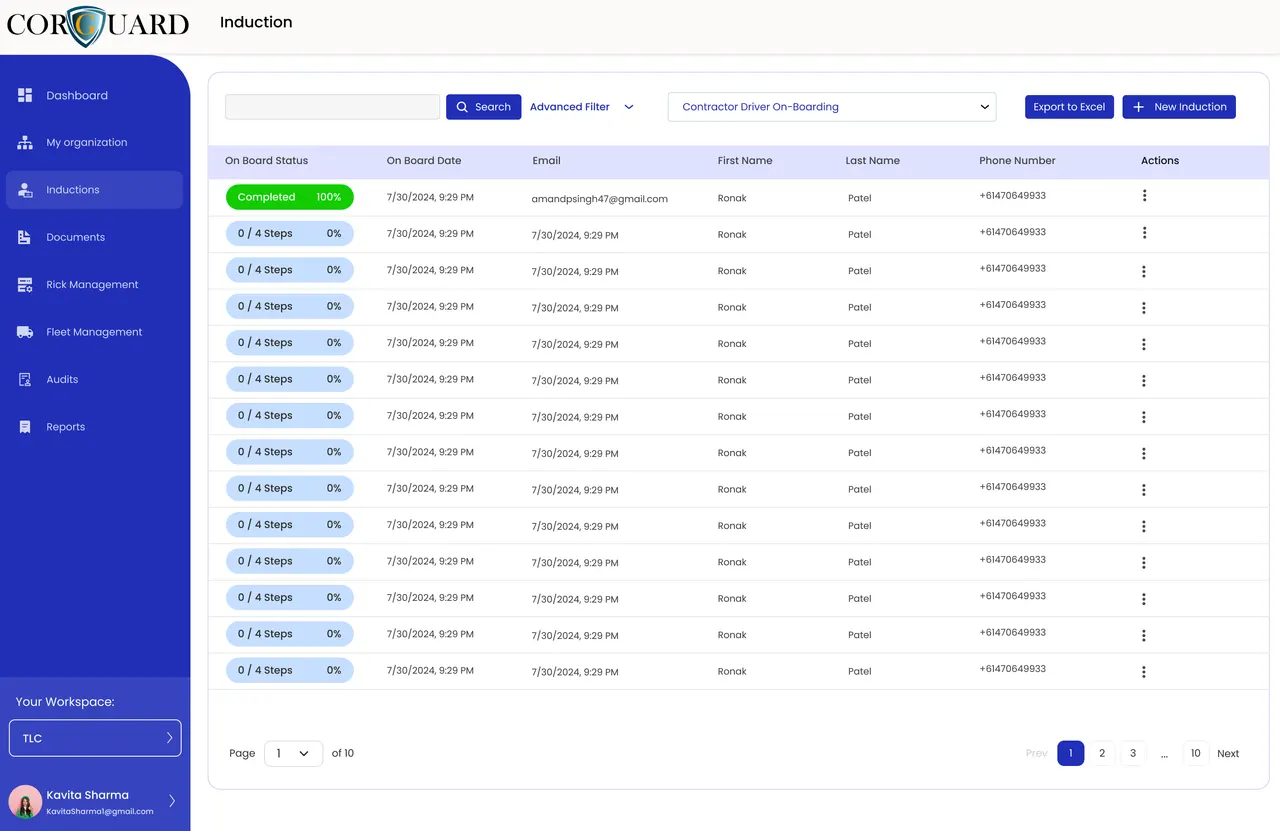
Training records
Connect training completion from cortraining.com.au to evidence and follow-up.
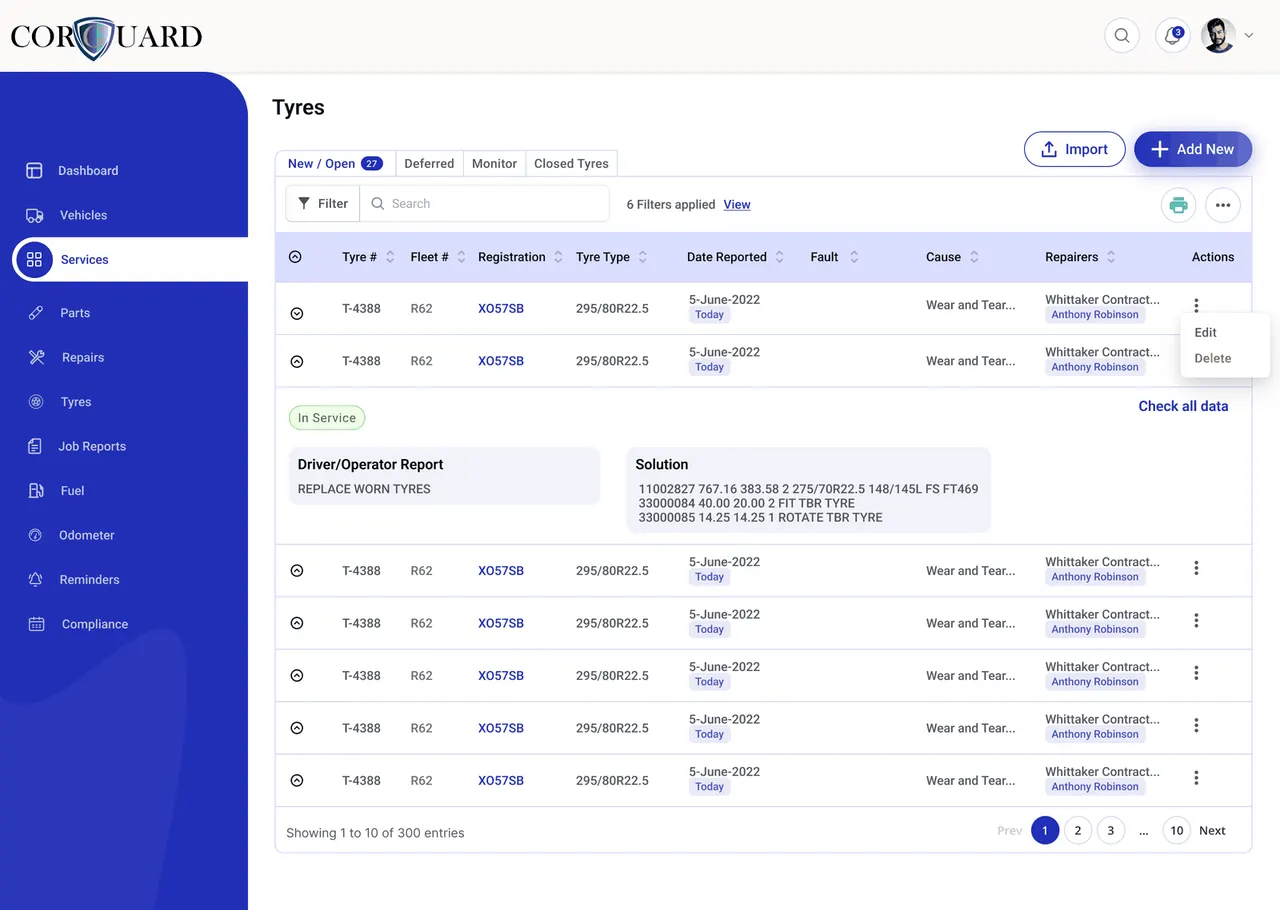
Driver diary checks
Connect fatigue and driver diary review back to manager visibility.
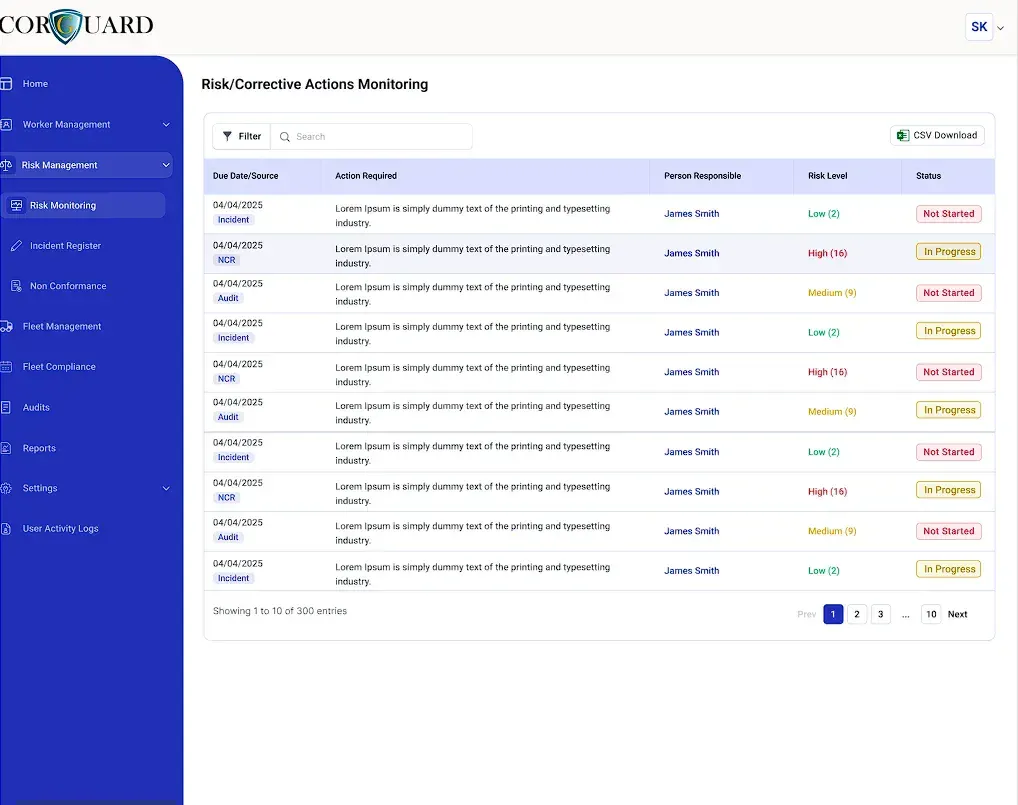
Corrective actions
Turn audit findings, hazards and incidents into tracked actions.
Keep exploring
Related Chain of Responsibility reading
MAEZ insight
Would You Sign Off A Cheque For $18m?
A large grain manufacturer was slugged with an $18m fine by the then RTA, for a total of 330 breaches or individual offences, about $55K for each offence. The allegation was that the business which was accepting loads, were accepting loads grossly overloaded!
MAEZ insight
Responsibility; Who’s at fault in the Chain of Responsibility?
Late last week on the NSW Police FB blog, it reported that a transport company (Many people will know who) was caught with unsafe loads coming out of a major retailers distribution centre.
MAEZ insight
Trucks Crash Too
I know what you’re all possibly saying to yourself now. Something along the lines of, “We’re fine, we have our drivers sign a fitness to drive form”. Let me explain to you further, that this is not good enough, it won’t save you from a potential prosecution.
MAEZ insight
Spend Less on Fuel
Motormouth, the brand that has always tried to help us spend less on fuel has delivered a cool new app for everyone to use. The best part is though, you can choose whatever fuel you want, including Diesel.
MAEZ insight
The Root Cause & How To Get There
You had an incident and many things may have happened, but you need to work through each one in a RCA (root cause analysis) one by one.
MAEZ insight
Is CoR a pain for you? Here’s 5 quick tips to help you in your business today
Chain of Responsibility is fast becoming the next ‘Work Place Health and Safety’. It’s daunting, new and no-one seems to know what to do.
Frequently asked questions
Questions people ask about this topic
What is a Chain of Responsibility policy and why does an Australian transport business need one?
A Chain of Responsibility (CoR) policy is a structured framework that defines the roles, responsibilities, and safety obligations of every party in a transport supply chain. Australian transport businesses need one to comply with the Heavy Vehicle National Law (HVNL) and workplace safety legislation, ensure shared accountability for road safety, and provide documented evidence that reasonable steps have been taken to manage safety.
Can a Chain of Responsibility duty be transferred to another party under the HVNL?
No. Under the HVNL, a duty cannot be transferred to another person. Each party's responsibility is proportionate to their capacity to influence and control the transport activity, which means a CoR policy must reflect real operational influence rather than just contractual titles.
What roles should a Chain of Responsibility policy define?
A CoR policy should define roles for consignors, consignees, loaders, packers, drivers, schedulers, and managers. It should assign clear responsibility for speed, fatigue, mass, dimension, load restraint, and vehicle standards, along with documented processes for identifying and reporting risks.
How often should a Chain of Responsibility policy be reviewed?
A CoR policy should be reviewed regularly to identify gaps or outdated elements, aligned with the latest HVNL updates and legal requirements, and revised whenever business operations or supply chain relationships change. With the HVNL 2026 changes approaching, operators should assess their policy and training readiness now.
Is ignorance of Chain of Responsibility obligations a defence under the HVNL?
No. When it comes to Chain of Responsibility, ignorance is not a defence — it can be a liability. Comprehensive training equips teams with up-to-date knowledge so each person understands their role and can confidently manage their responsibilities within the transport activity.