
MAEZ insight
Mastering Chain of Responsibility: Top Best Practices
Discover best practices for the Chain of Responsibility design pattern, including handler interfaces, chain assembly, termination conditions, and common pitfalls to avoid.

Contractor controls should be verified before the work starts.

Receiving windows, site rules, and unloading delays can all shape the transport task.
Unloading decisions can affect safety, scheduling, and responsibility.

Managers need a clear view of gaps before audit or enforcement pressure arrives.
Consignors
Freight terms, delivery windows, and KPIs must not push drivers into speed, fatigue, or mass breaches.
Consignees
Receiving rules, site access, and unloading delays are CoR controls that need to be set and evidenced.
Loaders
Mass, dimension, and load restraint decisions need documented checks, not assumptions.
Managers
Executives and managers need due-diligence evidence that the Safety Management System is actually working.
What Is the Chain of Responsibility Pattern?
A behavioural design pattern for flexible, sequential request processing

The Chain of Responsibility pattern is a behavioural design pattern that enables sequential request processing through multiple handlers. Each handler contains logic to either process the request or forward it along the chain, creating flexible processing pipelines that adapt to changing business needs. This decouples senders from receivers by passing requests through a handler chain.
The sender does not need to know which specific handler will process the request — the chain determines that dynamically at runtime. Think of it like a supply chain approval process: a purchase request moves through supervisors until someone with authority approves it.
In a transport compliance context, the same principle applies: a request might pass through weight checks, dimension checks, and dangerous goods verification before proceeding. For more on how this maps to real-world transport duties, see About Chain of Responsibility.
Sequential processing brings clarity to complex workflows. Instead of one massive conditional block checking everything, separate handlers own specific concerns. This modularity makes systems easier to maintain and extend.
Core Components That Make the Pattern Work
Three essential elements form the foundation

Three essential elements form the foundation of this pattern:
- Handler interface — defines the contract, typically including a method to process the request and a method to set the next handler reference. This linking mechanism connects handlers together.
- Concrete Handlers — implement specific processing logic. Each handler decides whether to process the current request or pass control to the next handler in the sequence.
- Client — assembles and triggers the chain. The client does not know implementation details; it sends requests to the first handler and trusts the chain to route appropriately.
This separation of concerns enables flexible runtime configuration. A base handler class can implement common linking logic that concrete handlers inherit, reducing code duplication across handler implementations.
When This Pattern Solves Real Problems
Authentication, routing, and filtering pipelines benefit most
The pattern excels when you need dynamic processing paths where different request types trigger different handler sequences.
Authentication systems
Token validation happens first, session checking comes next, permission verification follows. Each handler addresses one security concern.
Support ticket routing
Basic queries go to tier one, technical issues escalate to tier two, critical incidents reach specialists. The chain directs each ticket to appropriate resources.
Request filtering in web applications
CORS checks happen early, rate limiting follows, input validation comes next. Each layer protects the system from specific threats.
Middleware systems like Express.js demonstrate this pattern in action, where each middleware layer can modify requests before passing them along. The same chain structure adapts to varying business scenarios without requiring conditional logic scattered throughout the codebase.
For Australian transport operators, understanding how duties cascade across parties in the supply chain is equally important. See Chain of Responsibilities: What Australian HVNL Duty Holders Need to Understand.
Building Handler Interfaces That Scale
Essential methods and request object design

Strong handler interfaces form the backbone of maintainable chains. Poor interface design leads to brittle implementations. Keep the interface minimal — include only essential methods that every handler needs. Type safety matters when defining request parameters; generic types or well-defined request objects prevent runtime errors and make handler responsibilities obvious.
Essential Methods Every Handler Needs
handle(request)— mandatory for all handlers. Contains core processing logic; receives the request object and determines whether to process it or forward it. Return types should indicate whether processing occurred or the request moved forward.setNext(handler)— required for chain assembly. Accepts another handler reference and stores it, creating the sequential connection between handlers.canHandle(request)— optional but improves clarity. Separates the decision logic from actual processing, making handler responsibilities more transparent.
Designing Request Objects for Flexibility
Request objects carry information through the chain. Include request type identifiers so handlers can determine relevance, and a priority level to help handlers decide whether they should process the request.
Avoid adding business logic to request objects — they should carry data, not behaviour. Keep them as simple data structures that handlers can inspect and modify. Consider immutability: handlers can read but not change original data, preventing unintended side effects as requests move through the chain.
Implementing Concrete Handlers Effectively
Single responsibility, clear boundaries, and pass-through decisions
Concrete handlers contain the actual business logic that processes requests. Start by identifying distinct processing steps — each step becomes a separate handler. Authentication, authorisation, validation, and transformation are common handler types.
Single Responsibility for Each Handler
Every handler should do one thing well. A validation handler only validates. A logging handler only logs. This focused approach makes handlers easier to test and maintain.
Resist the temptation to combine related logic. Separate handlers can be composed differently for various scenarios, while combined handlers lock you into specific sequences. Name handlers clearly: ValidationHandler, AuthenticationHandler, and LoggingHandler leave no ambiguity.
Processing Logic and Pass-Through Decisions
Handlers need clear criteria for processing decisions. Define explicit conditions that determine when a handler acts — ambiguous conditions create unpredictable behaviour.
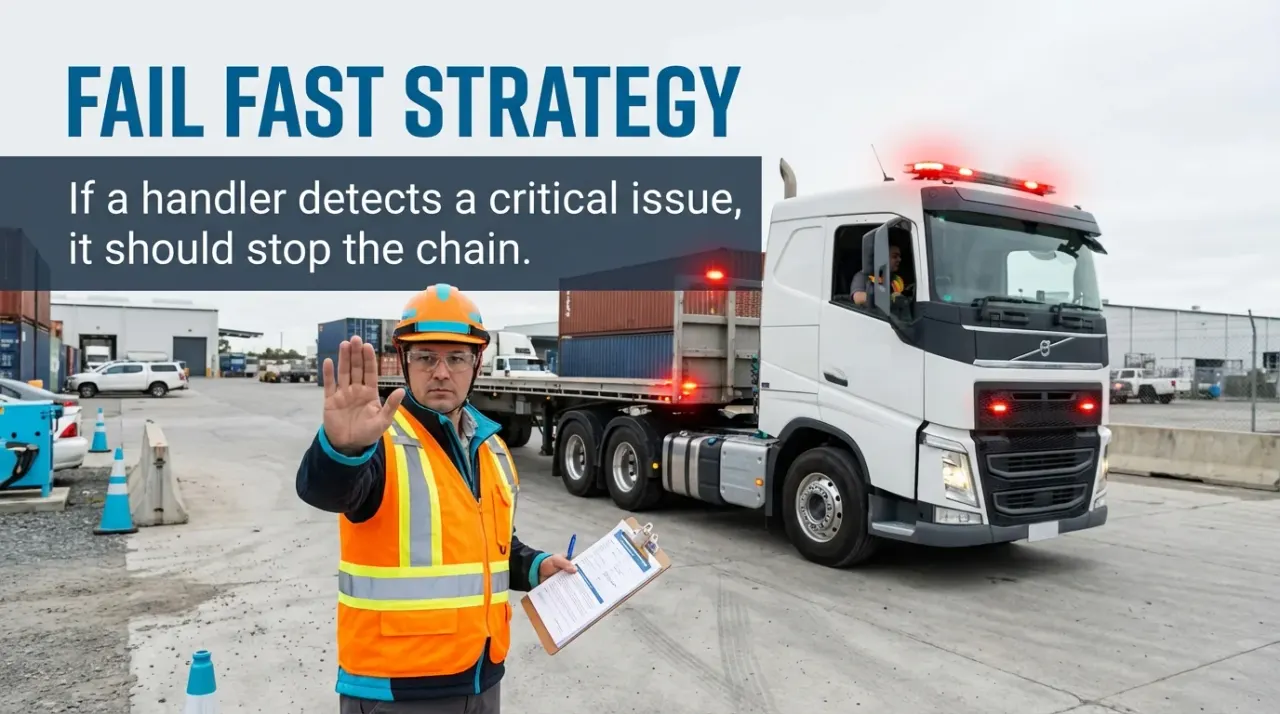
Implement fail-fast patterns: if a handler detects a critical issue, stop the chain. Do not pass invalid requests to subsequent handlers. Return meaningful results indicating whether processing succeeded, failed, or the request continued.
Check if the handler can process the current request type, execute processing logic if conditions match, then return results or pass control to the next handler. Log decisions for debugging and monitoring purposes. Consider timeout mechanisms for long-running handlers — requests should not hang indefinitely. Set reasonable limits and provide fallback behaviour.
Assembling Chains for Maximum Flexibility
Chain order, static vs dynamic configuration, and termination
Chain assembly determines processing order and system behaviour. The sequence matters significantly — order handlers from most restrictive to most permissive. Build chains programmatically rather than hard-coding sequences. Configuration files or builder patterns enable runtime adjustments that adapt to changing requirements.
Common patterns place authentication first (security checks before expensive operations), validation next, and processing last.
Static vs Dynamic Chain Configuration
Static chains work well for predictable workflows. You define the sequence once at application startup — a straightforward approach for simple scenarios.
Dynamic chains adapt to runtime conditions. Different user roles might trigger different handler sequences; request type could determine which handlers participate. Factory patterns help manage dynamic chain creation by examining request properties and assembling appropriate sequences.
Cache commonly used chains. Do not rebuild the same sequence repeatedly — store pre-assembled chains and reuse them to improve performance.
Managing Chain Termination Conditions
Chains need clear ending conditions. Success might terminate the chain early; failure could stop processing immediately. Define these conditions explicitly.
The last handler should always have defined behaviour: either process the request or return a meaningful error. Never leave requests unhandled. Consider default handlers at chain end that catch requests no specialised handler processed, preventing silent failures.
Avoiding Common Implementation Pitfalls
Long chains, circular references, and missing links
Several pitfalls recur in Chain of Responsibility implementations. Recognising them early saves significant debugging time.
Long Chains Create Performance Problems
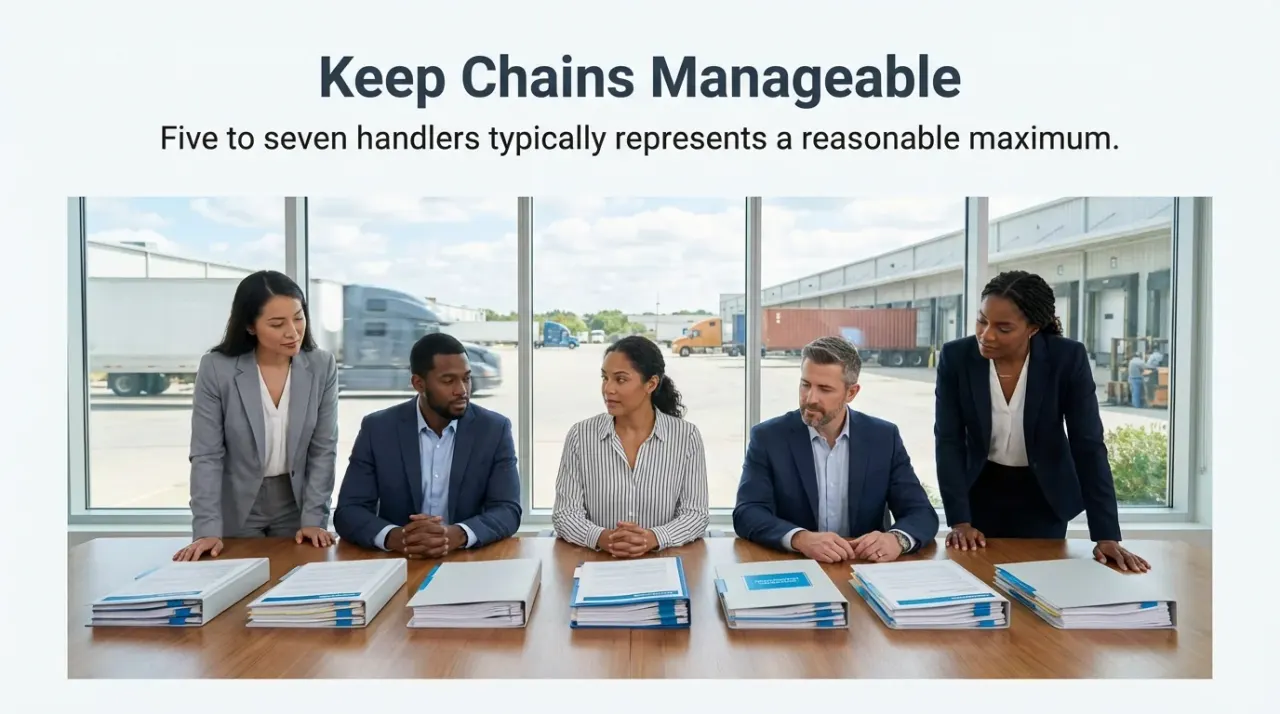
Every additional handler adds latency. Keep chains focused — five to seven handlers typically represents a reasonable maximum. Beyond that, latency and debugging difficulty increase disproportionately.
Circular References Cause Infinite Loops
Handler A passes to Handler B, which passes back to Handler A. Track visited handlers to prevent cycles. Without cycle detection, a single misconfigured link can hang the entire system.
Missing Next Handler References Break Chains
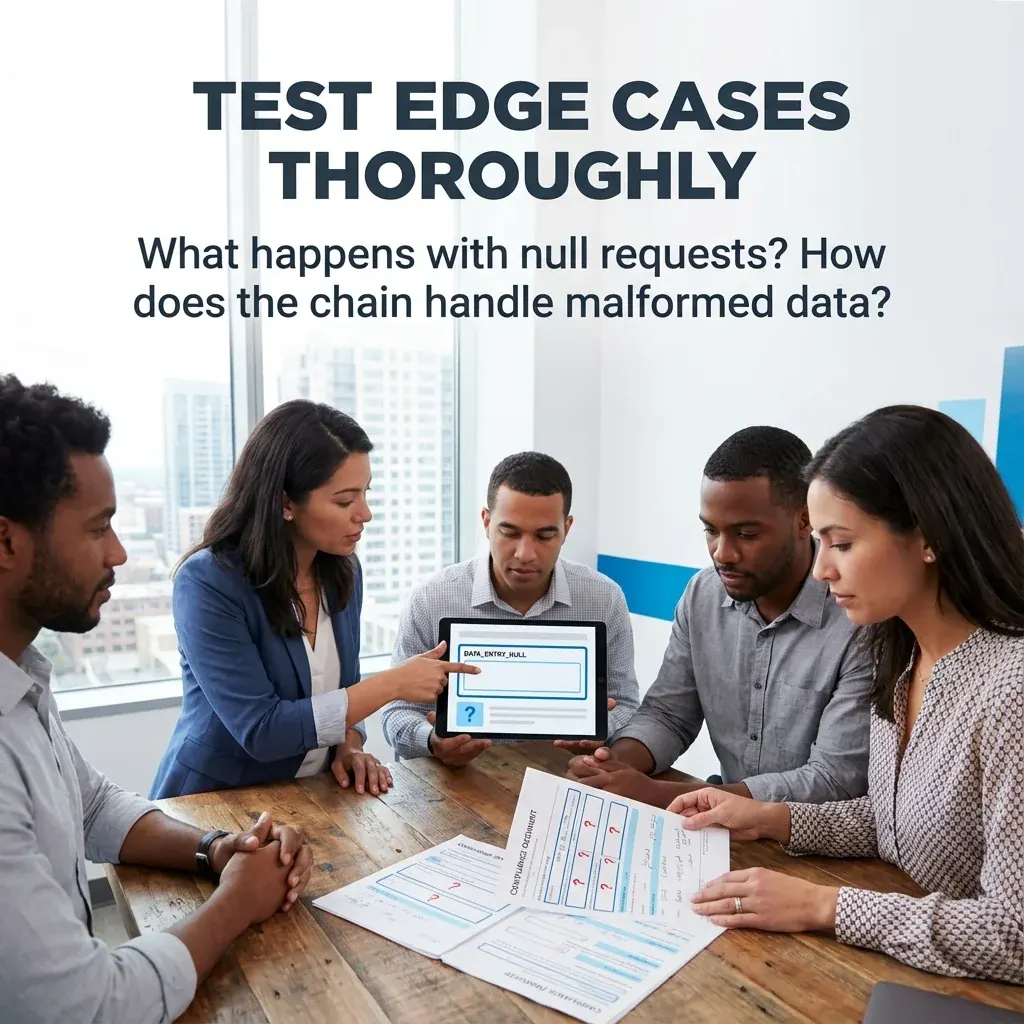
Always initialise the next handler field. Null references cause runtime errors when handlers try to pass requests forward. Defensive checks at each handler can catch this, but proper initialisation at assembly time is the better practice.
For more practical guidance on structuring compliance systems that scale, explore MAEZ Insights or Chain of Responsibility Consulting.
How MAEZ works
Find the gaps. Fix the system. Prove the controls.
MAEZ helps transport operators deal with the compliance risk they already know is there. We help get the Safety Management System in order, protect NHVAS accreditation, reduce fine exposure, and connect training, evidence, and CoRGuard workflows where software is needed.
Find
Identify what is exposed before an auditor or regulator does.
Fix
Build the SMS controls around how the transport business actually runs.
Prove
Use CoRGuard where records, reminders, diaries, audits, and evidence need structure.
From advice to evidence
From MAEZ advice to a working Safety Management System
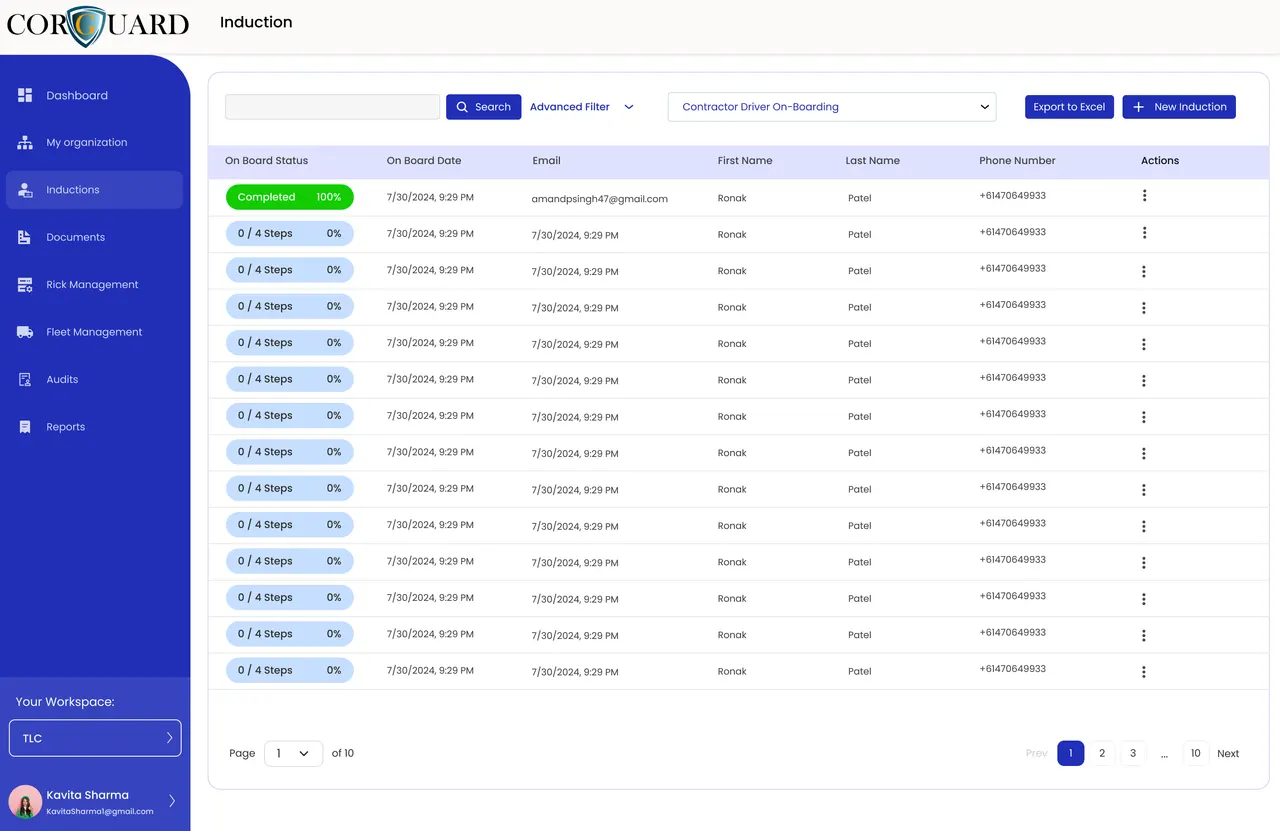
Advisory work should leave a practical implementation trail. These examples show how CoRGuard supports records, fatigue and driver diary checks, maintenance, audits, document control, inductions, corrective actions, and evidence review after MAEZ identifies the gaps.
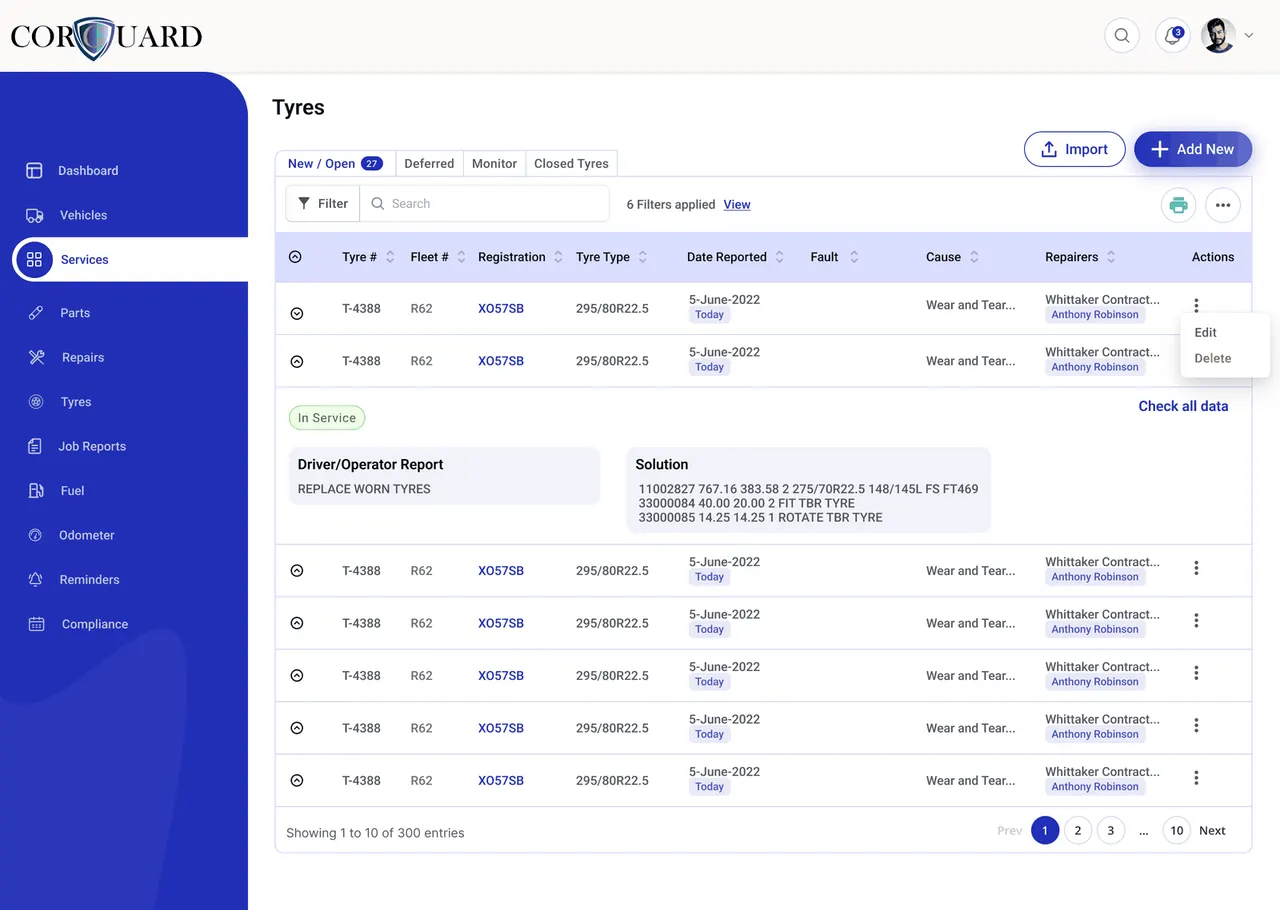
Training records
Connect training completion from cortraining.com.au to evidence and follow-up.
Driver diary checks
Connect fatigue and driver diary review back to manager visibility.
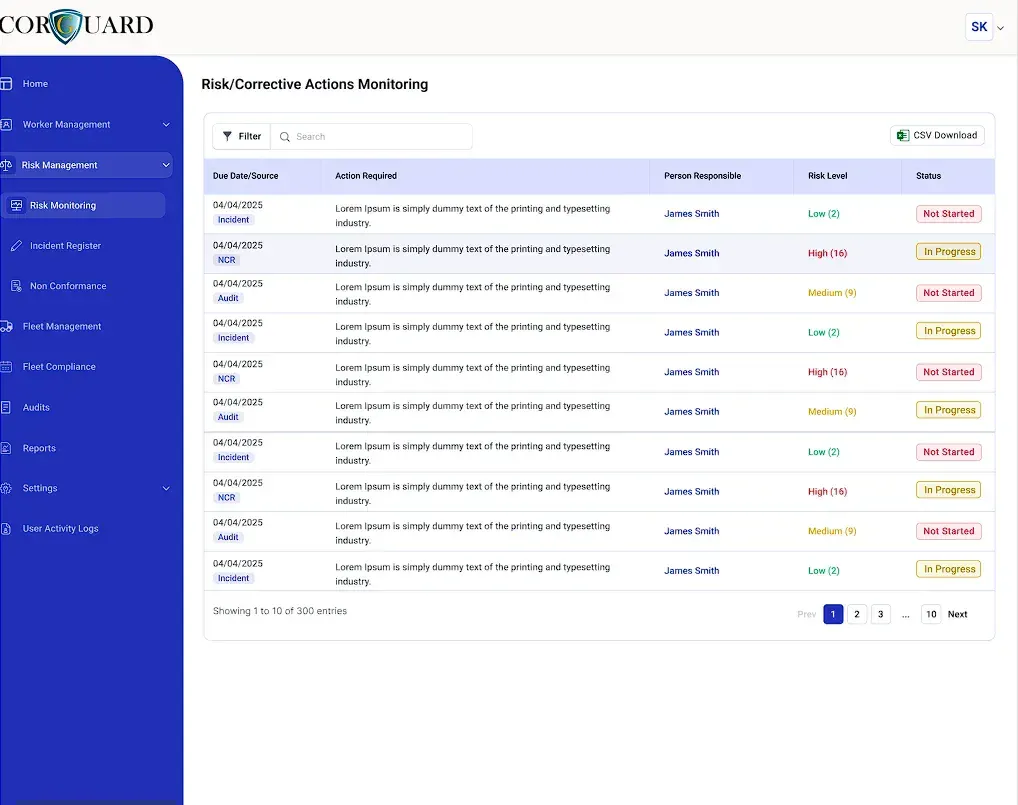
Corrective actions
Turn audit findings, hazards and incidents into tracked actions.
Keep exploring
Related Chain of Responsibility reading
MAEZ insight
Understanding HVNL: A Guide for Transport Operators
Discover HVNL explained for transport operators to ensure compliance with Australia’s heavy vehicle regulations, including fatigue and safety standards.
MAEZ insight
Essential HVNL Compliance Checklist for Transport Operators
Ensure your transport operations meet NHVR standards with our essential HVNL compliance checklist. Streamline safety and regulatory compliance effortlessly.
MAEZ insight
Essential Tools for an Effective Safety Management System
Discover essential Safety Management System tools to enhance compliance, identify hazards, and build robust safety cultures in your organization.
MAEZ insight
Effective Strategies for Mitigating Supply Chain Risks
Explore effective supply chain risk mitigation strategies to enhance resilience, efficiency, and reduce business disruptions with structured frameworks.
MAEZ insight
Understanding the Importance of ISO 45001 for Workplace Safety
Explore the importance of ISO 45001 in enhancing workplace safety by preventing injuries and promoting a proactive health management approach.
MAEZ insight
Effective Strategies for Managing Supply Chain Risks
Learn how to manage supply chain risks effectively with structured strategies. Discover vulnerabilities and safeguard operations from disruptions.
Frequently asked questions
Questions people ask about this topic
What is the Chain of Responsibility design pattern?
The Chain of Responsibility pattern is a behavioural design pattern that enables sequential request processing through multiple handlers, where each handler either processes the request or forwards it along the chain. This decouples senders from receivers and creates flexible processing pipelines.
What are the core components of the Chain of Responsibility pattern?
The three core components are the handler interface (which defines the contract for processing and linking), concrete handlers (which implement specific processing logic), and the client (which assembles and triggers the chain).
How do you prevent infinite loops in a Chain of Responsibility implementation?
To prevent infinite loops, track visited handlers and implement cycle detection. A single misconfigured link where Handler A passes to Handler B and back can hang the entire system without proper safeguards.
What is the recommended maximum length for a Chain of Responsibility?
Keep chains focused to around five to seven handlers. Beyond that, latency and debugging difficulty increase disproportionately, as every additional handler adds processing overhead.
When should you use the Chain of Responsibility pattern?
The pattern excels when you need dynamic processing paths where different request types trigger different handler sequences, such as authentication systems, support ticket routing, and request filtering in web applications.