
MAEZ insight
Mastering HVNL Compliance: Best Practices Explained
Practical guide to HVNL compliance best practices for Australian transport operators. Understand your primary duty, Chain of Responsibility, and what 'reasonably practicable' means.
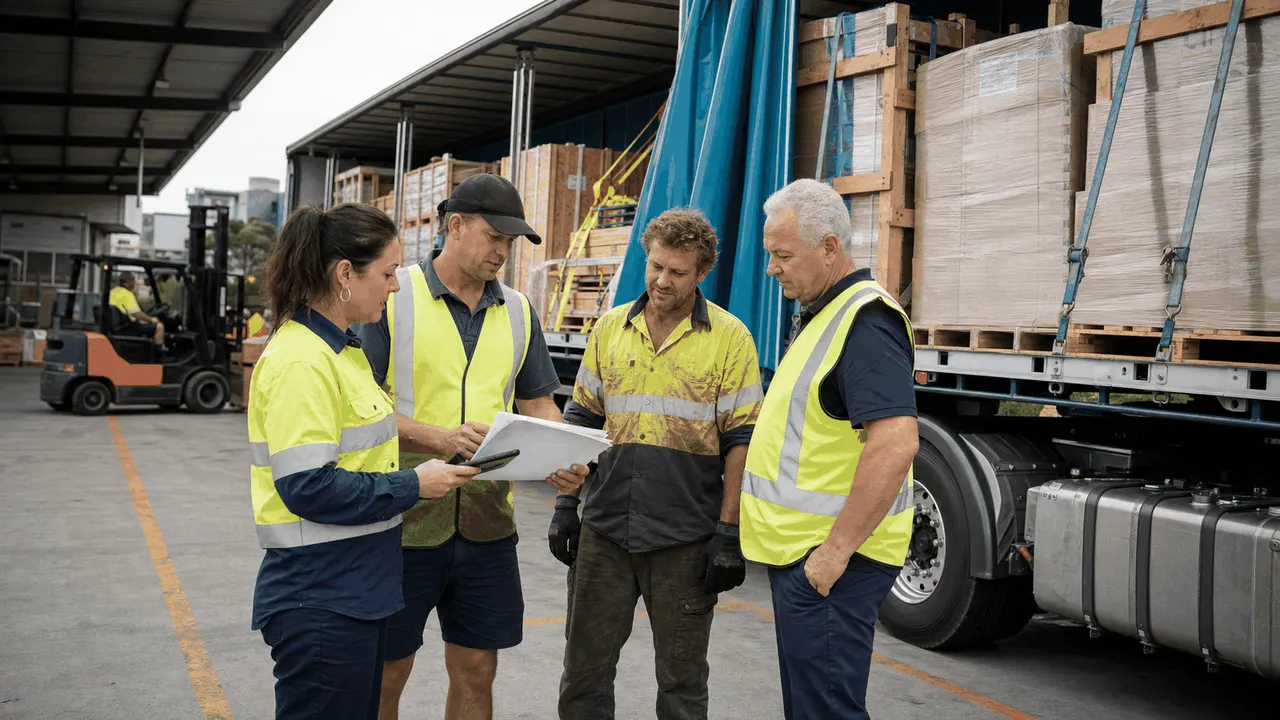
Unloading decisions can affect safety, scheduling, and responsibility.

Managers need a clear view of gaps before audit or enforcement pressure arrives.

Contractor controls should be verified before the work starts.
Receiving windows, site rules, and unloading delays can all shape the transport task.
Consignors
Freight terms, delivery windows, and KPIs must not push drivers into speed, fatigue, or mass breaches.
Consignees
Receiving rules, site access, and unloading delays are CoR controls that need to be set and evidenced.
Loaders
Mass, dimension, and load restraint decisions need documented checks, not assumptions.
Managers
Executives and managers need due-diligence evidence that the Safety Management System is actually working.
What does HVNL compliance really mean?
Moving beyond the checkbox to systems that actually work

HVNL compliance best practices mean understanding your primary duty under the Heavy Vehicle National Law, implementing systems that make compliance measurable, and ensuring every party in your supply chain accepts their legal responsibility for safety. The framework, administered by the NHVR, is not optional and affects far more people than just drivers.
After 25 years working across supply chains in Australia and the UK, I've seen businesses struggle with HVNL compliance because they treat it as a legal checkbox. That approach fails. The businesses that thrive understand Chain of Responsibility compliance as operational improvement, not regulatory burden.
The difference between meeting your obligations and facing prosecution often comes down to documentation, systems thinking, and shared accountability across your transport activities.
Key principles
- Compliance is a system, not a one-off task
- Every party in the supply chain shares responsibility
- Documentation connects business practices to safety outcomes
- Good intentions are not enough — you need evidence
Understanding the HVNL framework
A single national law covering five core areas of heavy vehicle safety
The HVNL governs vehicles over 4.5 tonnes gross vehicle mass across most Australian jurisdictions. It replaced multiple state-based systems with a single national framework designed to improve road safety and operational consistency.
Before the HVNL, operators crossing state borders faced different rules, permits, and enforcement approaches. The national law simplified this by establishing consistent standards across participating jurisdictions. The NHVR administers the law, develops policies, approves accreditation schemes, and works with industry to improve safety outcomes.
The law covers more than just driving rules. It addresses five main areas:
- Fatigue management — work and rest hours
- Mass, dimension, and loading — requirements for vehicle loads
- Vehicle standards — roadworthiness and maintenance
- Speed compliance — enforcement and monitoring
- Chain of Responsibility — duties for all parties in the supply chain
Each component connects to your primary duty under the CoR provisions. Your compliance approach must address all five areas systematically, not selectively.
Why Chain of Responsibility matters for your business
Shared responsibility across every party who influences transport safety
CoR provisions extend legal duties beyond drivers to other parties in the road transport supply chain. Schedulers, consignors, consignees, loaders, and operators can all face prosecution for breaches they influence or fail to prevent.
The concept recognises that drivers often face pressure from business practices beyond their control. Unrealistic delivery schedules, poor loading practices, or inadequate vehicle maintenance create risks that drivers alone can't mitigate. CoR holds the entire supply chain accountable.
Traditional enforcement focused on the driver at the roadside. But if your scheduler creates impossible timeframes, the driver faces a choice: break the law or lose their job. CoR acknowledges this reality and distributes legal responsibility to parties who control the conditions.
What CoR compliance requires
- Examining contracts, systems, and communications
- Documented processes showing how you eliminate or minimise safety risks
- Ensuring deadlines don't create fatigue breaches or speeding incentives
- Cultural change where tight deadlines have historically been normalised
For practical support, explore CoR consulting or CoR training options.
Your primary duty under the HVNL
An absolute obligation you can't contract out of
Your primary duty is to ensure the safety of your transport activities, so far as is reasonably practicable. This applies if you're an operator, scheduler, consignor, consignee, loader, packer, or any other party in the Chain of Responsibility.
The duty is absolute, meaning it exists regardless of contracts or commercial arrangements. You can't contract out of it or claim someone else is responsible. The primary duty requires you to eliminate or minimise public risks arising from your transport activities — including risks to other road users, pedestrians, and anyone affected by your heavy vehicle operations.
Transport activities cover far more than driving. They include vehicle maintenance, loading and unloading, route planning, scheduling, driver training, fatigue management, and mass compliance. If your business decisions influence any of these areas, you have compliance obligations.
Demonstrating your primary duty
Meeting your primary duty requires documented systems, not good intentions. You need evidence showing:
- Risk identification processes for your transport activities
- Controls implemented to eliminate or minimise identified risks
- Monitoring systems to verify control effectiveness
- Review processes to improve your compliance approach
Your documentation should connect business practices to safety outcomes. If a prosecutor questions your compliance, you need evidence showing what you did, when you did it, and how you verified effectiveness.
What 'reasonably practicable' actually means
Matching your compliance effort to the level of risk
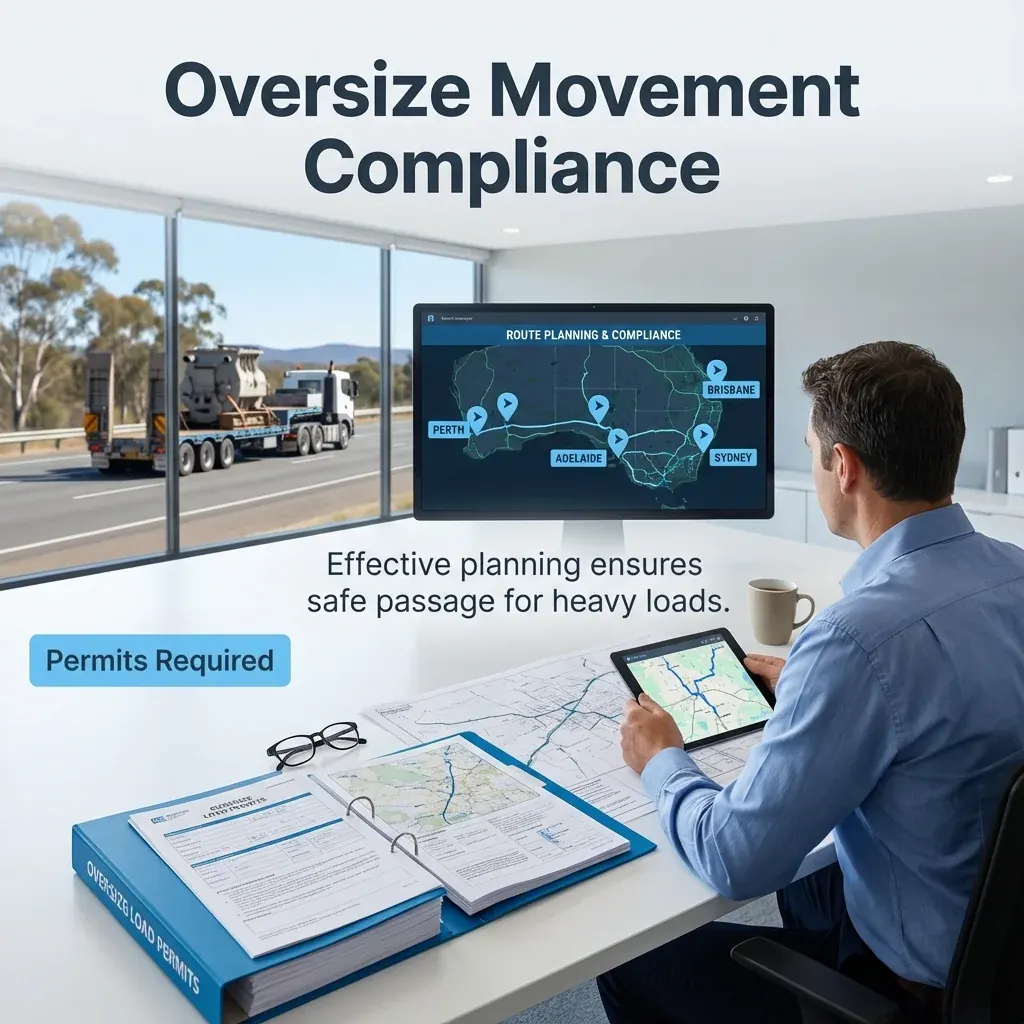
Reasonably practicable means what you can feasibly do considering available knowledge, risks, and resources. It's not perfection, but it's not minimal effort either. The standard recognises that businesses face constraints while maintaining high safety expectations.
Courts assess reasonably practicable by examining the likelihood of risk occurring, the potential harm if it does occur, what you knew or should have known about the risk, available control measures and their effectiveness, and the cost of implementing controls relative to risk reduction.
Start by identifying your specific risks. A business running overnight interstate routes faces different fatigue risks than one doing local metro deliveries. Your controls should match your actual operations, not generic templates.
Documenting your decisions
For each identified risk, document available control options. If multiple controls exist, implement the most effective option you can reasonably resource. Cost alone doesn't exempt you, especially if the risk is severe and the control is well-established industry practice.
If a control costs $10,000 but prevents a risk likely to cause death or serious injury, that's probably reasonably practicable regardless of business size. Your compliance approach must show you understood the risk, considered options, and implemented controls that match the risk level. For deeper insight, see our guide on using a chartered risk lens to close CoR gaps.
Who needs to comply: parties in the Chain of Responsibility
If you influence transport safety, you have duties
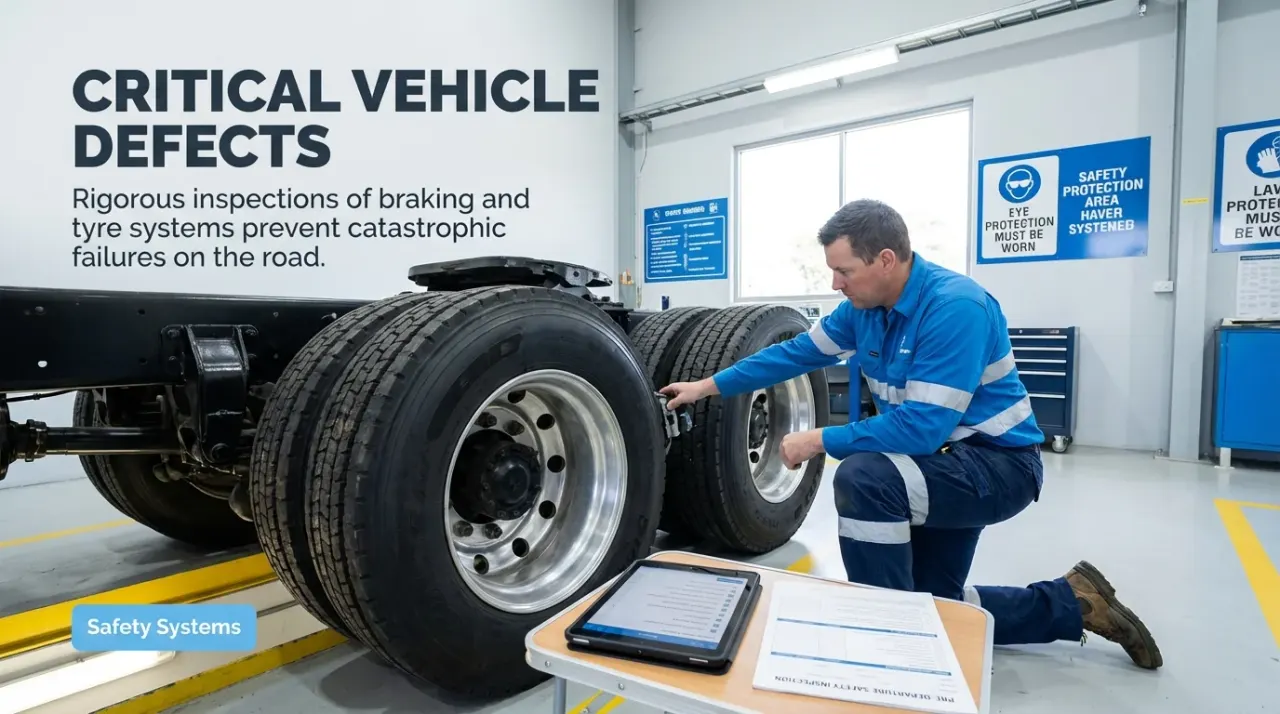
CoR obligations apply to any party whose actions or inactions affect heavy vehicle safety. The HVNL defines specific roles, but the key principle is simple: if you influence transport safety, you have duties.
Operators
The Draft Master Code recognises owner-drivers as operators, along with businesses that operate heavy vehicles under their direction. Operators have the most extensive obligations, including vehicle maintenance, driver management, and compliance system implementation. If you control when, where, and how a heavy vehicle is used, you're likely an operator.
Schedulers
Anyone who determines delivery timeframes or influences driver schedules is a scheduler. This includes freight coordinators, dispatch managers, and customer service teams who commit to delivery times. Your scheduling practices must allow compliance with fatigue rules and speed limits. If your systems create unrealistic timeframes, you share responsibility for resulting breaches.
Consignors and consignees
Consignors send goods. Consignees receive them. Both parties influence loading practices, booking systems, and delivery requirements. Receiving windows, site rules, and unloading delays can all shape the transport task and create pressure downstream.
To understand how these roles interact in practice, see our guide on Chain of Responsibilities for Australian HVNL duty holders, or explore MAEZ's CoR consulting and training options. You can also contact MAEZ for a practical review of your compliance gaps.
How MAEZ works
Find the gaps. Fix the system. Prove the controls.
MAEZ helps transport operators deal with the compliance risk they already know is there. We help get the Safety Management System in order, protect NHVAS accreditation, reduce fine exposure, and connect training, evidence, and CoRGuard workflows where software is needed.
Find
Identify what is exposed before an auditor or regulator does.
Fix
Build the SMS controls around how the transport business actually runs.
Prove
Use CoRGuard where records, reminders, diaries, audits, and evidence need structure.
From advice to evidence
From MAEZ advice to a working Safety Management System
Advisory work should leave a practical implementation trail. These examples show how CoRGuard supports records, fatigue and driver diary checks, maintenance, audits, document control, inductions, corrective actions, and evidence review after MAEZ identifies the gaps.
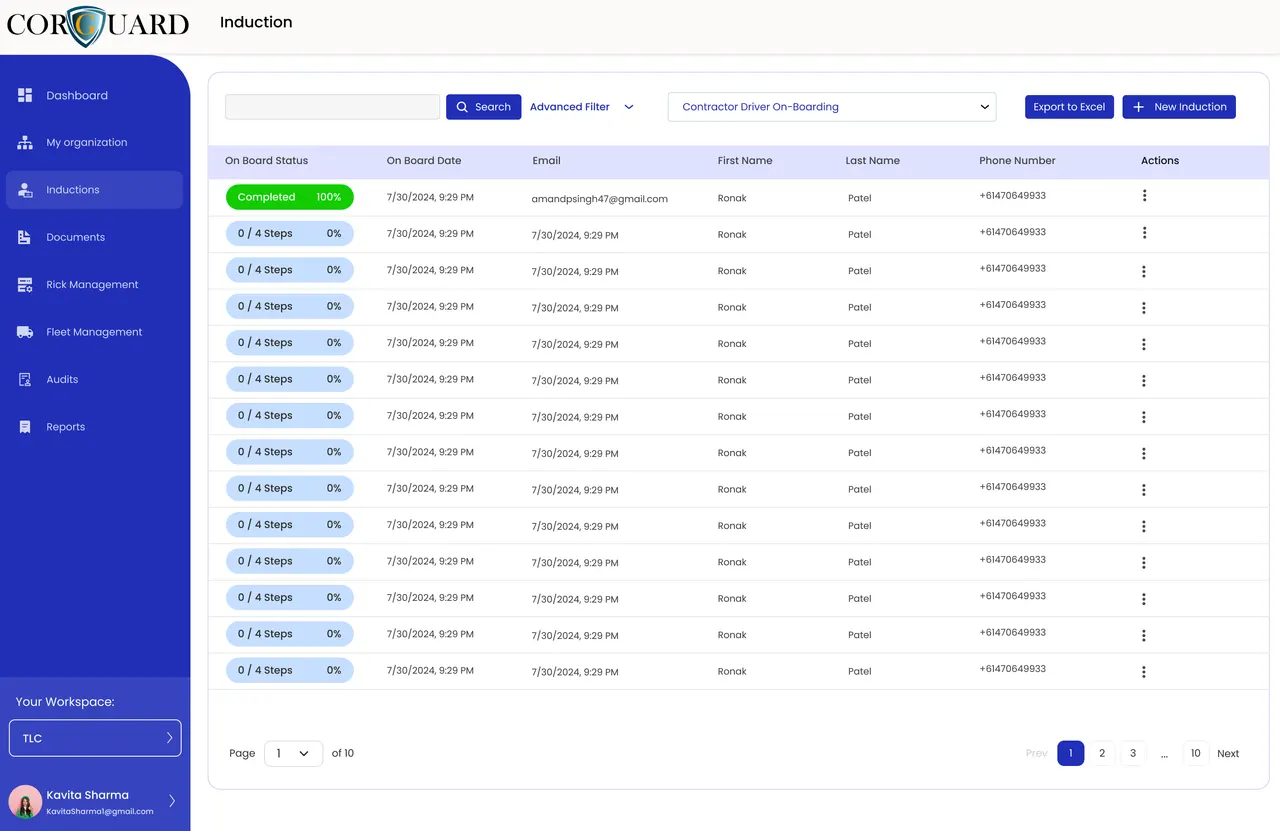
Training records
Connect training completion from cortraining.com.au to evidence and follow-up.
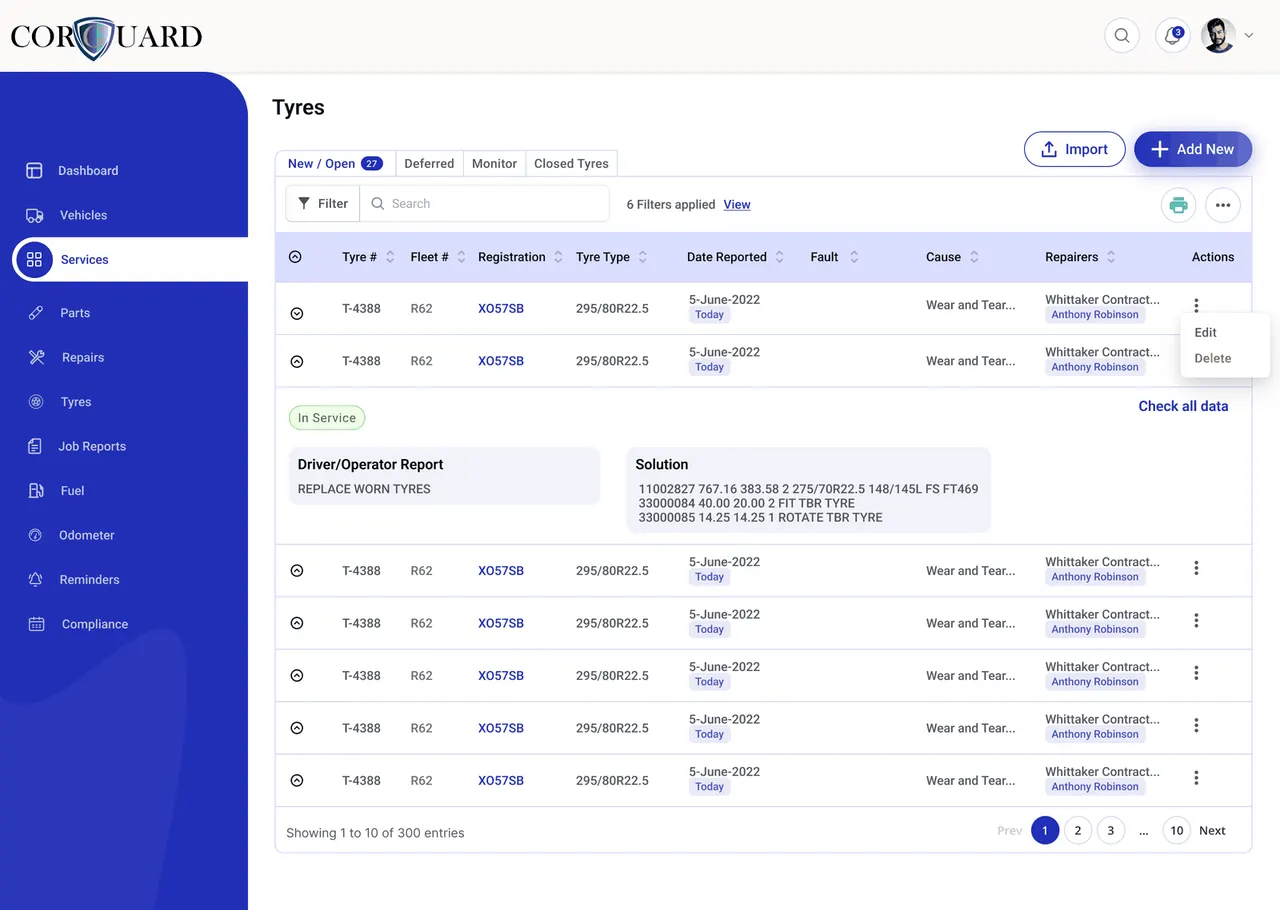
Driver diary checks
Connect fatigue and driver diary review back to manager visibility.
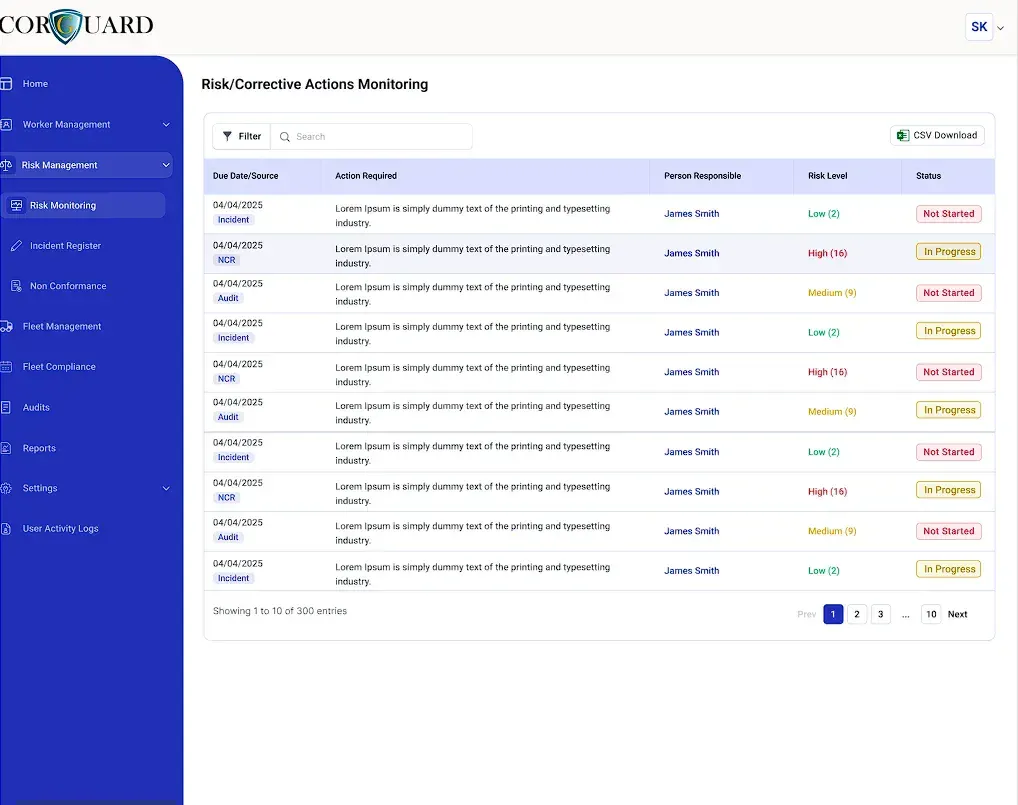
Corrective actions
Turn audit findings, hazards and incidents into tracked actions.
Keep exploring
Related Chain of Responsibility reading
MAEZ insight
Demystifying HVNL Regulations: A Comprehensive Guide
Unlock the intricacies of HVNL with our comprehensive guide. Perfect for those seeking a deeper understanding of HVNL regulations for road safety.
MAEZ insight
Understanding HVNL Compliance: A Step-by-Step Guide
Learn how to comply with HVNL effectively with our step-by-step guide. Ensure safety and legal adherence in your transport supply chain.
MAEZ insight
Top Tips for Ensuring Chain of Responsibility Compliance
Discover essential chain of responsibility compliance tips to enhance safety, protect business interests, and ensure legal adherence under HVNL.
MAEZ insight
Essential Chain of Responsibility Checklist for 2023
Stay compliant with the Chain of Responsibility Checklist 2023. Ensure safety under HVNL with our comprehensive guide for transport operators and managers.
MAEZ insight
Understanding the Latest HVNL Updates and Changes
Stay informed on HVNL updates and changes with our detailed guide. Learn about new compliance rules and safety management systems effectively.
MAEZ insight
Crafting an Effective Transport Safety Management Plan
Learn how to craft an effective transport safety management plan to prevent crashes, reduce injuries, and ensure operational continuity in your organization.
Frequently asked questions
Questions people ask about this topic
What is the primary duty under the HVNL?
Your primary duty under the HVNL is to ensure the safety of your transport activities, so far as is reasonably practicable. This absolute obligation applies to operators, schedulers, consignors, consignees, loaders, packers, and any other Chain of Responsibility party — you cannot contract out of it or shift responsibility to someone else.
What does 'reasonably practicable' mean in HVNL compliance?
Reasonably practicable means what you can feasibly do considering available knowledge, risks, and resources. Courts assess the likelihood of risk, potential harm, what you knew or should have known, available controls, and cost relative to risk reduction. It is not perfection, but it is not minimal effort — your controls must match the actual risk level of your operations.
Who has Chain of Responsibility obligations under the HVNL?
Any party whose actions or inactions affect heavy vehicle safety has CoR obligations. This includes operators, schedulers, consignors, consignees, loaders, and packers. Even a retailer who never owns vehicles has duties as a consignee if their receiving practices, booking systems, or delivery requirements influence transport safety.
What evidence do I need to demonstrate HVNL compliance?
You need documented systems showing risk identification processes, controls implemented to eliminate or minimise identified risks, monitoring systems to verify control effectiveness, and review processes to improve your approach. Your documentation must connect business practices to safety outcomes so a prosecutor can see what you did, when you did it, and how you verified effectiveness.
How should schedulers approach Chain of Responsibility compliance?
Schedulers must ensure delivery timeframes allow compliance with fatigue rules and speed limits. Anyone who determines or influences driver schedules — including freight coordinators, dispatch managers, and customer service teams — is a scheduler under the HVNL. If scheduling systems create unrealistic timeframes, the scheduler shares responsibility for any resulting breaches.