
MAEZ insight
Chain of Responsibility Policy: What Australian Transport Operators Need to Know
Understand how Chain of Responsibility legislation applies to every party in the heavy vehicle supply chain — from executives to drivers — and what your business must actively do to meet its safety duties under the HVNL.

Contractor controls should be verified before the work starts.
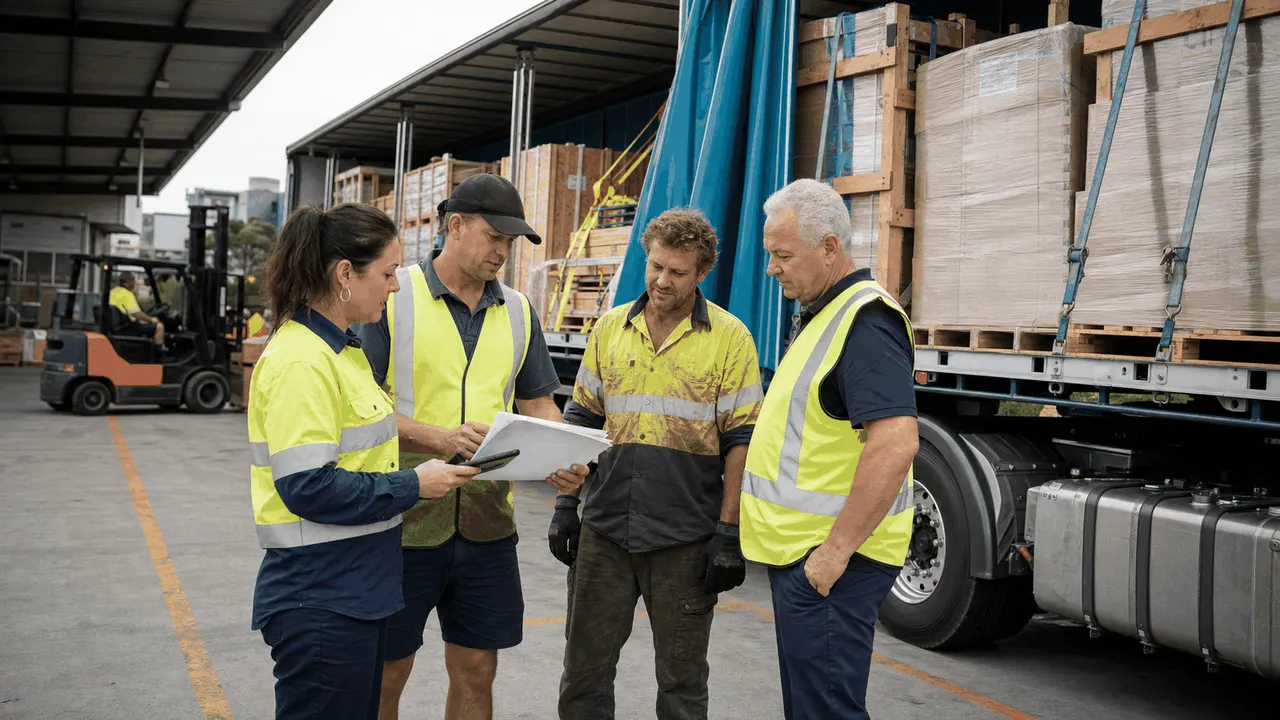
Receiving windows, site rules, and unloading delays can all shape the transport task.
Unloading decisions can affect safety, scheduling, and responsibility.
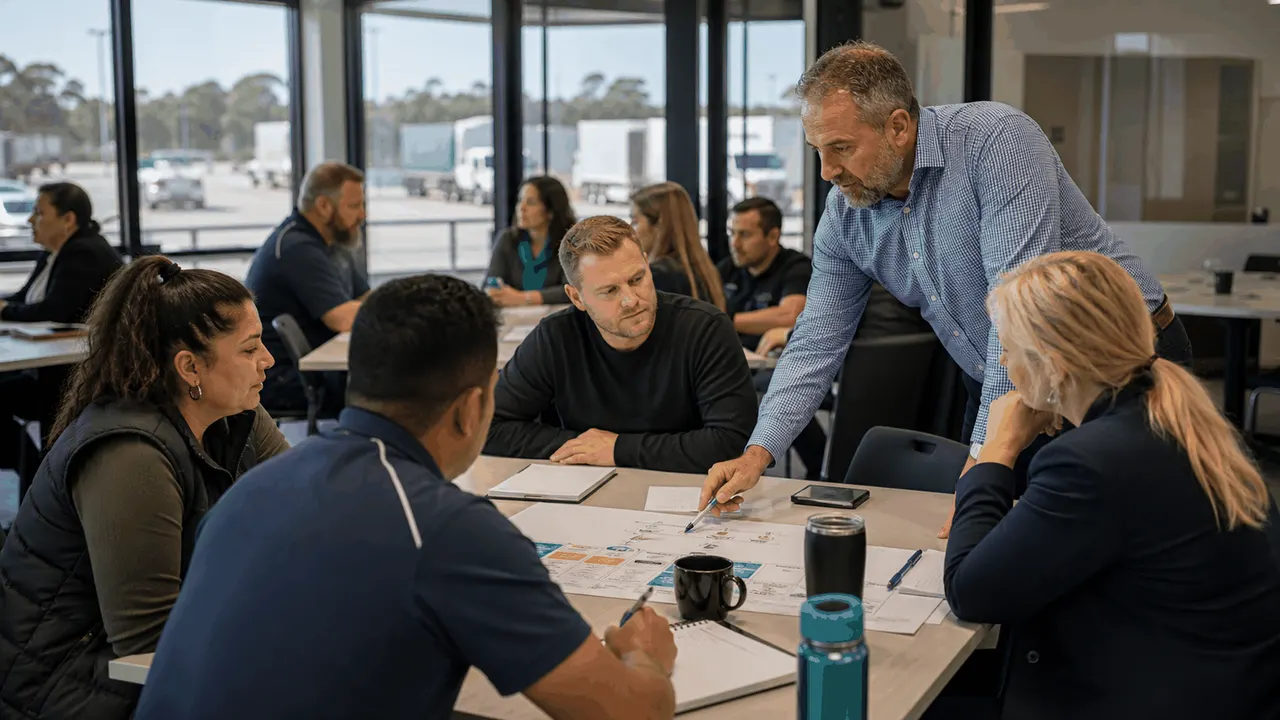
Managers need a clear view of gaps before audit or enforcement pressure arrives.
Consignors
Freight terms, delivery windows, and KPIs must not push drivers into speed, fatigue, or mass breaches.
Consignees
Receiving rules, site access, and unloading delays are CoR controls that need to be set and evidenced.
Loaders
Mass, dimension, and load restraint decisions need documented checks, not assumptions.
Managers
Executives and managers need due-diligence evidence that the Safety Management System is actually working.
What is a Chain of Responsibility policy?
A shared-duty framework for heavy vehicle safety
A Chain of Responsibility policy is a documented framework that ensures every party who influences the safety of a heavy vehicle transport task — from executives and consignors to loaders, schedulers, and drivers — shares legal responsibility for the outcome under the Heavy Vehicle National Law (HVNL). It requires active, evidence-based controls rather than a policy on the wall, and it means each party must discharge their duty to the extent they have capacity to influence and control the transport activity.
Under the HVNL, the principle of shared responsibility is explicit: the safety of transport activities relating to a heavy vehicle is the shared responsibility of each party in the chain of responsibility. A duty may not be transferred to another person.
For broader context on how these obligations work in practice, see About Chain of Responsibility.
Why Chain of Responsibility legislation exists
From speed limits to shared safety duties across the supply chain
Laws exist to protect people and maintain a functioning society. Speed limits on roads are a simple example — without them, individuals would be left to self-diagnose the risk of travelling at a particular speed.
Australia has long had laws governing heavy vehicles: rules on speed, driver rest periods, and vehicle mass limits. For years, however, enforcement focus was limited. Over the same period, Australia's reliance on road freight grew substantially, and the road freight network became a major component of national GDP.
Lawmakers identified a need to improve efficiencies and reduce incidents on the road network. The result was the formation and introduction of Chain of Responsibility legislation — a framework designed to ensure that every person who influences the safety of a heavy vehicle transport task shares responsibility for the outcome.
How Chain of Responsibility policy has evolved
Expanding the duty to everyone who influences transport safety
Over the last 20 years, Chain of Responsibility policy has shifted significantly. The change came from a growing understanding that certain people within organisations — those who influenced the safety of trucking companies and truck drivers — did not realise their actions or inactions were causing harm.
The law now encompasses a wider range of people within a supply chain who may influence the safety outcome of a heavy vehicle, the driver, and the general public while a vehicle is in transit.
Key principles under the HVNL
- The safety of transport activities is a shared responsibility of each party in the chain.
- A duty may not be transferred to another person.
- Each party must discharge their duty to the extent they have the capacity to influence and control the relevant matter — or would have had that capacity but for an agreement purporting to limit or remove it.
For a deeper look at who counts as a duty holder, see Chain of Responsibilities: What Australian HVNL Duty Holders Need to Understand.
Who holds a duty under Chain of Responsibility law
The HVNL explicitly lists the parties responsible for heavy vehicle safety
The HVNL sets out the people who have a role in ensuring the safety of a heavy vehicle. These include:
- Executives or leaders of an organisation — including charities
- Managers of loading teams — or packers and unpackers of containers
- Loaders — such as forklift drivers, or container packers and unpackers
- Consignees — those who send large shipments on trucks
- Consignors — those who receive large loads on trucks
- Employers — who engage a transport company to work for them in any capacity
- Schedulers — someone who allocates or schedules work to a heavy vehicle, including the load or the timeframe
- Operators — of a transport company
- Sub-contractors — who drive a truck for paid work
If you perform any of those tasks — or similar tasks — it does not matter what your role is called, whether you work part-time or full-time, or even if you work for free. If you work in and around trucks, there is a strong likelihood you carry a legal liability to ensure your workplace Chain of Responsibility policy provides safety across all heavy vehicle transport movements.
Why a policy on the wall isn't enough
Active measures are required — ignorance is not a defence
It is not enough to say you are safe, or to hang an excellent policy on the wall. You must be doing things within your business to actively reduce the likelihood of harm your organisation may inflict on a driver, the truck, or the general public.
There is much conjecture around this law, as people do not see transport safety as their direct responsibility. However, putting your head in the sand is not a viable strategy — courts will dismiss a plea of ignorance.
You can do a great deal within your organisation, even inexpensively, to reduce your personal legal liability or the liability your company may face as a result of your actions. The key is taking practical steps that match how your business actually operates, rather than relying on documents that sit unused.
For a structured approach to identifying and closing gaps, explore Chain of Responsibility Consulting | Practical CoR Risk Review.
How CoR compliance affects your business
Smaller operators are already losing work over safety gaps
Industries across Australia are adopting this legislation, and it is already affecting the ability of smaller businesses to obtain work through a lack of safety measures in their organisation. Larger corporations are spending millions to ensure they mitigate their Chain of Responsibility risk.
Being involved in an incident that can become public very quickly is not good for business. The reputational and financial consequences of non-compliance extend well beyond the immediate fine or penalty — they can affect your ability to win contracts and retain customers.
Safety is embedded in Australian workplace culture. The person wearing steel-cap boots and a fluorescent shirt is a visible reminder that safety obligations are taken seriously across every part of the supply chain, not just on the road.
For practical guidance on preparing your team, see Chain of Responsibility Training for Australian Operators.
How MAEZ helps with CoR readiness
Turning legal obligations into practical, evidence-based controls
MAEZ helps Australian businesses turn Chain of Responsibility, HVNL, WHS, transport safety, and chartered risk obligations into practical training, advisory, audit, and implementation pathways. The focus is on finding gaps, fixing systems, and proving controls — not on paperwork that does not survive scrutiny.
What MAEZ focuses on
- Find — identify what is exposed before an auditor or regulator does.
- Fix — build SMS controls around how the transport business actually runs.
- Prove — use CoRGuard where records, reminders, diaries, audits, and evidence need structure.
Where software is the right next step for managing records, reminders, audits, and evidence workflows, MAEZ connects the advisory work to the tools that support it day to day.
If you need a practical review of the controls, evidence, training, and Safety Management System gaps that matter most to your operation, contact MAEZ to get started.
How MAEZ works
Find the gaps. Fix the system. Prove the controls.
MAEZ helps transport operators deal with the compliance risk they already know is there. We help get the Safety Management System in order, protect NHVAS accreditation, reduce fine exposure, and connect training, evidence, and CoRGuard workflows where software is needed.
Find
Identify what is exposed before an auditor or regulator does.
Fix
Build the SMS controls around how the transport business actually runs.
Prove
Use CoRGuard where records, reminders, diaries, audits, and evidence need structure.
From advice to evidence
From MAEZ advice to a working Safety Management System
Advisory work should leave a practical implementation trail. These examples show how CoRGuard supports records, fatigue and driver diary checks, maintenance, audits, document control, inductions, corrective actions, and evidence review after MAEZ identifies the gaps.
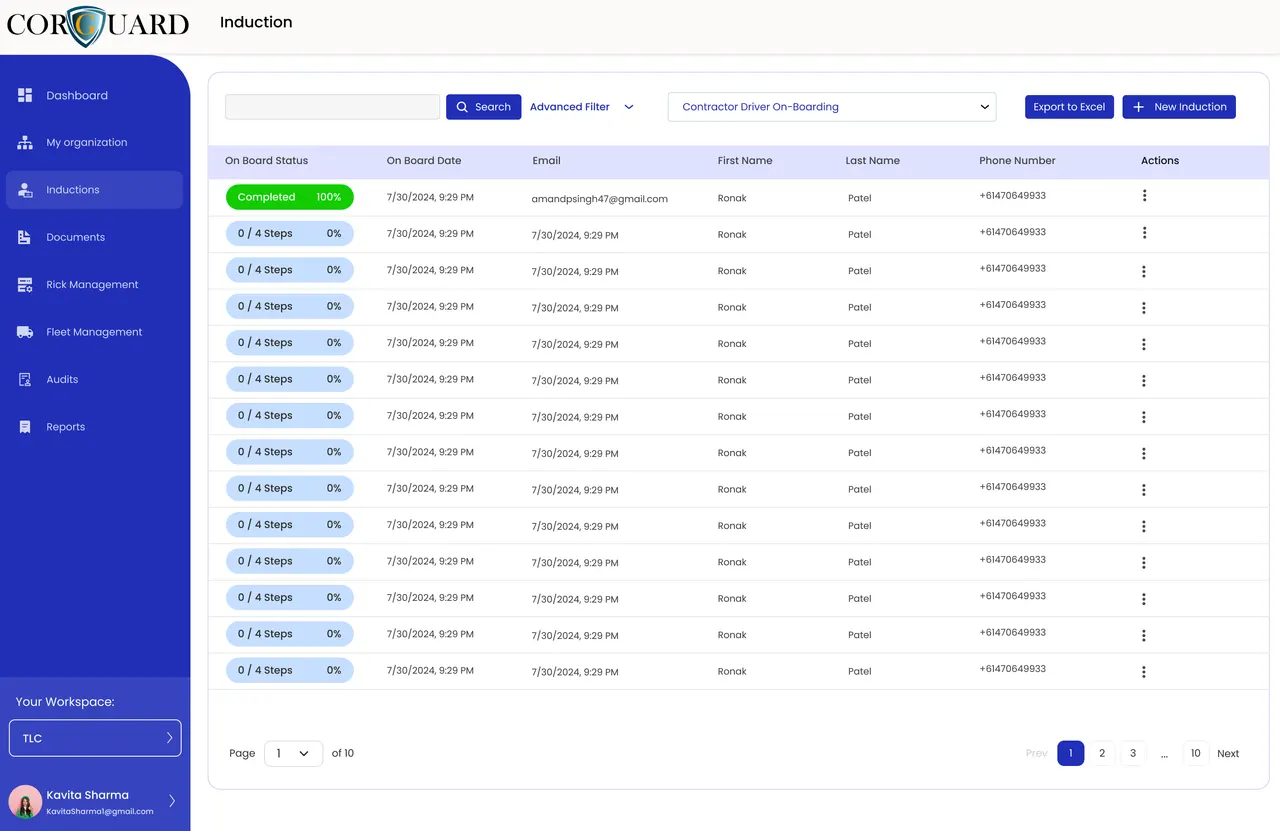
Training records
Connect training completion from cortraining.com.au to evidence and follow-up.
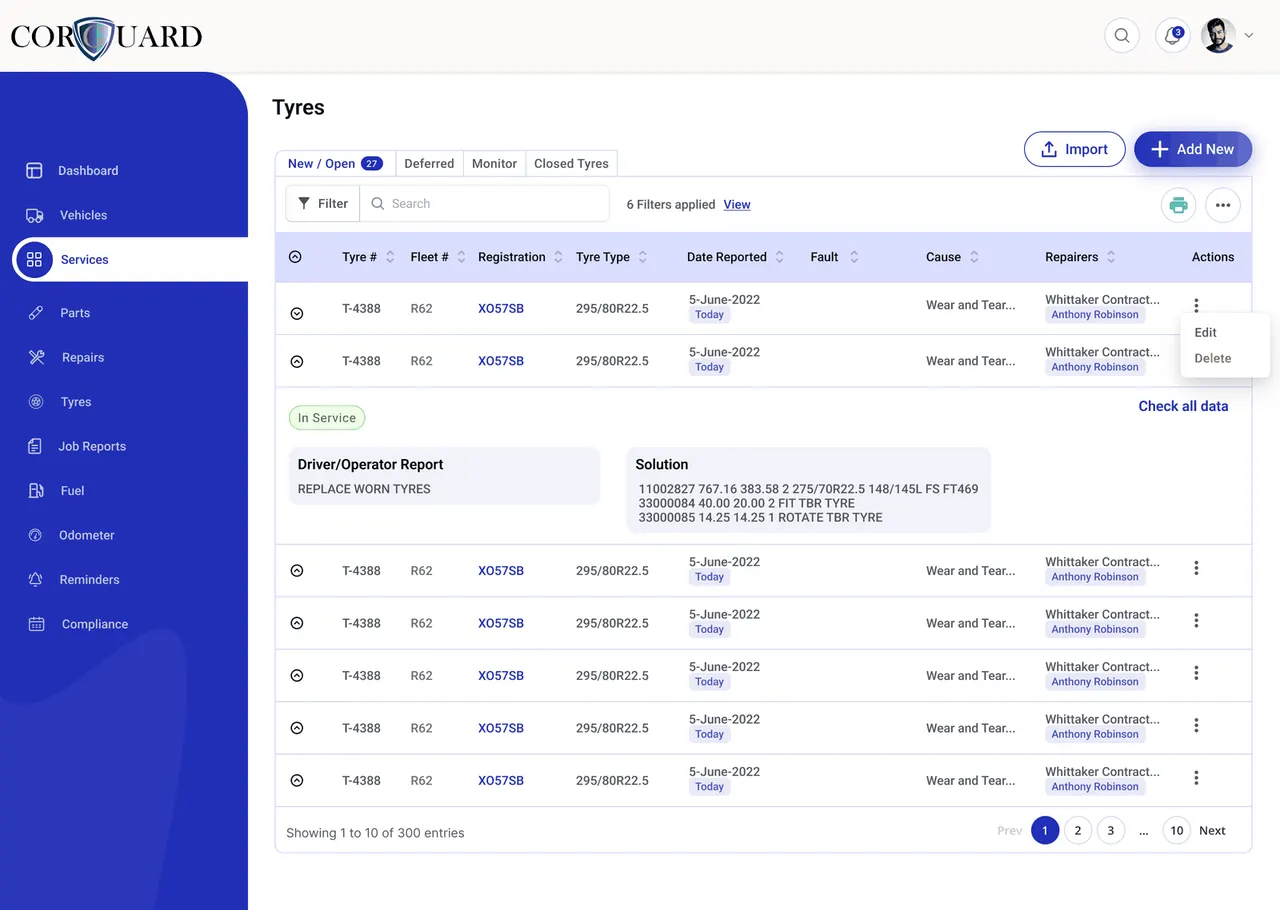
Driver diary checks
Connect fatigue and driver diary review back to manager visibility.
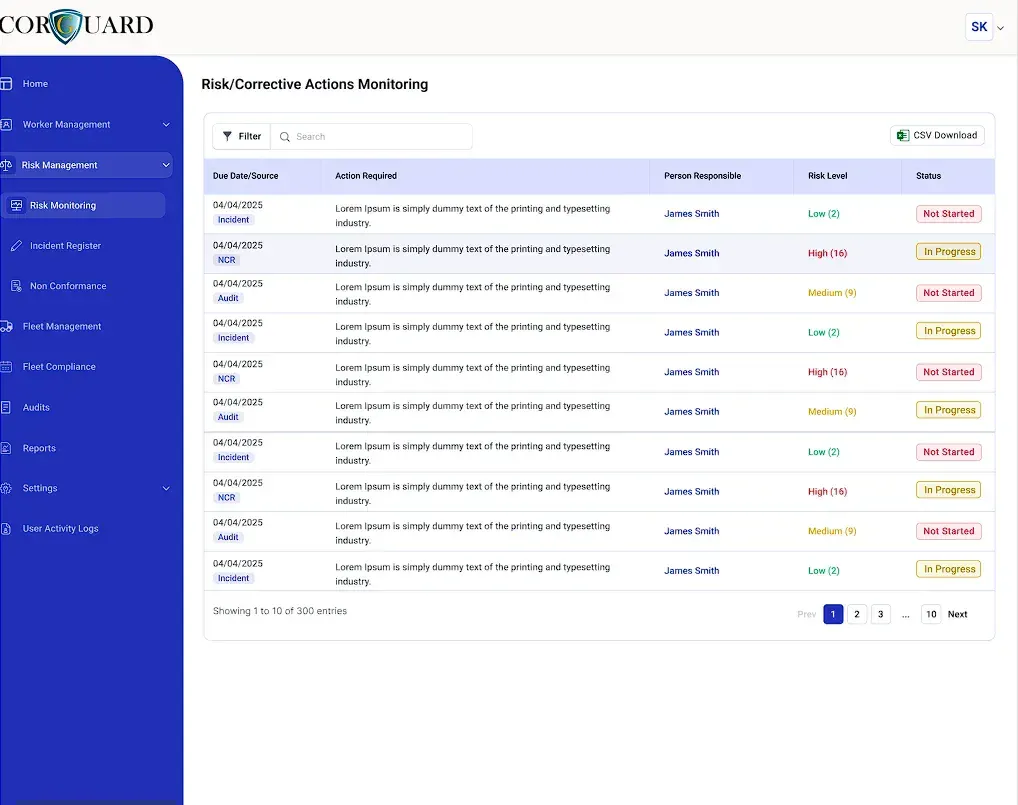
Corrective actions
Turn audit findings, hazards and incidents into tracked actions.
Keep exploring
Related Chain of Responsibility reading
MAEZ insight
Chain of Responsibility (or CoR) in Victoria
October 2018 saw the first major changes to the Heavy Vehicle National Law (HVNL) since its 2014 adoption, which affect changes to Chain of Responsibility (or CoR) in Victoria.
MAEZ insight
Why Chain of Responsibility Matters to Your Business
Understanding and implementing an effective Chain of Responsibility (CoR) strategy is not only a matter of legislative compliance under the Heavy Vehicle National Law (HVNL), it is also crucial to the running of a successful business in the supply chain sector.
MAEZ insight
How Do Heavy Vehicle Operators Get Accreditation For Their Safety & Compliance?
The National Heavy Vehicle Accreditation Scheme (NHVAS), that is controlled by state and territory road transport agencies, was first introduced in 1999 as an alternative compliance scheme. In 2014, the NHVR took over the state based systems and now administer all aspects of the NHVAS.
MAEZ insight
Investigations Continue with NSW Truck Accident
This story as sad as it is, happens to all too often. This gentleman had a mum and dad, may have had kids of his own potentially. We all need to take stock of what we do in transport. We all need to think about others in our work places and check in on them to ensure they are ok.
MAEZ insight
Electronic Work Diary
Heavy vehicle drivers must record their working hours, rest hours, and transportation data to synchronise and make work data trackable under Chain of Responsibility law.
MAEZ insight
Fatigue Management – Are You Breaking The Law?
The behaviour that transport providers are challenged most by, is the lack of understanding these entities, both consignor and consignee, have on the transport aspect of the supply chain, more o on the fatigue management of drivers in the transport task.
Frequently asked questions
Questions people ask about this topic
What is the Chain of Responsibility under the HVNL?
The Chain of Responsibility is a legal framework under the Heavy Vehicle National Law that makes every party who influences the safety of a heavy vehicle transport task share responsibility for the outcome. A duty may not be transferred to another person, and each party must discharge their duty to the extent they have capacity to influence and control the relevant matter.
Who holds a duty under Chain of Responsibility law?
Duty holders include executives, managers of loading teams, loaders, consignees, consignors, employers, schedulers, operators, and sub-contractors. If you perform tasks that influence heavy vehicle safety — regardless of your job title or whether you work full-time, part-time, or unpaid — you likely carry a legal liability under the HVNL.
Is a written Chain of Responsibility policy enough to comply?
No. A policy on the wall is not sufficient. The HVNL requires active, evidence-based measures that reduce the likelihood of harm to drivers, vehicles, and the public. Courts will dismiss a plea of ignorance, so businesses must take practical steps that match how they actually operate.
How does CoR non-compliance affect a transport business commercially?
Non-compliance can affect your ability to win and retain contracts, as larger clients increasingly require evidence of safety measures. Smaller operators are already losing work over safety gaps, and the reputational and financial consequences of an incident extend well beyond any immediate fine or penalty.
What does MAEZ do to help with Chain of Responsibility readiness?
MAEZ turns HVNL and CoR obligations into practical training, advisory, audit, and implementation pathways focused on finding gaps, fixing systems, and proving controls. Where software is appropriate, MAEZ connects advisory work to CoRGuard for managing records, reminders, audits, and evidence workflows day to day.