
MAEZ insight
Why Chain of Responsibility Matters to Your Transport Business
Understand why Chain of Responsibility compliance under the HVNL matters to your transport business—safety culture, reputation, operational efficiency, and reduced risk of penalties.
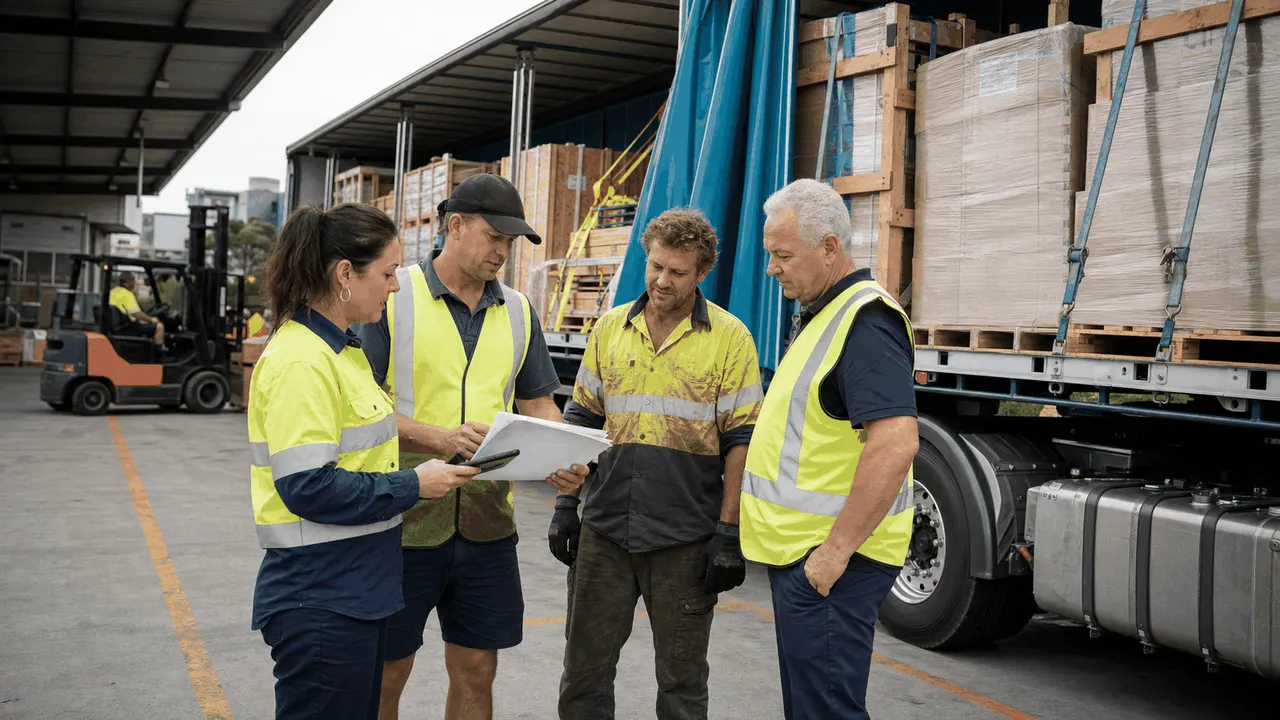
Receiving windows, site rules, and unloading delays can all shape the transport task.
Unloading decisions can affect safety, scheduling, and responsibility.

Managers need a clear view of gaps before audit or enforcement pressure arrives.

Contractor controls should be verified before the work starts.
Consignors
Freight terms, delivery windows, and KPIs must not push drivers into speed, fatigue, or mass breaches.
Consignees
Receiving rules, site access, and unloading delays are CoR controls that need to be set and evidenced.
Loaders
Mass, dimension, and load restraint decisions need documented checks, not assumptions.
Managers
Executives and managers need due-diligence evidence that the Safety Management System is actually working.
Why Chain of Responsibility matters to your business
Safety culture, reputation, efficiency, and reduced penalty exposure under the HVNL

Chain of Responsibility compliance under the Heavy Vehicle National Law matters to your business because it extends legal duty for safety beyond drivers to every party in the supply chain—consignors, consignees, loaders, managers, and contractors. A strong CoR approach reduces incident and penalty risk, improves operational efficiency, and builds a safety culture that protects your reputation and commercial relationships.
Understanding and implementing an effective CoR strategy is not only a matter of legislative compliance—it is also crucial to running a successful business in the transport and supply chain sector. The HVNL establishes a principle of shared responsibility across all parties, meaning the actions, inactions, and demands of anyone in the chain can affect road safety.
A strong CoR strategy delivers three core benefits:
- Safety culture: An effective CoR approach fosters an environment where safety is valued and promoted at every level, from drivers to senior management, boosting employee morale and productivity.
- Reputation: Demonstrating a commitment to safety builds trust with clients, partners, and the public, showing your business takes its responsibilities seriously and helping foster long-term commercial relationships.
- Operational efficiency: A systematic approach to managing safety risks streamlines processes, reduces errors, and creates a more reliably functioning supply chain.
For example, a transport company with a strong CoR culture ensures all employees understand their role in maintaining safety through regular training, clear communication about procedures, and encouragement for staff to report concerns without fear of reprisal. To learn more about the underlying principles, see our About Chain of Responsibility page.
What is the Chain of Responsibility?
Shared duty across every party in the supply chain

The Chain of Responsibility is a concept integral to the HVNL. It extends responsibility for safety in the transport supply chain to all parties involved—not just drivers, but also CEOs, managers, supervisors, loaders, consignors, consignees, and contractors. The principle recognises that the actions, inactions, and demands of these parties can have a major impact on road safety.
If a logistics company pressures drivers to meet unrealistic deadlines that cannot be achieved without speeding or skipping rest breaks, the company could be held liable for breaches under the HVNL.
Under CoR, all parties in the supply chain are obliged to:
- Eliminate or minimise potential harm or loss by doing all within their power to ensure safety
- Take reasonable steps to prevent breaches of the HVNL
- Implement proactive measures to manage risks before they escalate
For example, a freight company might implement a safety management system (SMS) that identifies potential risks, puts control measures in place, and provides ongoing training to employees. For a deeper look at who holds duties and what those duties mean, see our guide on Chain of Responsibilities and what Australian HVNL duty holders need to understand.
Key advantages of CoR compliance
Benefits that go beyond meeting legislative requirements
Compliance with the Chain of Responsibility offers advantages that reach well beyond simply satisfying legal obligations. These benefits have far-reaching impacts across safety, efficiency, and business reputation.
- Reduced risk of incidents and penalties: Proactive CoR strategies help identify and mitigate safety risks before they escalate, reducing the likelihood of hefty penalties under the HVNL.
- Enhanced operational efficiency: A robust compliance program streamlines processes and promotes consistency, leading to fewer errors and increased productivity.
- Improved corporate reputation: Clients, partners, and the public tend to trust businesses that prioritise safety and adhere to national laws—translating into stronger relationships and customer loyalty.
- Safety improvement: A well-implemented SMS following CoR guidelines creates a safer work environment for everyone in the supply chain.
An effective CoR compliance program also provides a framework for continuous improvement. This might involve regular reviews, hazard reporting, and incident investigations, helping your business adapt and evolve in response to safety concerns. If you are ready to assess where your business stands, explore our practical CoR risk review service.
Reducing the risk of incidents and penalties
Practical measures to manage and mitigate supply chain risks
Employing proactive measures to manage and mitigate risks is a key aspect of CoR compliance. These measures significantly curb the likelihood of safety incidents and, in turn, reduce the potential for incurring penalties under the HVNL.
Here are some practical ways to achieve this:
- Regular auditing: Audit operational practices to identify potential breaches before they escalate. For instance, a transport company can audit its loading practices to ensure conformance with CoR guidelines and adjust where needed.
- Rigorous driver schedules: Implement schedules that adhere to HVNL fatigue regulations to prevent overworking and associated risks, ensuring driver safety and minimising compliance breaches.
- Incident reporting and investigation: An effective incident reporting system catches safety risks early. Thorough investigations of any incidents that do occur provide valuable insights to prevent similar occurrences.
- Continuous training: Regular training on CoR compliance ensures all staff understand their responsibilities under the law, fostering a safety-first culture and reducing accidental breaches.
By reducing the risk of incidents and penalties, businesses protect their financial interests and build a reputation as a responsible, safety-conscious organisation. For structured training options, visit our Chain of Responsibility training page.
How CoR compliance improves operational efficiency
Consistency, accountability, and better resource allocation
Consistency and efficiency are hallmarks of a well-operated supply chain. Through a CoR compliance program, businesses can ensure that all processes are executed in a uniform manner, reducing errors and wastage.
Key ways in which CoR compliance enhances operational efficiency include:
- Consistent procedures: Standardised loading and unloading procedures, driving schedules, and incident reporting protocols reduce errors, improve accuracy, and save time.
- Improved decision-making: Clear guidelines help managers and employees make informed decisions quickly and confidently, minimising downtime.
- Better resource allocation: CoR compliance helps identify areas that require more personnel, equipment, or time—allowing resources to be directed where they are needed most and preventing wastage.
- Increased accountability: Clear allocation of responsibilities means every team member understands their role, leading to tasks being completed correctly and on time.
Enhanced operational efficiency is not just about improving the bottom line—it creates a more resilient, adaptable supply chain. For executive-level guidance on embedding CoR into your operations, see our resource on CoR training for executives and managers. If you would like practical help closing gaps in your CoR approach, contact MAEZ for tailored transport compliance advisory support.
How MAEZ works
Find the gaps. Fix the system. Prove the controls.
MAEZ helps transport operators deal with the compliance risk they already know is there. We help get the Safety Management System in order, protect NHVAS accreditation, reduce fine exposure, and connect training, evidence, and CoRGuard workflows where software is needed.
Find
Identify what is exposed before an auditor or regulator does.
Fix
Build the SMS controls around how the transport business actually runs.
Prove
Use CoRGuard where records, reminders, diaries, audits, and evidence need structure.
From advice to evidence
From MAEZ advice to a working Safety Management System
Advisory work should leave a practical implementation trail. These examples show how CoRGuard supports records, fatigue and driver diary checks, maintenance, audits, document control, inductions, corrective actions, and evidence review after MAEZ identifies the gaps.
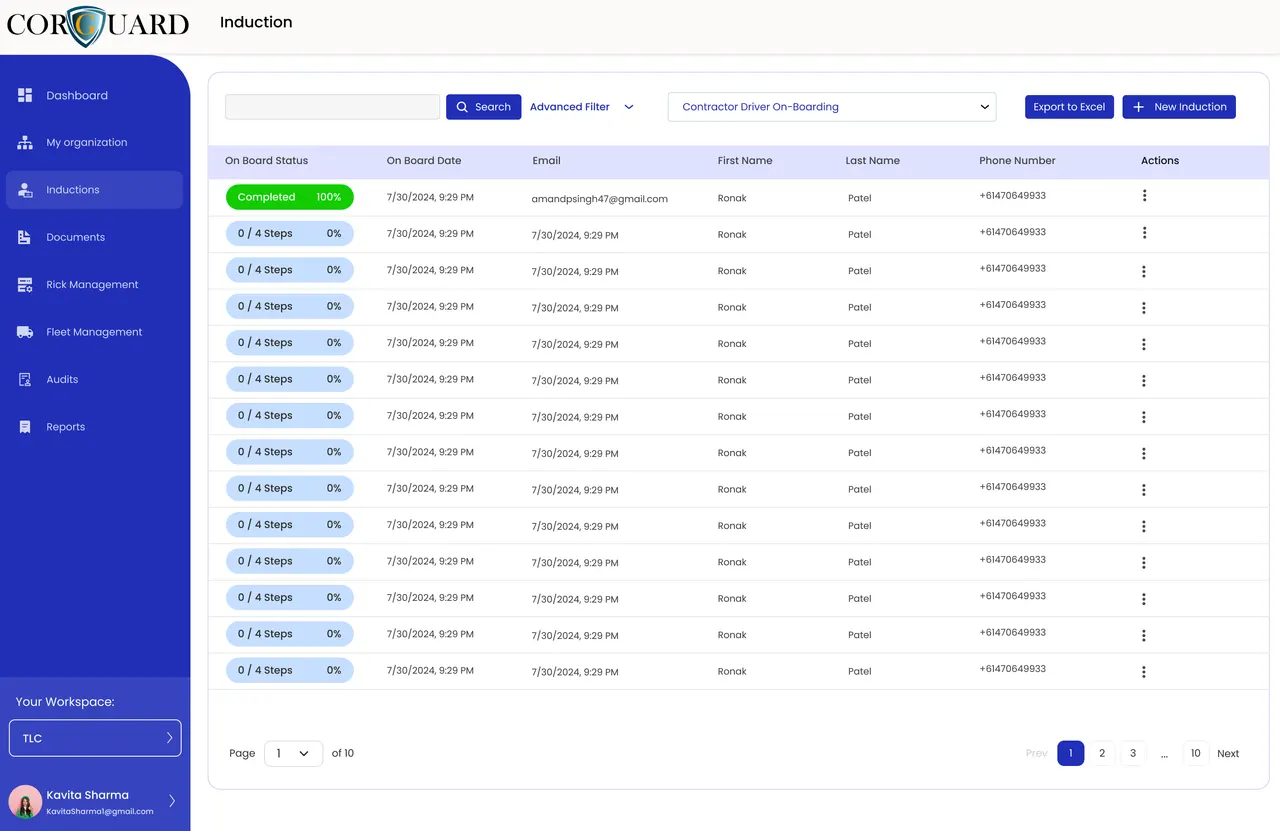
Training records
Connect training completion from cortraining.com.au to evidence and follow-up.
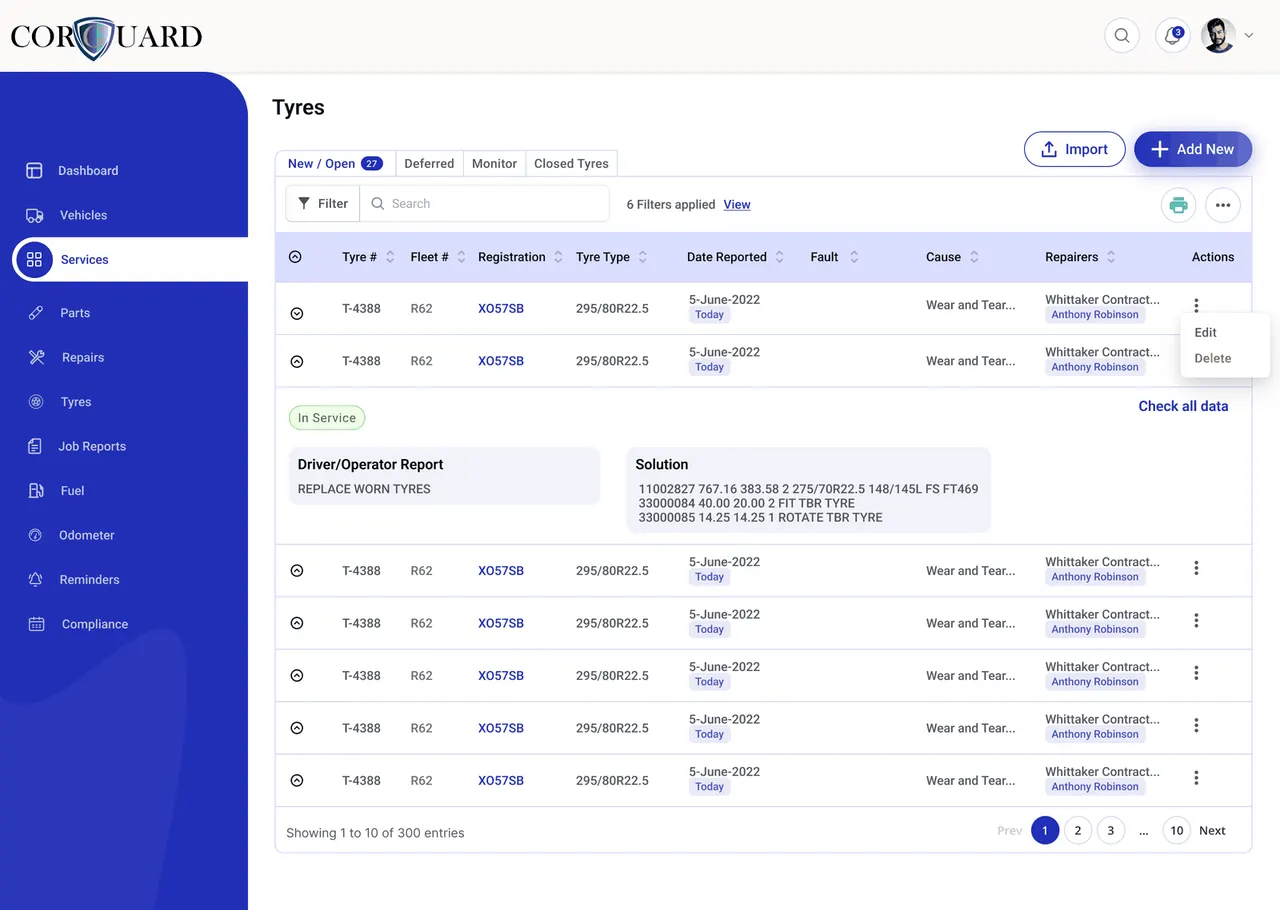
Driver diary checks
Connect fatigue and driver diary review back to manager visibility.
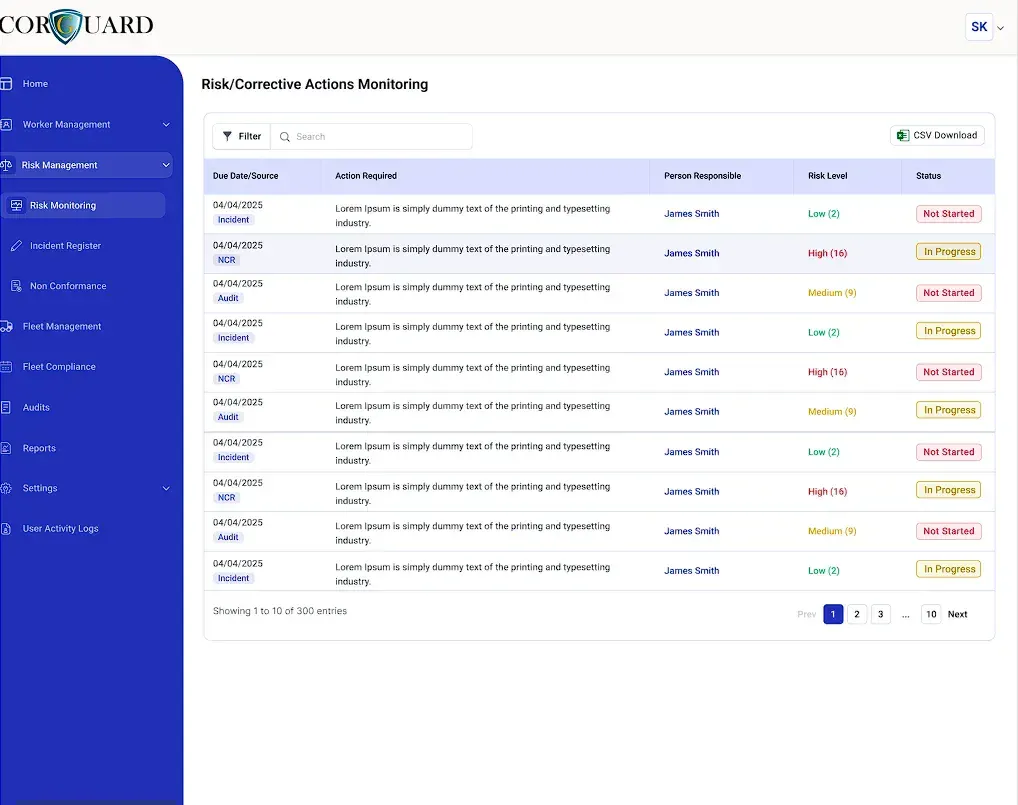
Corrective actions
Turn audit findings, hazards and incidents into tracked actions.
Keep exploring
Related Chain of Responsibility reading
MAEZ insight
How Do Heavy Vehicle Operators Get Accreditation For Their Safety & Compliance?
The National Heavy Vehicle Accreditation Scheme (NHVAS), that is controlled by state and territory road transport agencies, was first introduced in 1999 as an alternative compliance scheme. In 2014, the NHVR took over the state based systems and now administer all aspects of the NHVAS.
MAEZ insight
Investigations Continue with NSW Truck Accident
This story as sad as it is, happens to all too often. This gentleman had a mum and dad, may have had kids of his own potentially. We all need to take stock of what we do in transport. We all need to think about others in our work places and check in on them to ensure they are ok.
MAEZ insight
Electronic Work Diary
Heavy vehicle drivers must record their working hours, rest hours, and transportation data to synchronise and make work data trackable under Chain of Responsibility law.
MAEZ insight
Fatigue Management – Are You Breaking The Law?
The behaviour that transport providers are challenged most by, is the lack of understanding these entities, both consignor and consignee, have on the transport aspect of the supply chain, more o on the fatigue management of drivers in the transport task.
MAEZ insight
Managing Risk or Assessing Risk, Do You Know The Difference?
When it comes to risk assessment, there are six elements.Identify the element upon which risk exists. What could cause you problems?
MAEZ insight
What Is A Duty Holder Under the Heavy Vehicle National Law?
The Heavy Vehicle National Law (HVNL) is pivotal for ensuring the safety and compliance of heavy vehicle operations in Australia. Central to this framework is the Chain of Responsibility (CoR), which distributes accountability across various parties in the transport supply chain.
Frequently asked questions
Questions people ask about this topic
Why does Chain of Responsibility matter if I am not a driver?
Under the HVNL, CoR extends legal duty for safety to every party in the supply chain—including consignors, consignees, loaders, managers, and contractors. If your actions, inactions, or demands influence the transport task, you can be held liable for breaches even if you never drive a heavy vehicle.
What are the main business benefits of CoR compliance beyond avoiding penalties?
A strong CoR approach fosters a safety culture that boosts morale and productivity, builds trust with clients and partners, and streamlines supply chain processes to reduce errors and improve efficiency. These benefits support long-term commercial relationships and a more resilient operation.
How can a transport business reduce its risk of HVNL penalties?
Practical measures include regular auditing of operational practices, driver schedules that comply with fatigue regulations, effective incident reporting and investigation systems, and continuous CoR training so all staff understand their responsibilities. Together these help identify and mitigate risks before they escalate into breaches.
Does CoR compliance improve operational efficiency or is it just a legal obligation?
CoR compliance drives operational efficiency by standardising procedures, improving decision-making through clear guidelines, enabling better resource allocation, and increasing accountability across the supply chain. These improvements reduce errors, save time, and create a more adaptable business.
Where can I get practical help assessing my CoR compliance gaps?
MAEZ offers a practical CoR risk review service that identifies gaps in controls, evidence, training, and safety management systems before auditors or regulators do. You can also access structured Chain of Responsibility training for staff, executives, and managers.