
MAEZ insight
Journey Planners: Essential Guide to Transport Safety and Compliance
How journey planners, Electronic Work Diaries, and route planners support Chain of Responsibility compliance and transport safety for Australian heavy vehicle operators.
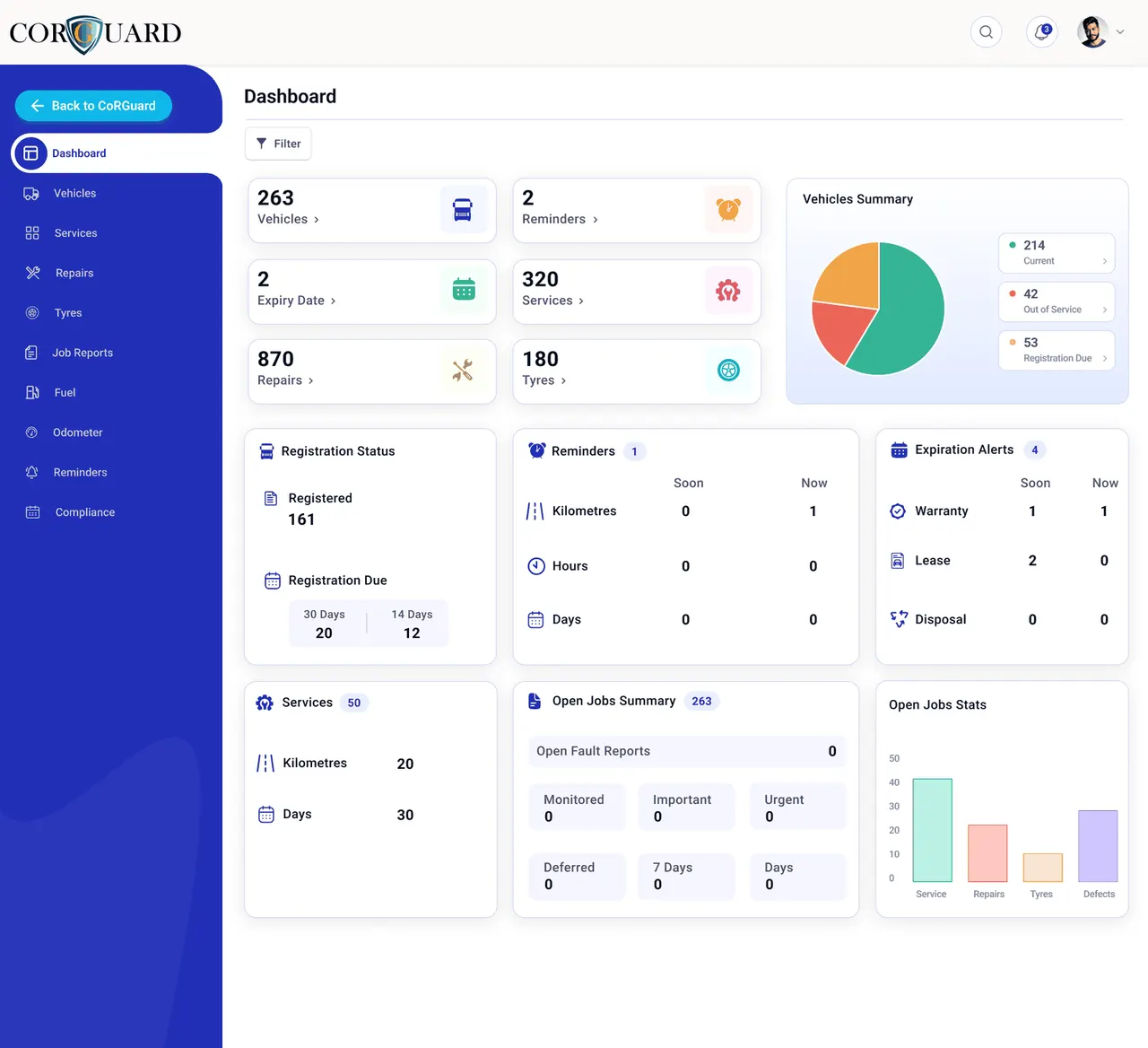
Daily fleet activity has to connect back to duties, controls, and review.

Due diligence means knowing whether the safety system is actually working.

Proof that freight promises do not create unsafe transport pressure.

Loading controls need evidence, not assumptions.
Consignors
Freight terms, delivery windows, and KPIs must not push drivers into speed, fatigue, or mass breaches.
Consignees
Receiving rules, site access, and unloading delays are CoR controls that need to be set and evidenced.
Loaders
Mass, dimension, and load restraint decisions need documented checks, not assumptions.
Managers
Executives and managers need due-diligence evidence that the Safety Management System is actually working.
What are journey planners and why do they matter?

Journey planners, Electronic Work Diaries (EWDs), and route planners are practical compliance instruments that align heavy vehicle transport tasks with Chain of Responsibility duties under the HVNL. They help every party in the supply chain manage fatigue, route risks, and scheduling pressure while creating timestamped evidence that controls are working. A well-structured journey planner protects drivers, cargo, and the public — and demonstrates that your business takes its safety obligations seriously.
Navigating the heavy vehicle transport industry requires precision, attention to detail, and a deep commitment to safety. Tools like journey planners, EWDs, and route planners are not just compliance formalities — they are practical instruments that elevate safety outcomes for every transport task.
A well-structured journey planner aligns your transport practices with the Chain of Responsibility framework, ensuring each party in the supply chain understands and meets their safety obligations. It is not just about getting from point A to point B. It is about protecting drivers, cargo, and the public while demonstrating that your business takes its HVNL duties seriously.
What a journey planner helps you control
A robust journey planner functions as a navigator, helping align your fleet's movements with CoR requirements and risk-management practices. When implemented properly, it delivers three core benefits:
- CoR compliance support — A journey planner helps each party in the chain understand and meet their role in maintaining safety, reinforcing the shared responsibility model at the heart of the HVNL.
- Road risk mitigation — By anticipating obstacles, road conditions, and fatigue-related hazards before departure, a journey planner acts as a preventive defence against foreseeable dangers.
- Efficiency and cost savings — Route optimisation reduces fuel costs and transit time while keeping safety as the primary consideration, not an afterthought.
These benefits matter most when they are backed by evidence. A planner that exists only in theory does little to protect your business during an audit or incident review.
How Electronic Work Diaries support fatigue compliance
An Electronic Work Diary (EWD) replaces traditional paper logs with a digital solution that provides real-time insights and a clear audit trail. Under the HVNL, fatigue-regulated heavy vehicle drivers must comply with minimum rest requirements and maximum work times — and an EWD helps capture that evidence accurately.
Key advantages of EWDs include:
- Superior accuracy — Digital entries reduce the risk of manual errors and create a trustworthy, timestamped record of driver hours.
- Preventive fatigue management — Alerts for upcoming rest breaks help keep drivers compliant with fatigue rules before breaches occur.
- Streamlined auditing — A coherent, immediately accessible overview of work and rest data supports faster, more effective compliance checks.
For operators building a Safety Management System, an EWD is a practical layer of evidence that connects driver behaviour to management oversight.
Using route planners for safer transport decisions
In the complex web of transport logistics, a route planner guides your fleet to its destination through the safest and most efficient paths available. It complements the journey planner by addressing the operational detail of how each trip is executed.
Core advantages of employing a route planner include:
- Personalised routing — Tailor journeys according to vehicle type, load requirements, and mass or dimension limits, ensuring the travel plan suits the specific transport task.
- Real-time adaptability — Stay informed of road closures, conditions, or delays so proactive adjustments keep safety paramount.
- Integrated communication — Maintain a flow of updates between dispatchers, drivers, and other stakeholders, strengthening the safety net across the operation.
Route planning is particularly relevant where PBS vehicle approvals authorise mass or dimension limits that differ from standard requirements — the route must account for those conditions.
How MAEZ connects planning tools to your compliance system
MAEZ helps Australian businesses turn Chain of Responsibility, HVNL, WHS, transport safety, and chartered risk obligations into practical training, advisory, audit, and implementation pathways. The approach is straightforward:
- Find — Identify what is exposed before an auditor or regulator does.
- Fix — Build Safety Management System controls around how your transport business actually operates.
- Prove — Use structured records, reminders, diaries, audits, and evidence to demonstrate the controls are working.
Where software is the right next step, CoRGuard supports the evidence workflow — covering training records, driver diary checks, maintenance, audits, document control, inductions, corrective actions, and evidence review.
Chain of Responsibility training is delivered through our dedicated training platform, connecting course completion back to evidence and follow-up. This ensures your people, your processes, and your records work together.
Who should use journey planning tools
Journey planning is relevant to everyone who influences a heavy vehicle transport task. That includes:
- Owner-operators and drivers managing fatigue and route decisions
- Transport managers and schedulers responsible for dispatch
- Executives and managers overseeing safety systems and due diligence
- Consignors, consignees, and loaders whose decisions create transport pressure
- Contractors and anyone else in the supply chain with a CoR role
If your decisions affect vehicle selection, loading, scheduling, route choice, or time allocation, journey planning tools are part of your duty under the CoR.
Ready to turn planning into evidence? Contact MAEZ for a practical review of your controls, training, and SMS gaps, or explore our CoR consulting pathway.
How MAEZ works
Find the gaps. Fix the system. Prove the controls.
MAEZ helps transport operators deal with the compliance risk they already know is there. We help get the Safety Management System in order, protect NHVAS accreditation, reduce fine exposure, and connect training, evidence, and CoRGuard workflows where software is needed.
Find
Identify what is exposed before an auditor or regulator does.
Fix
Build the SMS controls around how the transport business actually runs.
Prove
Use CoRGuard where records, reminders, diaries, audits, and evidence need structure.
From advice to evidence
From MAEZ advice to a working Safety Management System
Advisory work should leave a practical implementation trail. These examples show how CoRGuard supports records, fatigue and driver diary checks, maintenance, audits, document control, inductions, corrective actions, and evidence review after MAEZ identifies the gaps.
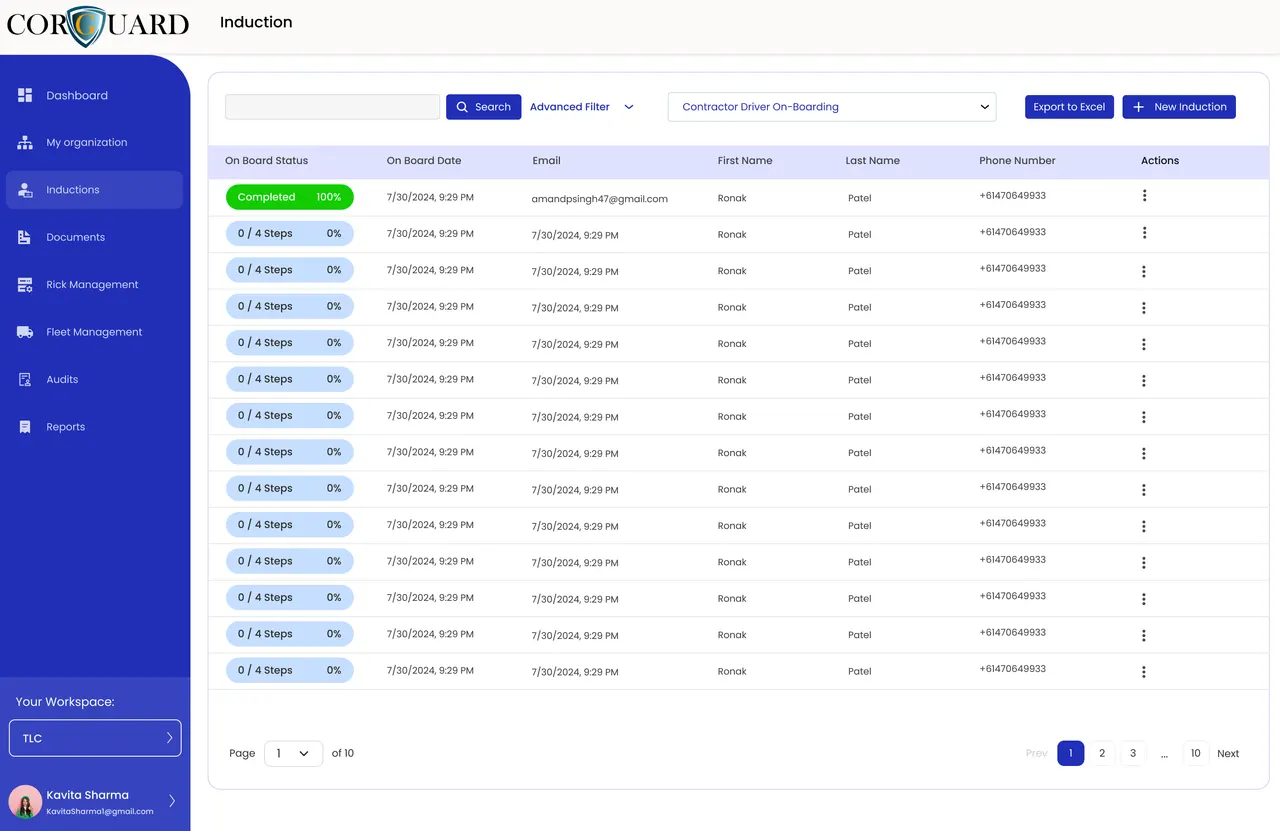
Training records
Connect training completion from cortraining.com.au to evidence and follow-up.
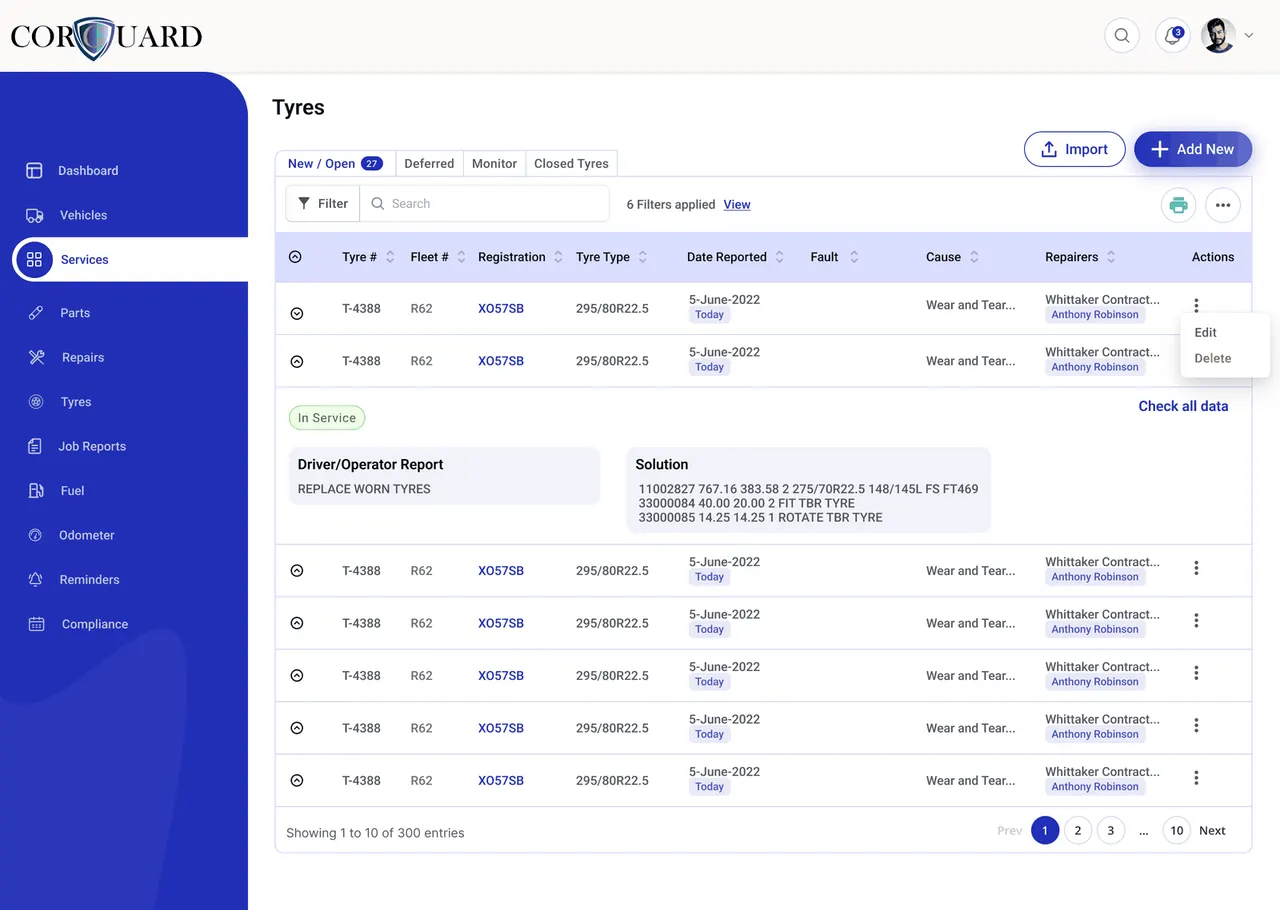
Driver diary checks
Connect fatigue and driver diary review back to manager visibility.
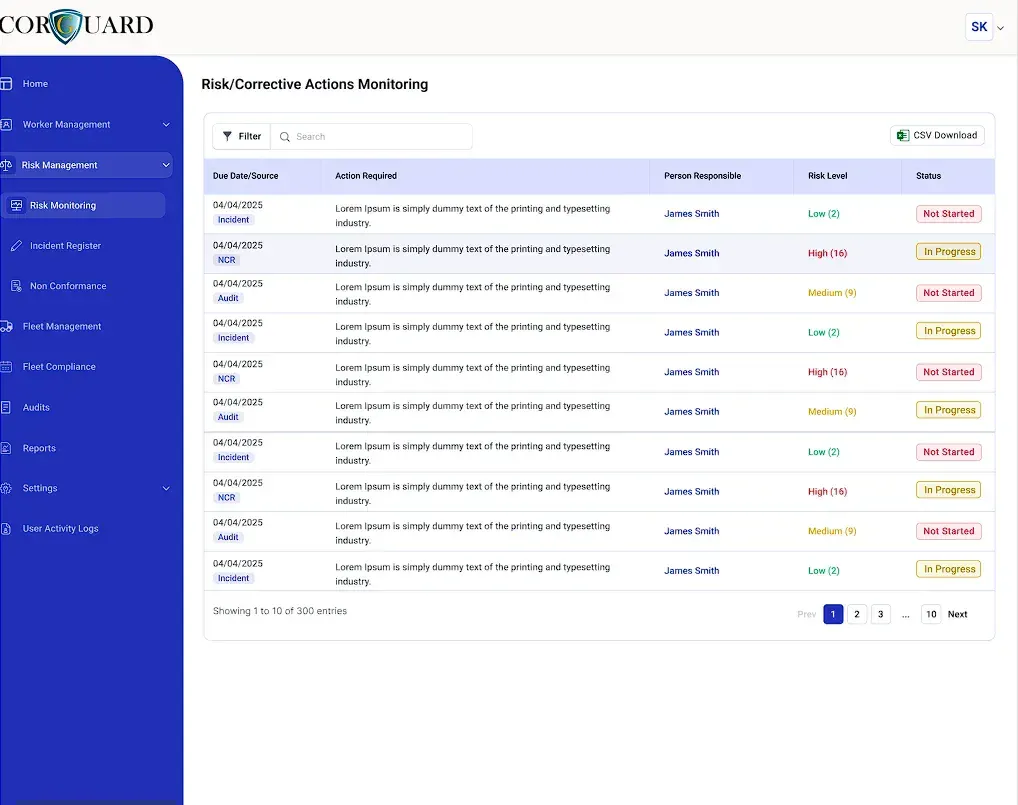
Corrective actions
Turn audit findings, hazards and incidents into tracked actions.
Keep exploring
Related Chain of Responsibility reading
MAEZ insight
Significant Increase in CoR Fines & Prosecutions
Are you feeling the rise in living costs? How would your corporation pay penalties for $3,546,390 for a Category 1 offence? How would your family cope if you had to face jail time?
MAEZ insight
The Imperative of Incorporating a Chain of Responsibility Policy in Your Enterprise
The safety of our roads is of paramount importance, particularly in the transport sector. In Australia, the safety of the transport sector relies heavily on the Heavy Vehicle National Law (HVNL) and state-based workplace safety legislation. One key area of focus for transport safety is the use of driver-facing cameras.
MAEZ insight
Would You Sign Off A Cheque For $18m?
A large grain manufacturer was slugged with an $18m fine by the then RTA, for a total of 330 breaches or individual offences, about $55K for each offence. The allegation was that the business which was accepting loads, were accepting loads grossly overloaded!
MAEZ insight
Responsibility; Who’s at fault in the Chain of Responsibility?
Late last week on the NSW Police FB blog, it reported that a transport company (Many people will know who) was caught with unsafe loads coming out of a major retailers distribution centre.
MAEZ insight
Trucks Crash Too
I know what you’re all possibly saying to yourself now. Something along the lines of, “We’re fine, we have our drivers sign a fitness to drive form”. Let me explain to you further, that this is not good enough, it won’t save you from a potential prosecution.
MAEZ insight
Spend Less on Fuel
Motormouth, the brand that has always tried to help us spend less on fuel has delivered a cool new app for everyone to use. The best part is though, you can choose whatever fuel you want, including Diesel.
Frequently asked questions
Questions people ask about this topic
What is the purpose of journey planners in heavy vehicle transport?
Journey planners align transport tasks with Chain of Responsibility duties by managing fatigue, route risks, and scheduling pressure while creating timestamped evidence that safety controls are working. They protect drivers, cargo, and the public while demonstrating HVNL compliance.
Who should use journey planning tools?
Anyone who influences a heavy vehicle transport task should use journey planning tools, including owner-operators, drivers, transport managers, schedulers, executives, consignors, consignees, loaders, and contractors with a Chain of Responsibility role.
How do Electronic Work Diaries support fatigue compliance under the HVNL?
Electronic Work Diaries replace paper logs with a digital solution that provides real-time insights and a clear audit trail of driver work and rest hours. They reduce manual errors, send alerts for upcoming rest breaks, and support faster compliance auditing.
How does MAEZ connect journey planning tools to a compliance system?
MAEZ identifies compliance gaps, builds Safety Management System controls around how the business operates, and uses structured records and evidence to prove controls are working. Where software is needed, CoRGuard supports training records, driver diary checks, audits, corrective actions, and evidence review.
Where is Chain of Responsibility training delivered for MAEZ clients?
MAEZ provides the advisory and risk pathway, while Chain of Responsibility training is delivered through a dedicated training platform that connects course completion back to evidence and follow-up within the compliance system.