
MAEZ insight
Significant Increase in CoR Fines & Prosecutions
NHVR penalties increased from 1 July 2022. Category 1 CoR offences now carry corporate fines up to $3,546,390. Learn what's driving the rise and how to reduce your risk.

Proof that freight promises do not create unsafe transport pressure.
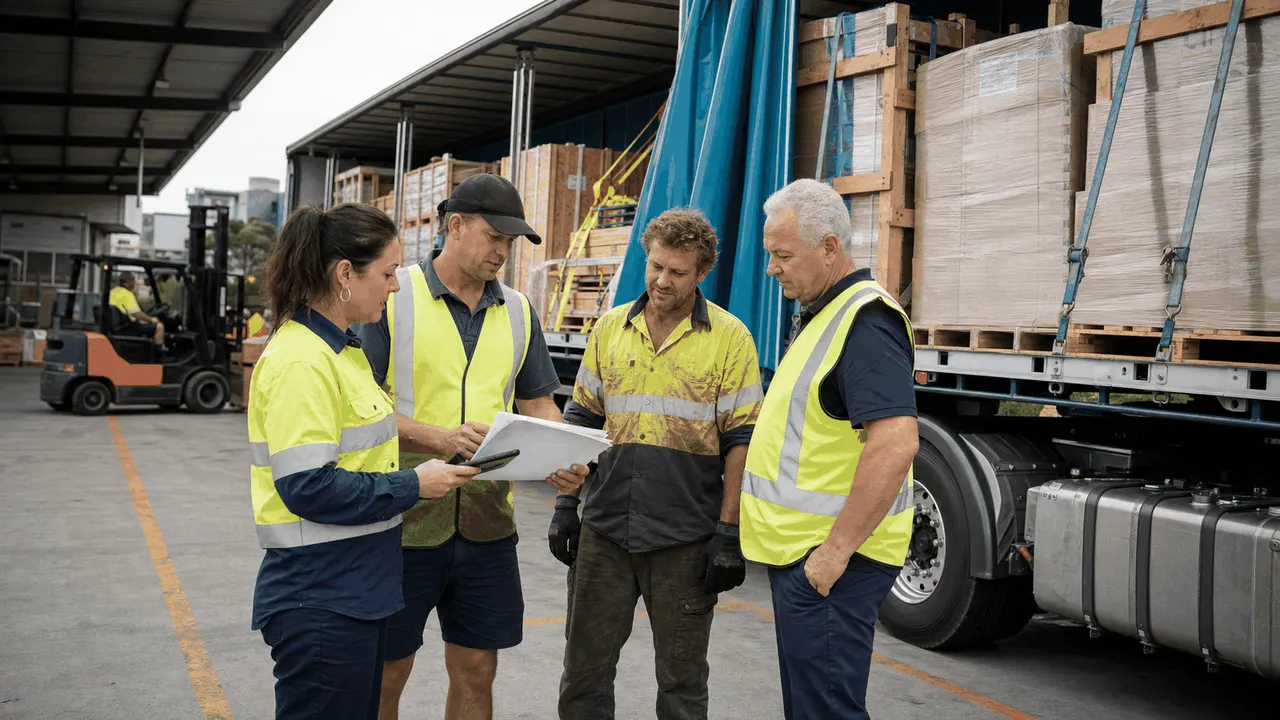
Loading controls need evidence, not assumptions.
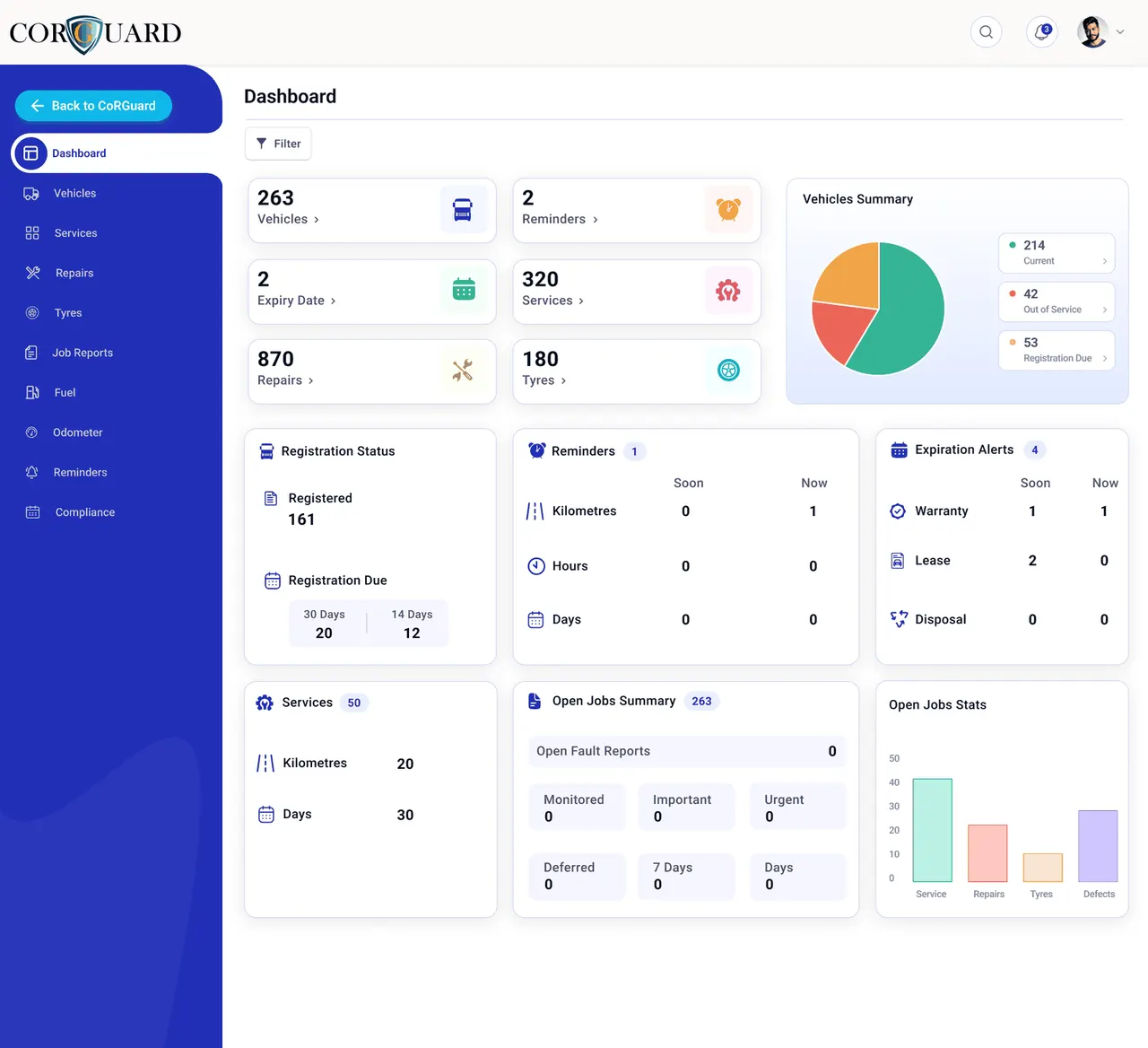
Daily fleet activity has to connect back to duties, controls, and review.

Due diligence means knowing whether the safety system is actually working.
Consignors
Freight terms, delivery windows, and KPIs must not push drivers into speed, fatigue, or mass breaches.
Consignees
Receiving rules, site access, and unloading delays are CoR controls that need to be set and evidenced.
Loaders
Mass, dimension, and load restraint decisions need documented checks, not assumptions.
Managers
Executives and managers need due-diligence evidence that the Safety Management System is actually working.
What is driving the rise in CoR fines and prosecutions?
Penalties are indexed annually and enforcement is intensifying
NHVR penalties increased from 1 July 2022, with Category 1 Chain of Responsibility offences now carrying corporate fines of up to $3,546,390. In the past 12 months, 28 penalties were handed down compared with 19 in the previous year — a 147% increase in fines being issued. Penalty increases cover Category 1, 2 and 3 offences, meaning every party in the Chain of Responsibility faces greater financial and personal exposure.
The National Heavy Vehicle Regulator (NHVR) indexes penalties each year on 1 July. The trend is clear: the Regulator is clamping down harder on breaches of the Heavy Vehicle National Law (HVNL), and penalty amounts will continue to rise with annual indexation.
For a broader understanding of how duties are分配 across the supply chain, see About Chain of Responsibility | MAEZ.
What the penalty increases look like
Category 1 is the most serious tier under the HVNL
A Category 1 Chain of Responsibility offence is punishable by a corporate fine of $3,546,390. Category 1 is the most serious tier, typically involving risks to public safety, mass, dimension, loading, or fatigue management breaches that create significant danger.
For individuals, Category 1 offences can also carry the risk of imprisonment. This puts personal liability squarely on executives, managers, and operators who influence transport tasks.
Key points about HVNL court sanctions
- The HVNL sets out the court sanctions and matters the court must consider when imposing penalties for noncompliance with mass, dimension, or loading requirements.
- Penalty amounts are indexed annually, so these figures will continue to rise each year.
- Category 1, 2 and 3 offences are all affected, increasing exposure across every role in the chain.
What happens when fines hit home
Enforcement outcomes are real — businesses have been liquidated
A South Australian concrete company was recently liquidated due to a significant fine imposed by the Regulator. This is not a theoretical risk; it is an operational one that can end a business.
With living costs rising across the board, absorbing a major regulatory fine is beyond what most transport businesses can sustain. Consider the following questions:
- How would your corporation pay a penalty of $3,546,390 for a Category 1 offence?
- How would your family cope if you personally had to face jail time?
- Could your business survive the reputational and financial damage of a prosecution?
These are not hypothetical scenarios — they are the consequences already being experienced by operators who were not prepared.
How to reduce your risk
Systems and procedures are your best defence
Everyone makes mistakes. The key to reducing exposure is having as many systems, procedures, and controls in place as possible to mitigate risk before an incident occurs. Now is an excellent time to review the risks and practices in your business.
Check that the following are actively documented
- Fatigue management and speed compliance are being reviewed
- Mass and load restraint are checked before a heavy vehicle departs your loading facility
- Loading controls are backed by evidence, not assumptions
- Executives and managers can demonstrate due diligence — knowing whether the safety system is actually working
If you are unsure of your requirements under the HVNL, a practical CoR risk review can identify what is exposed before an auditor or regulator does. The goal is to find the gaps, fix the system, and prove the controls.
Train your team on CoR obligations
Online training is the fastest way to build awareness across your business
Engaging your employees is one of the most effective steps you can take. Chain of Responsibility training helps every person in your supply chain understand their duties — from consignors and loaders to operators, managers, and executives.
You can purchase as little as one seat through CoR training or contact MAEZ on 1300 553 811 to arrange bulk training for your team.
Don't follow the trend that is starting to occur and let a fine ruin your business or your life. If you are not sure whether training would benefit your business, explore the available CoR training options or reach out via the contact page.
How MAEZ works
Find the gaps. Fix the system. Prove the controls.
MAEZ helps transport operators deal with the compliance risk they already know is there. We help get the Safety Management System in order, protect NHVAS accreditation, reduce fine exposure, and connect training, evidence, and CoRGuard workflows where software is needed.
Find
Identify what is exposed before an auditor or regulator does.
Fix
Build the SMS controls around how the transport business actually runs.
Prove
Use CoRGuard where records, reminders, diaries, audits, and evidence need structure.
From advice to evidence
From MAEZ advice to a working Safety Management System
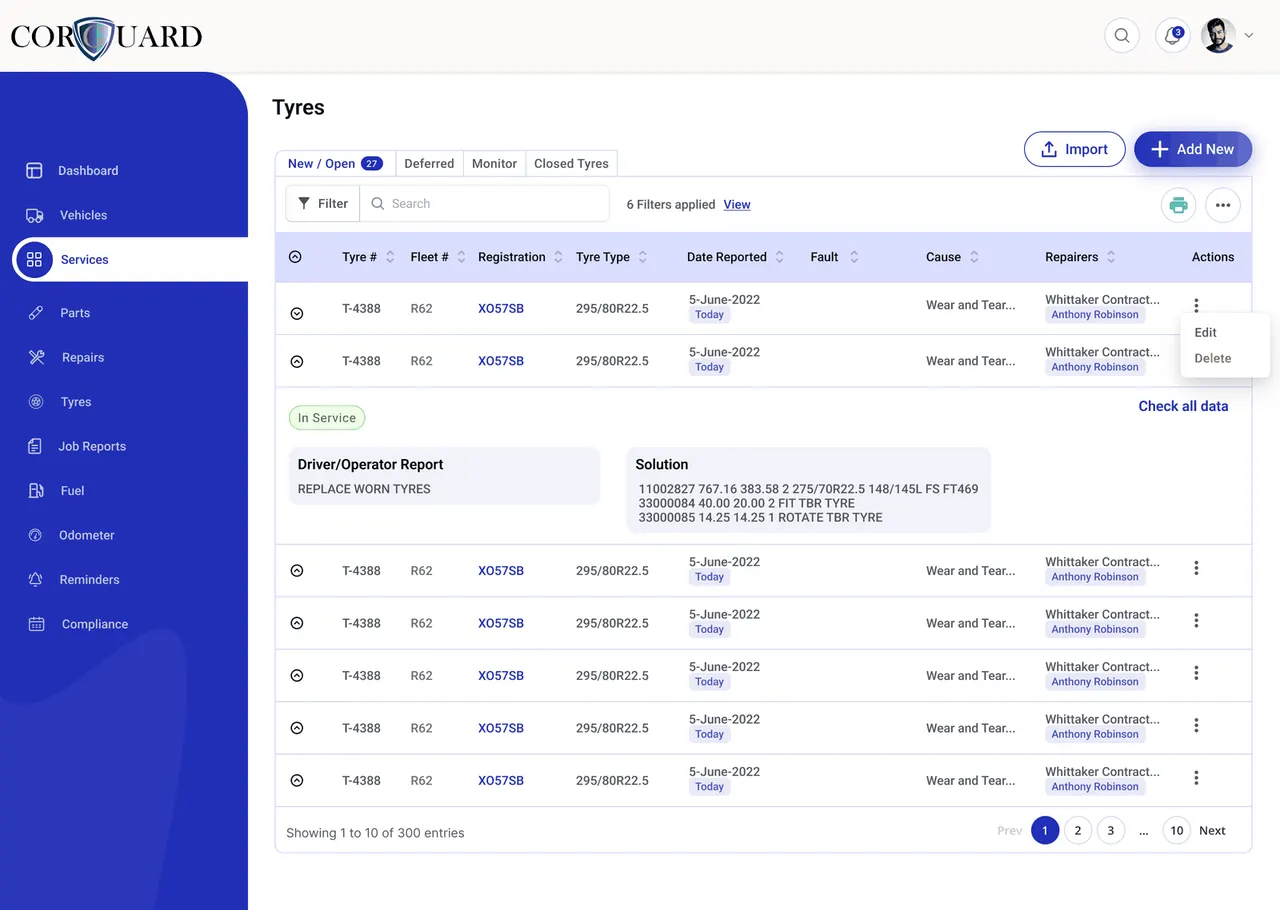
Advisory work should leave a practical implementation trail. These examples show how CoRGuard supports records, fatigue and driver diary checks, maintenance, audits, document control, inductions, corrective actions, and evidence review after MAEZ identifies the gaps.
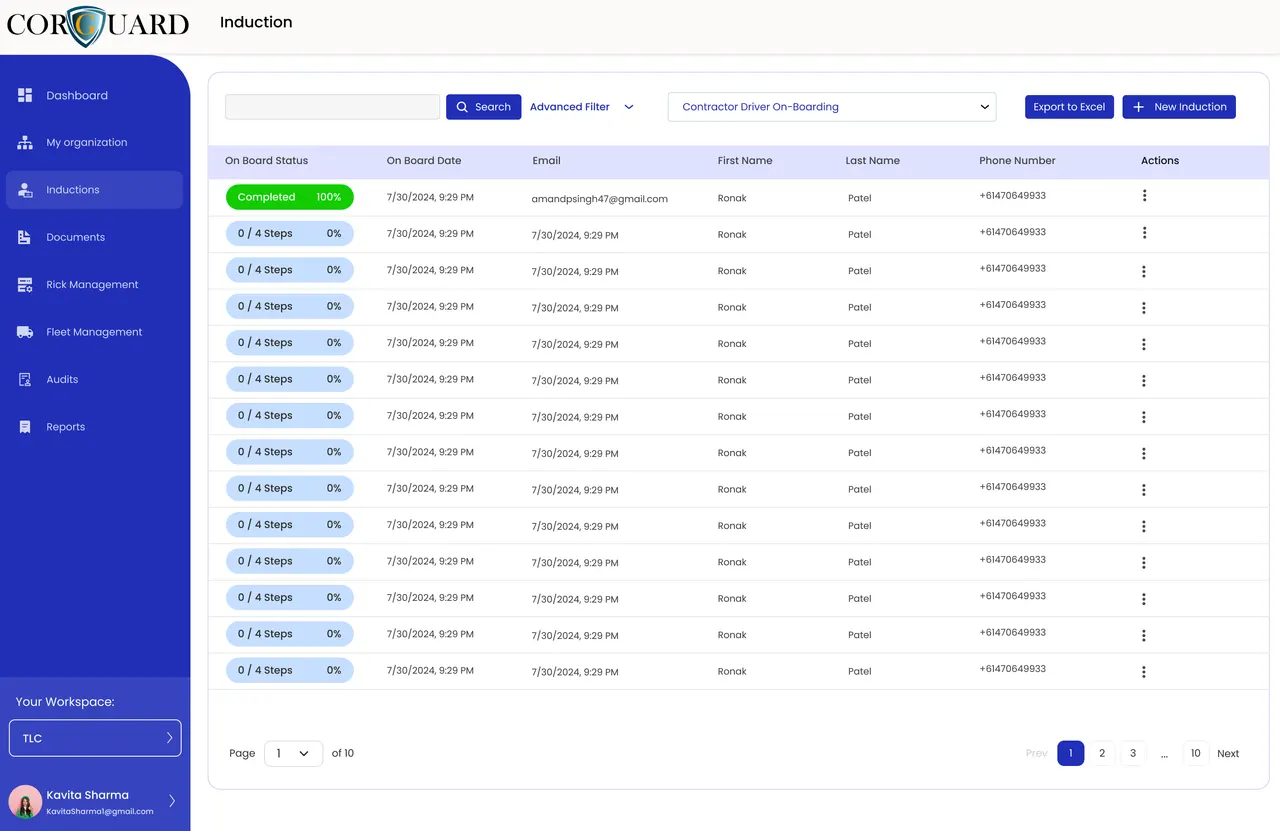
Training records
Connect training completion from cortraining.com.au to evidence and follow-up.
Driver diary checks
Connect fatigue and driver diary review back to manager visibility.
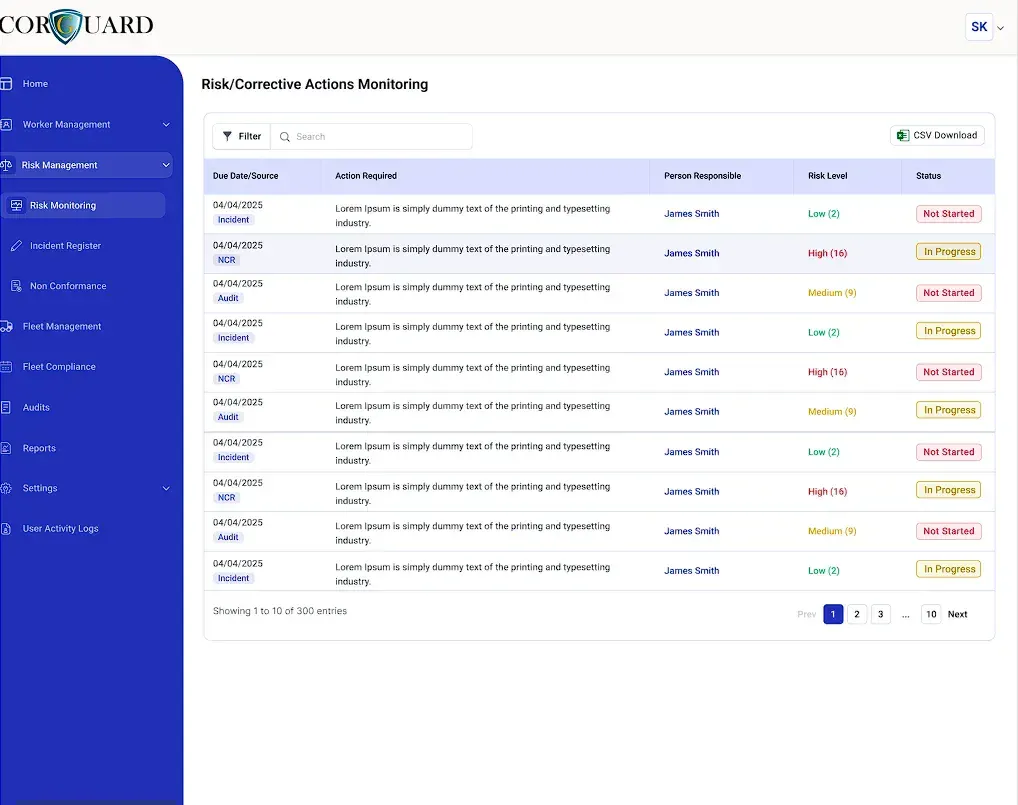
Corrective actions
Turn audit findings, hazards and incidents into tracked actions.
Keep exploring
Related Chain of Responsibility reading
MAEZ insight
The Imperative of Incorporating a Chain of Responsibility Policy in Your Enterprise
The safety of our roads is of paramount importance, particularly in the transport sector. In Australia, the safety of the transport sector relies heavily on the Heavy Vehicle National Law (HVNL) and state-based workplace safety legislation. One key area of focus for transport safety is the use of driver-facing cameras.
MAEZ insight
Would You Sign Off A Cheque For $18m?
A large grain manufacturer was slugged with an $18m fine by the then RTA, for a total of 330 breaches or individual offences, about $55K for each offence. The allegation was that the business which was accepting loads, were accepting loads grossly overloaded!
MAEZ insight
Responsibility; Who’s at fault in the Chain of Responsibility?
Late last week on the NSW Police FB blog, it reported that a transport company (Many people will know who) was caught with unsafe loads coming out of a major retailers distribution centre.
MAEZ insight
Trucks Crash Too
I know what you’re all possibly saying to yourself now. Something along the lines of, “We’re fine, we have our drivers sign a fitness to drive form”. Let me explain to you further, that this is not good enough, it won’t save you from a potential prosecution.
MAEZ insight
Spend Less on Fuel
Motormouth, the brand that has always tried to help us spend less on fuel has delivered a cool new app for everyone to use. The best part is though, you can choose whatever fuel you want, including Diesel.
MAEZ insight
The Root Cause & How To Get There
You had an incident and many things may have happened, but you need to work through each one in a RCA (root cause analysis) one by one.
Frequently asked questions
Questions people ask about this topic
How much is the maximum fine for a Category 1 CoR offence?
As of 1 July 2022, a Category 1 Chain of Responsibility offence carries a maximum corporate penalty of $3,546,390. Category 1 is the most serious tier under the HVNL and can also involve imprisonment for individuals.
Why have CoR fines and prosecutions increased?
The NHVR indexes penalties annually on 1 July and is clamping down harder on HVNL breaches. In the past 12 months, 28 penalties were issued compared with 19 in the previous year — a 147% increase in fines being handed down.
Who faces personal liability under the Chain of Responsibility?
Executives, managers, operators, and anyone who influences a heavy vehicle transport task can face personal liability. Category 1 offences can carry imprisonment for individuals, not just corporate fines.
What is the most effective way to reduce CoR fine exposure?
The best defence is having documented systems, procedures, and controls in place — including fatigue and speed compliance reviews, pre-departure mass and load restraint checks, evidence-based loading controls, and demonstrable executive due diligence. CoR training for all supply-chain parties is also critical.
Can a CoR fine actually put a transport company out of business?
Yes. A South Australian concrete company was recently liquidated due to a significant fine imposed by the NHVR. For most transport businesses, absorbing a major regulatory penalty is financially unsustainable.