
MAEZ insight
The Definitive Guide to Chain of Responsibility (CoR)
Understand Chain of Responsibility under the Heavy Vehicle National Law: what it means, who is responsible, why it matters, and how training and advisory support help Australian transport operators comply.

Contractor controls should be verified before the work starts.
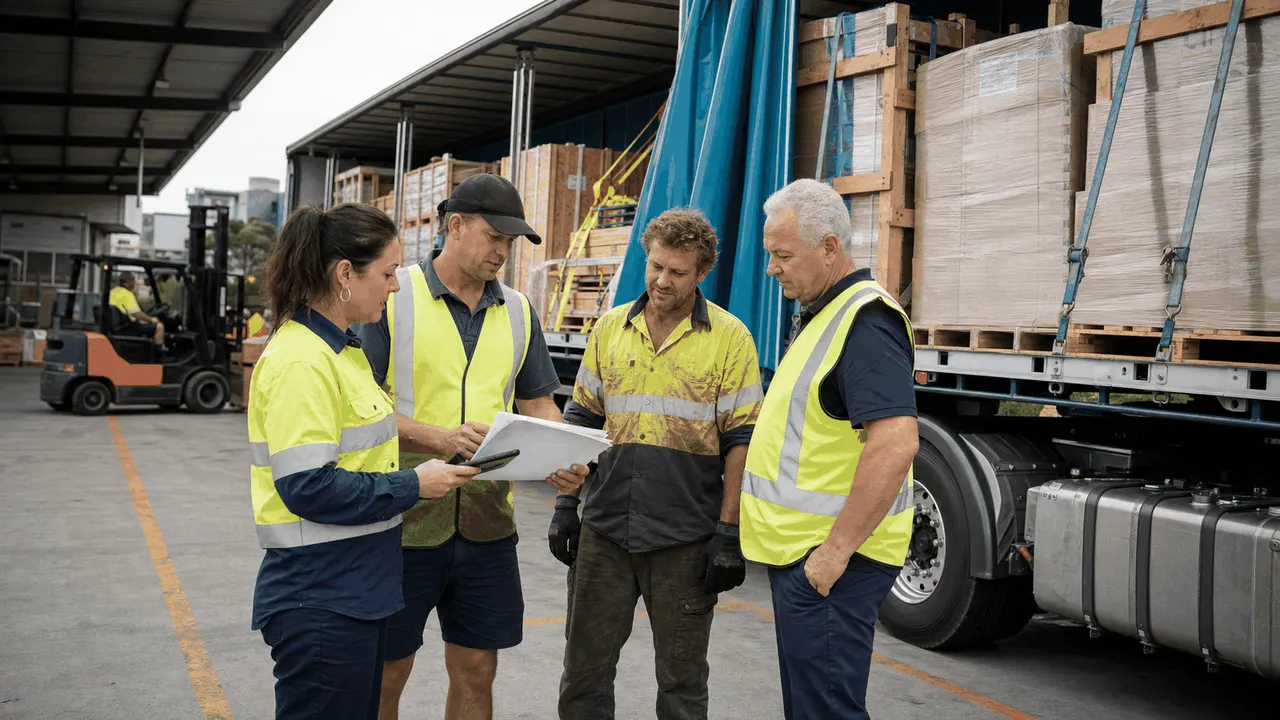
Receiving windows, site rules, and unloading delays can all shape the transport task.
Unloading decisions can affect safety, scheduling, and responsibility.
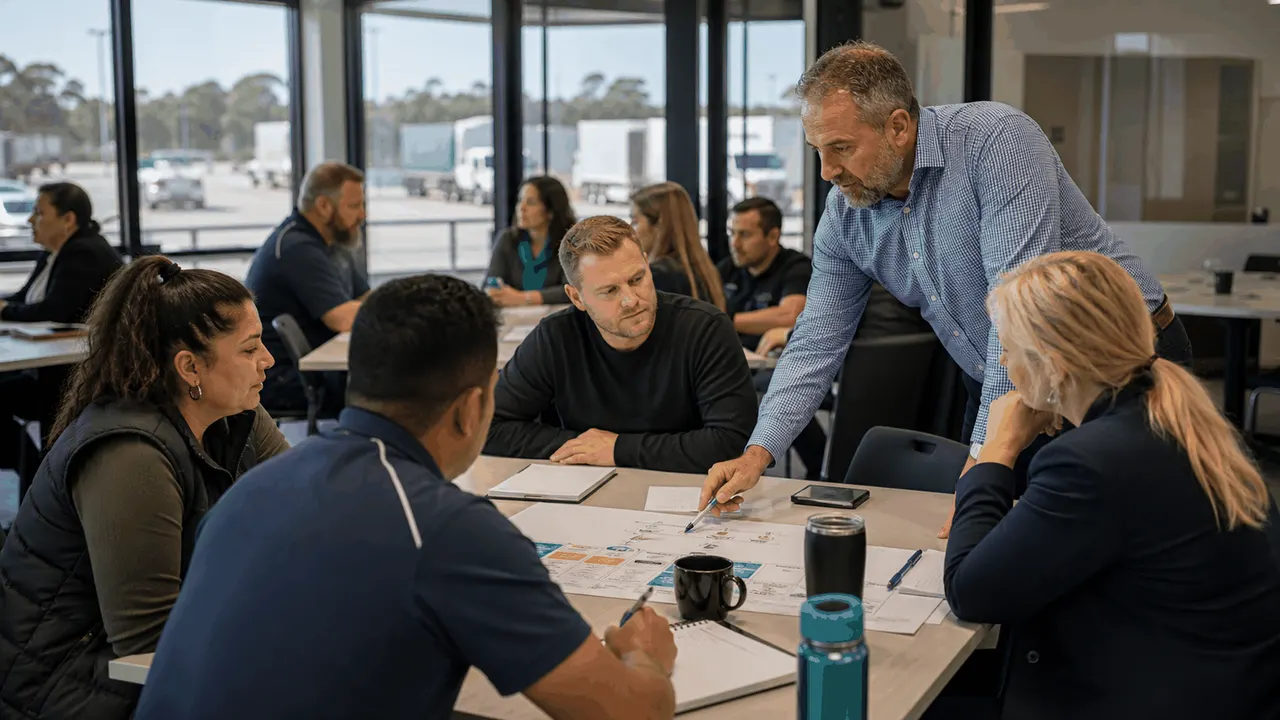
Managers need a clear view of gaps before audit or enforcement pressure arrives.
Consignors
Freight terms, delivery windows, and KPIs must not push drivers into speed, fatigue, or mass breaches.
Consignees
Receiving rules, site access, and unloading delays are CoR controls that need to be set and evidenced.
Loaders
Mass, dimension, and load restraint decisions need documented checks, not assumptions.
Managers
Executives and managers need due-diligence evidence that the Safety Management System is actually working.
What is the Chain of Responsibility?
Shared duty for everyone who influences a heavy vehicle transport task
The Chain of Responsibility (CoR) under the Heavy Vehicle National Law (HVNL) means every party in the supply chain who influences a transport activity shares legal responsibility for heavy vehicle safety. Updated on 1 October 2018 and aligned with workplace health and safety principles, CoR requires all parties to take reasonably practicable steps to eliminate or minimise public risk.
The law embeds a principle of shared responsibility (HVNL s26A) and a primary duty (HVNL s26C) that applies to consignors, consignees, loaders, packers, schedulers, managers, contractors, drivers, and operators. Executives of legal entities also carry a personal due-diligence duty (HVNL s26D).
In practical terms, CoR means transport safety is managed the same way a business manages workplace safety — identifying hazards, putting controls in place, and keeping evidence that those controls work.
For a broader overview, see About Chain of Responsibility and our guide on what Australian HVNL duty holders need to understand.
How do CoR duties work in practice?
Accountability flows through every level of the supply chain
A chain of responsibility is, at its core, a risk-management strategy. A person or corporation can be held accountable for the acts of their employees and contractors when those acts affect heavy vehicle safety. This places responsibility on every level of an organisation — from executives and managers through to apprentices and individual workers.
What each person in the chain is expected to do
- Recognise risks in their area of activity
- Take reasonably practicable steps to control those risks
- Report dangerous conditions or breaches to a supervisor or manager
- Alert co-workers and other parties to hazards they may not be aware of
- Follow policies and procedures that regulate their transport-related duties
Prohibited requests and contracts
The HVNL also prohibits making requests or entering contracts that would encourage or require a breach of the law (HVNL s26E). This means a consignor cannot set deadlines that effectively force a driver to speed or exceed work/rest limits, and a manager cannot turn a blind eye to overloaded vehicles.
When a worker violates a rule, the reporting and accountability process continues up the chain — potentially reaching the highest-ranking official in the organisation. This is why having a clear, documented reporting system matters.
Why does CoR matter for your business?
Reputation, safety performance, and legal exposure all hinge on it
Chain of Responsibility is central to workplace health and safety management in the transport sector. It ensures that the people with the authority to control a situation actually do so — and that everyone else follows the policies and procedures that support safe transport activities.
Protecting business reputation
Every business depends on its employees and contractors doing the right thing. A single CoR breach — whether it involves mass, fatigue, speed, or load restraint — can damage a company's standing with customers, regulators, and the public. Strong CoR controls help demonstrate that the business takes safety seriously.
Maintaining health and safety in the workplace
CoR places responsibility on every worker, from executives to apprentices, for recognising and managing risks in their area. This distributed approach is effective because it catches hazards closer to the source rather than relying on a single safety officer.
Identifying negligence and accountability
When an incident occurs, CoR laws are often central to evaluating culpability. They help ensure that the person ultimately responsible for an employee's conduct — or for a systemic gap — can be held accountable.
Supporting an effective reporting system
A well-structured reporting system lets violations and hazards escalate quickly to the right decision-maker. CoR training helps everyone understand what to report, when, and to whom.
How does Chain of Responsibility training help?
Building understanding of HVNL duties and practical risk controls
Chain of Responsibility training helps candidates understand the core concepts of CoR legislation under the HVNL and how those duties translate into everyday decisions.
What well-targeted training covers
- Improving road safety outcomes
- Reducing damage to infrastructure and vehicles
- Improving business efficiency and compliance
- Understanding who is a duty holder and what each role requires
- Recognising prohibited requests and contracts under the HVNL
Employees and managers can complete Chain of Responsibility training so they can carry out their roles with a clear understanding of their legal obligations.
For role-specific guidance, see our resources on CoR training for executives and managers and HVNL 2026 changes and CoR training readiness.
How MAEZ helps with CoR compliance
From gap review to practical controls, training, and evidence
MAEZ helps Australian transport and supply-chain businesses turn Chain of Responsibility, HVNL, WHS, NHVAS, and chartered risk obligations into practical training, advisory, audit, and implementation pathways.
A typical engagement starts with a practical CoR risk review to identify what is exposed before an auditor or regulator does. From there, MAEZ helps build Safety Management System controls around how the transport business actually runs — not generic templates that sit unused.
Where software fits
Where structured records, reminders, audits, maintenance, driver diary checks, inductions, corrective actions, and evidence reporting are needed, the CoRGuard platform supports the evidence workflow. MAEZ defines the risk, obligations, and controls; CoRGuard helps prove them.
Training delivery
MAEZ provides the advisory and risk pathway. Chain of Responsibility training is delivered through dedicated training channels so that managers, executives, contractors, and supply-chain parties understand their HVNL duties and practical risk controls.
If you want a practical review of the controls, evidence, training, and SMS gaps that matter most to your operation, contact MAEZ.
Important disclaimer
The information on this page is provided for educational purposes and reflects general guidance on Chain of Responsibility under the HVNL. It is not legal advice. For advice specific to your operation — including CoR obligations, NHVAS readiness, Safety Management System design, and training pathways — contact MAEZ to discuss your situation with a qualified professional.
How MAEZ works
Find the gaps. Fix the system. Prove the controls.
MAEZ helps transport operators deal with the compliance risk they already know is there. We help get the Safety Management System in order, protect NHVAS accreditation, reduce fine exposure, and connect training, evidence, and CoRGuard workflows where software is needed.
Find
Identify what is exposed before an auditor or regulator does.
Fix
Build the SMS controls around how the transport business actually runs.
Prove
Use CoRGuard where records, reminders, diaries, audits, and evidence need structure.
From advice to evidence
From MAEZ advice to a working Safety Management System
Advisory work should leave a practical implementation trail. These examples show how CoRGuard supports records, fatigue and driver diary checks, maintenance, audits, document control, inductions, corrective actions, and evidence review after MAEZ identifies the gaps.
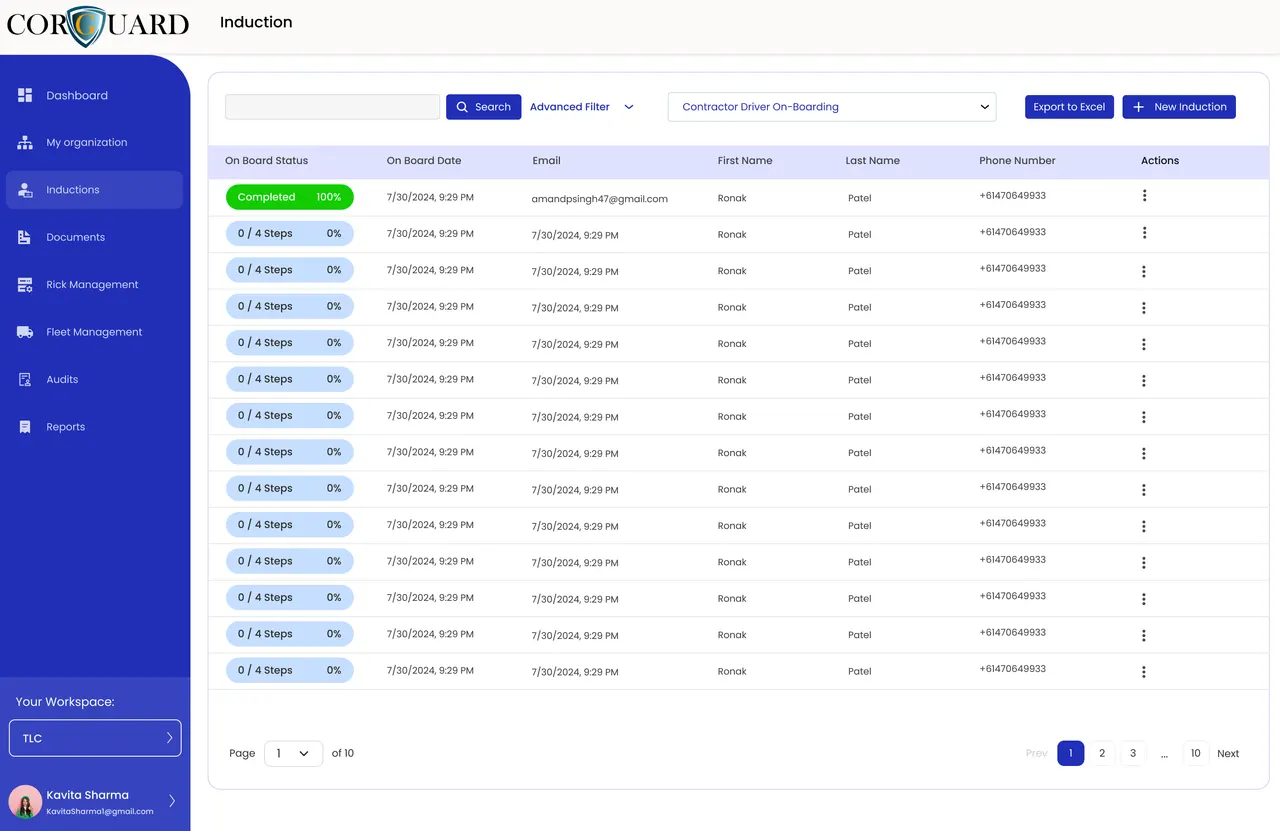
Training records
Connect training completion from cortraining.com.au to evidence and follow-up.
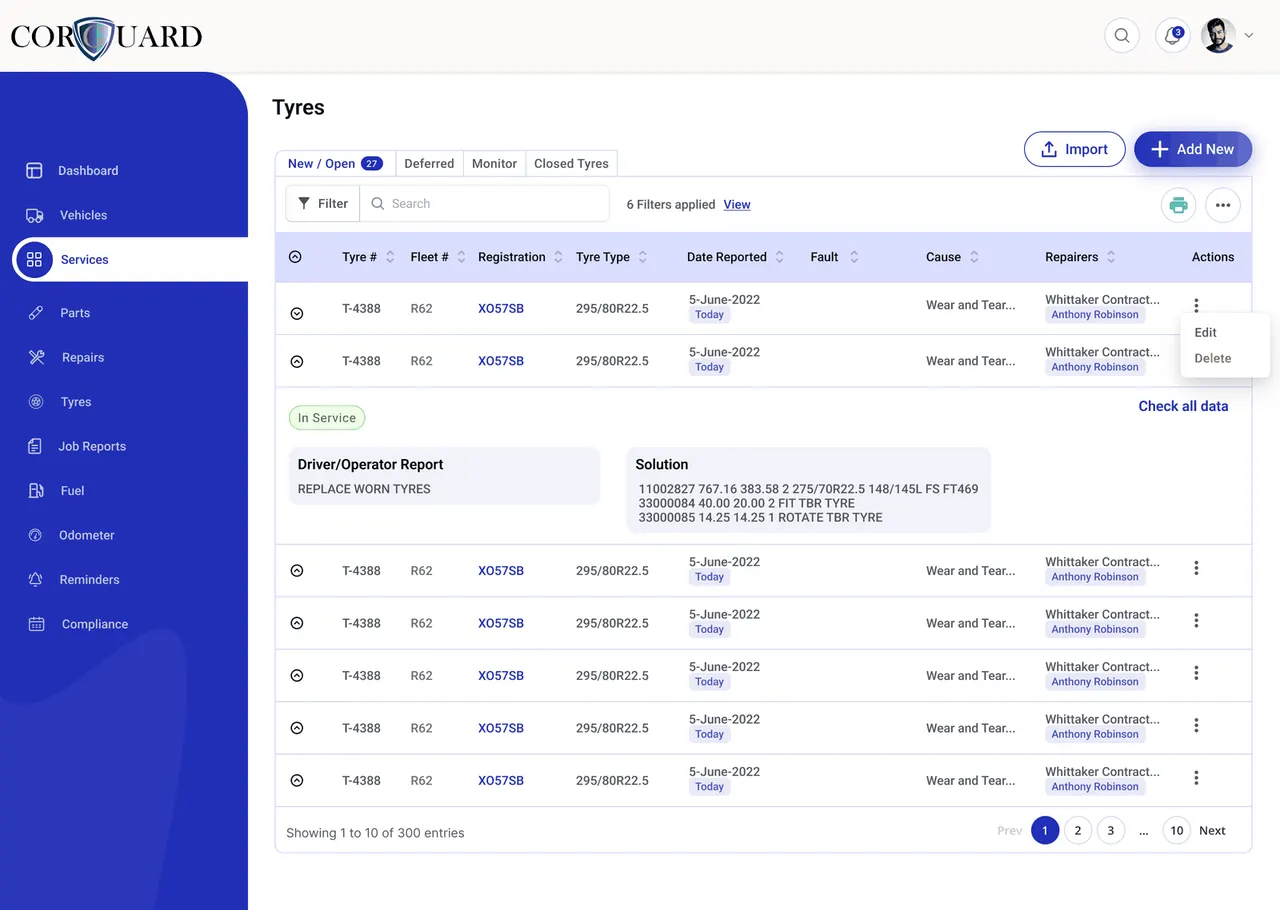
Driver diary checks
Connect fatigue and driver diary review back to manager visibility.
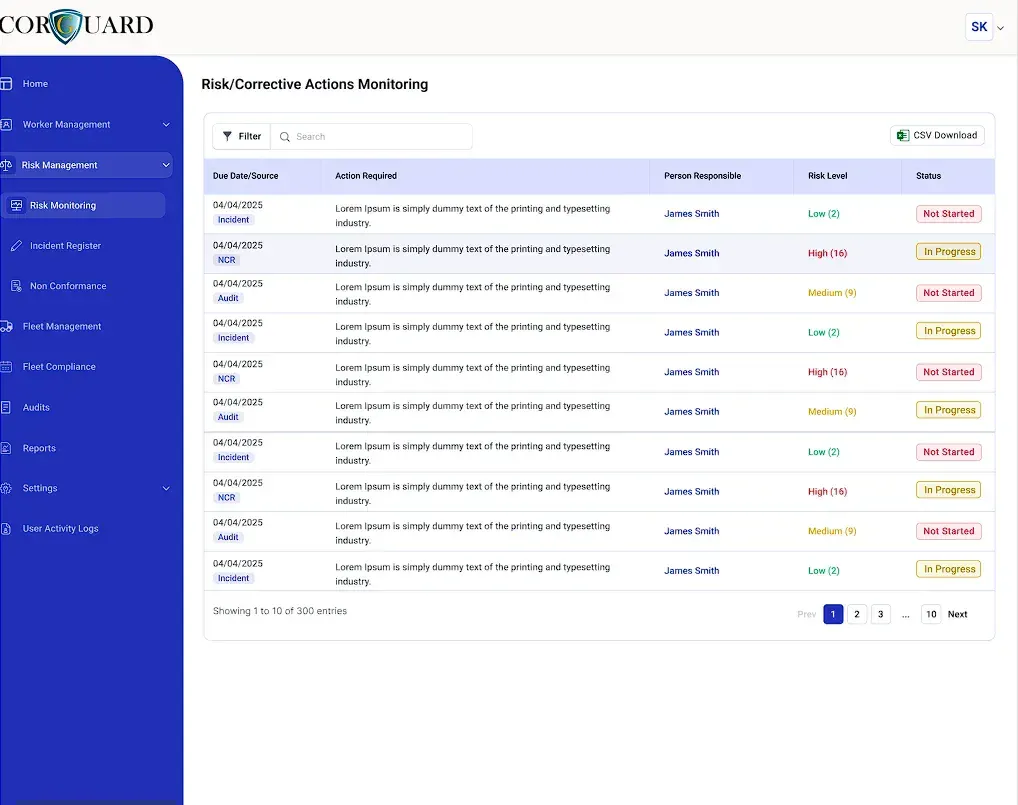
Corrective actions
Turn audit findings, hazards and incidents into tracked actions.
Keep exploring
Related Chain of Responsibility reading
MAEZ insight
Penalties for Breaches of Heavy Vehicle National Law
HVNL refers to the Heavy Vehicle National Law, which defines minimum safety standards across the logistics network and significant penalties for the parties responsible for breaches.
MAEZ insight
Eifers Pty Ltd | NHVR Issues Enforceable Undertaking
Over the many years of operation at MAEZ we are continually staggered to find a lack of Mass control at varying types of business. What is interesting is that businesses that drive revenue from Mass related products, for example, Iron Ore, tend to be very specific with its Mass control, where others are not.
MAEZ insight
What Causes Collisions & How can Fleets Prevent Them? Experts Explain
A preventable accident is one in which the driver failed to do everything reasonably possible to avoid it — understanding collision causes is the first step in fleet prevention.
MAEZ insight
The Impact of Driver-Facing Cameras on Road Safety and the Transport Sector in Australia
The safety of our roads is of paramount importance, particularly in the transport sector. In Australia, the safety of the transport sector relies heavily on the Heavy Vehicle National Law (HVNL) and state-based workplace safety legislation. One key area of focus for transport safety is the use of driver-facing cameras.
MAEZ resource
Chain of Responsibility Training Sydney
Practical Chain of Responsibility training for Sydney transport operators, schedulers, loaders and executives — delivered on-site across Sydney or online, mapped to the current HVNL.
MAEZ resource
Chain of Responsibility Training Melbourne
Practical Chain of Responsibility training for Melbourne transport operators, schedulers, loaders and executives — delivered on-site across Melbourne or online, mapped to the current HVNL.
Frequently asked questions
Questions people ask about this topic
What is the Chain of Responsibility under the HVNL?
The Chain of Responsibility (CoR) is a legal principle under the Heavy Vehicle National Law that makes every party in the supply chain who influences a transport activity share responsibility for heavy vehicle safety. Updated on 1 October 2018, it aligns with workplace health and safety principles and requires all parties to take reasonably practicable steps to eliminate or minimise public risk.
Who is considered a duty holder under Chain of Responsibility?
Duty holders include consignors, consignees, loaders, packers, schedulers, managers, contractors, drivers, and operators — anyone in the supply chain who influences a transport activity. Executives of legal entities also carry a personal due-diligence duty under HVNL s26D to ensure the business complies with its primary duty.
Can a consignor be held liable if their deadlines force a driver to breach the HVNL?
Yes. Under HVNL s26E, the law prohibits making requests or entering contracts that would encourage or require a breach. A consignor who sets deadlines that effectively force a driver to speed or exceed work/rest limits can be held accountable, as can a manager who ignores overloaded vehicles.
What does Chain of Responsibility training cover?
CoR training covers understanding who is a duty holder, recognising prohibited requests and contracts under the HVNL, identifying risks in each role's area of activity, and knowing how to report hazards and breaches. It aims to improve road safety outcomes, reduce infrastructure damage, and improve business efficiency and compliance.
How does MAEZ help transport operators with CoR compliance?
MAEZ starts with a practical CoR risk review to identify exposed areas before an auditor or regulator does, then helps build Safety Management System controls tailored to how the business actually runs. Where structured records and evidence are needed, the CoRGuard platform supports the evidence workflow. Training is delivered through dedicated channels for managers, executives, contractors, and supply-chain parties.