
MAEZ insight
How to Implement Chain of Responsibility
A practical look at implementing Chain of Responsibility in Australian transport, using a real SafeWork NSW enforceable undertaking as a case study. Learn what went wrong, how it was fixed, and how MAEZ helps operators close CoR gaps.
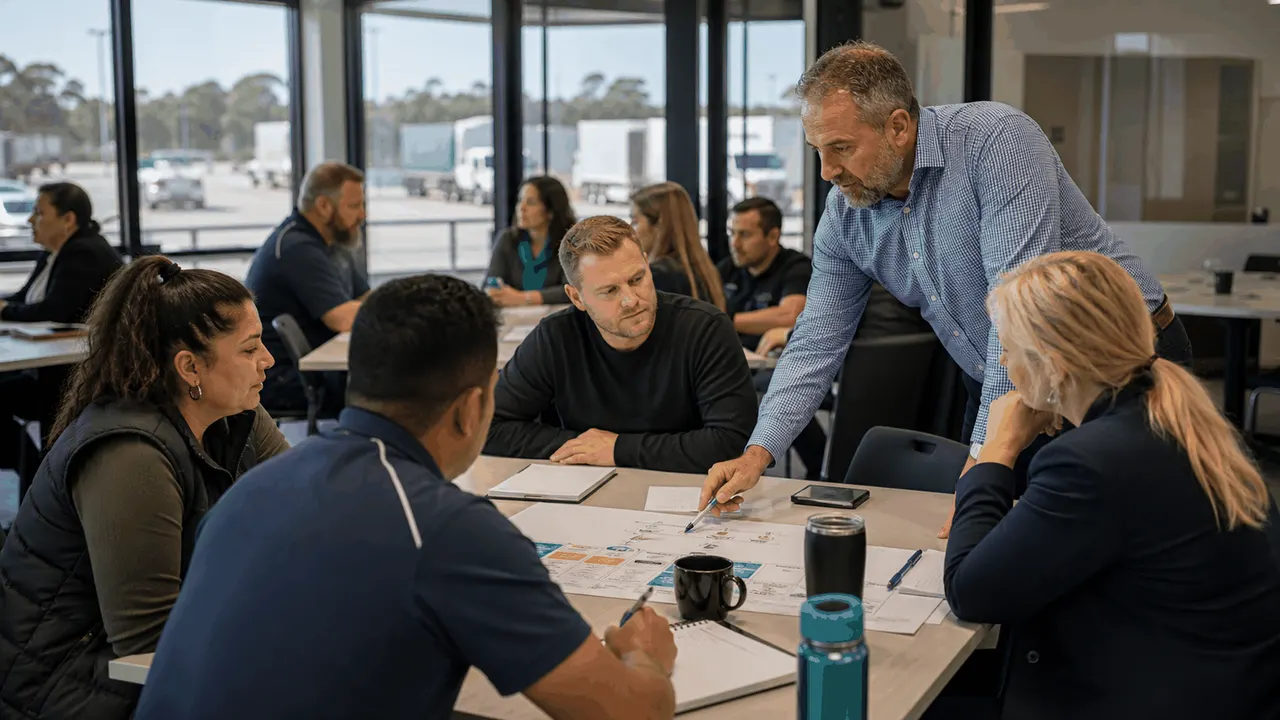
Managers need a clear view of gaps before audit or enforcement pressure arrives.

Contractor controls should be verified before the work starts.
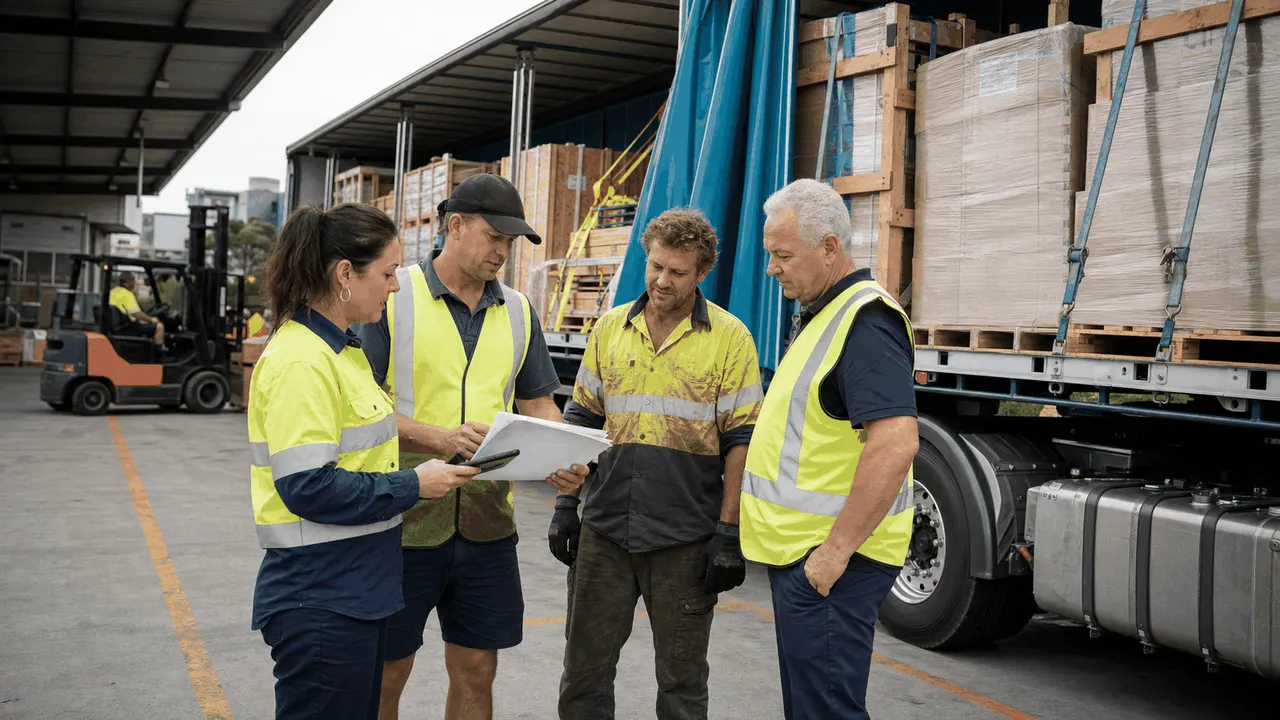
Receiving windows, site rules, and unloading delays can all shape the transport task.
Unloading decisions can affect safety, scheduling, and responsibility.
Consignors
Freight terms, delivery windows, and KPIs must not push drivers into speed, fatigue, or mass breaches.
Consignees
Receiving rules, site access, and unloading delays are CoR controls that need to be set and evidenced.
Loaders
Mass, dimension, and load restraint decisions need documented checks, not assumptions.
Managers
Executives and managers need due-diligence evidence that the Safety Management System is actually working.
Why CoR implementation matters
A real-world lesson from a SafeWork NSW enforceable undertaking

Implementing Chain of Responsibility means building operational controls, verified training, and evidence that your safety system works at the front line — not just on paper. A real SafeWork NSW enforceable undertaking involving Holcim shows that a compliant-looking management system can still leave a business exposed when operational audits and duty-holder training are incomplete.
CoR is not about having a written policy on a shelf. It requires a system that is operationally verified and duty holders who understand their responsibilities at every level of the chain.
A real case involving Holcim (Australia) Pty Ltd shows what can happen when a business has a management system in place but critical gaps remain at an operational level. SafeWork NSW alleged that Holcim failed to discharge its duty as a person conducting a business undertaking (PCBU), after a visiting truck salesperson was struck by a B-Double delivering aggregate to a Sydney plant.
The result was an enforceable undertaking with a total expenditure of $1,294,100, plus over $4,000,000 in company-wide traffic management improvements.
For a deeper understanding of who holds duties under the Heavy Vehicle National Law, see Chain of Responsibilities: What Australian HVNL Duty Holders Need to Understand.
Case study: SafeWork NSW and Holcim
An incident on 13 May 2016 that exposed systemic gaps
On 13 May 2016, a visiting truck salesperson was injured when struck by a B-Double truck delivering aggregate to a Holcim concrete plant in Sydney, NSW. SafeWork NSW alleged that Holcim failed to ensure the health of its workers so far as reasonably practicable.
Holcim had a working WHS management system at the time, which was audited externally by a legal team and internal auditors every two years. However, an external audit by a safety representative was never completed at an operational level to ascertain whether the current traffic management was suitable for the site.
The enforceable undertaking was accepted on the basis that the alleged contravention did not appear to be a section 31 reckless conduct category 1 offence. Had it been classified as such, the undertaking would not have been accepted — and the consequences would have included lengthier legal proceedings, potential jail time for responsible duty holders, and much larger fines.
Where the gaps were
A compliant-looking system that missed the operational detail
Two key failures stood out in this case:
Incomplete operational audit
The external audit was never completed at an operational level to verify that traffic management arrangements were suitable for the site and its day-to-day activities.
Missing duty-holder training
Training of the company's duty holders was not completed, leaving front-line staff without the awareness needed to manage vehicle and pedestrian interactions safely.
Under the Heavy Vehicle National Law, the principle of shared responsibility means each party in the chain must take all reasonable steps to prevent breaches. The HVNL also places a specific duty on executives of legal entities to exercise due diligence. When those duties are not supported by verified training and operational audits, the entire system is exposed.
For guidance on closing these types of gaps, see Using a Chartered Risk Lens to Close Chain of Responsibility Gaps in Australian Transport.
How Holcim rectified its traffic management controls
Practical, physical, and procedural changes after the incident
Following the incident, Holcim implemented a range of rectification measures at the Caringbah plant, totalling $70,960. Company-wide traffic management improvements exceeded $4,000,000.
Specific implementations included:
- An independent pedestrian and vehicle audit
- Entrance redesign with a new front gate
- Implementation of flashing lights
- Line marking and floodlighting
- Segregated walkways
- Pedestrian crossings, handrails, signage, and gates
- Improvements to car parks
- Lobbying of the local council to change parking notices at the site entrance
Holcim also committed to a broader set of agreed activities under the enforceable undertaking, including:
- Safety leadership training for all front-line and senior members in its NSW concrete business
- An external traffic management audit of five NSW concrete manufacturing sites
- An industry forum on best-practice vehicle and pedestrian traffic management
- A community safety awareness campaign
- A truck advertisement campaign promoting safety awareness
What this means for your transport business
The lessons that apply to every operator in the chain
The Holcim case highlights that having a management system is not enough. The system must be operationally verified, and every duty holder must be trained to understand their CoR responsibilities.
MAEZ has helped dozens of businesses address risks found through gap analysis that would have exposed them to serious financial penalties for not adequately implementing Chain of Responsibility obligations. In many cases, the exposure easily exceeded the costs Holcim faced.
Key takeaways for transport operators:
- Ensure audits are completed at an operational level, not just at a corporate or document level
- Provide targeted CoR training for front-line staff and executives who carry primary duties
- Verify that site-specific traffic management controls are suitable for the actual activities taking place
- Treat CoR as an integrated part of your Safety Management System, not a separate compliance checkbox
For training pathways, see Chain of Responsibility Training for Australian Operators.
How MAEZ helps you implement Chain of Responsibility
Advisory, training, and evidence pathways tailored to your operation
MAEZ helps Australian transport businesses turn Chain of Responsibility, HVNL, WHS, and chartered risk obligations into practical training, advisory, audit, and implementation pathways. Our approach focuses on three stages:
Find
Identify what is exposed before an auditor or regulator does.
Fix
Build Safety Management System controls around how the transport business actually runs.
Prove
Use structured records, reminders, audits, and evidence to demonstrate compliance.
Where software is the right next step, CoRGuard supports the evidence workflow, including training records, driver diary checks, corrective actions, document control, inductions, and audit reporting.
To get started with a practical review of your controls, evidence, training, and SMS gaps, contact MAEZ or explore our Chain of Responsibility consulting services.
How MAEZ works
Find the gaps. Fix the system. Prove the controls.
MAEZ helps transport operators deal with the compliance risk they already know is there. We help get the Safety Management System in order, protect NHVAS accreditation, reduce fine exposure, and connect training, evidence, and CoRGuard workflows where software is needed.
Find
Identify what is exposed before an auditor or regulator does.
Fix
Build the SMS controls around how the transport business actually runs.
Prove
Use CoRGuard where records, reminders, diaries, audits, and evidence need structure.
From advice to evidence
From MAEZ advice to a working Safety Management System
Advisory work should leave a practical implementation trail. These examples show how CoRGuard supports records, fatigue and driver diary checks, maintenance, audits, document control, inductions, corrective actions, and evidence review after MAEZ identifies the gaps.
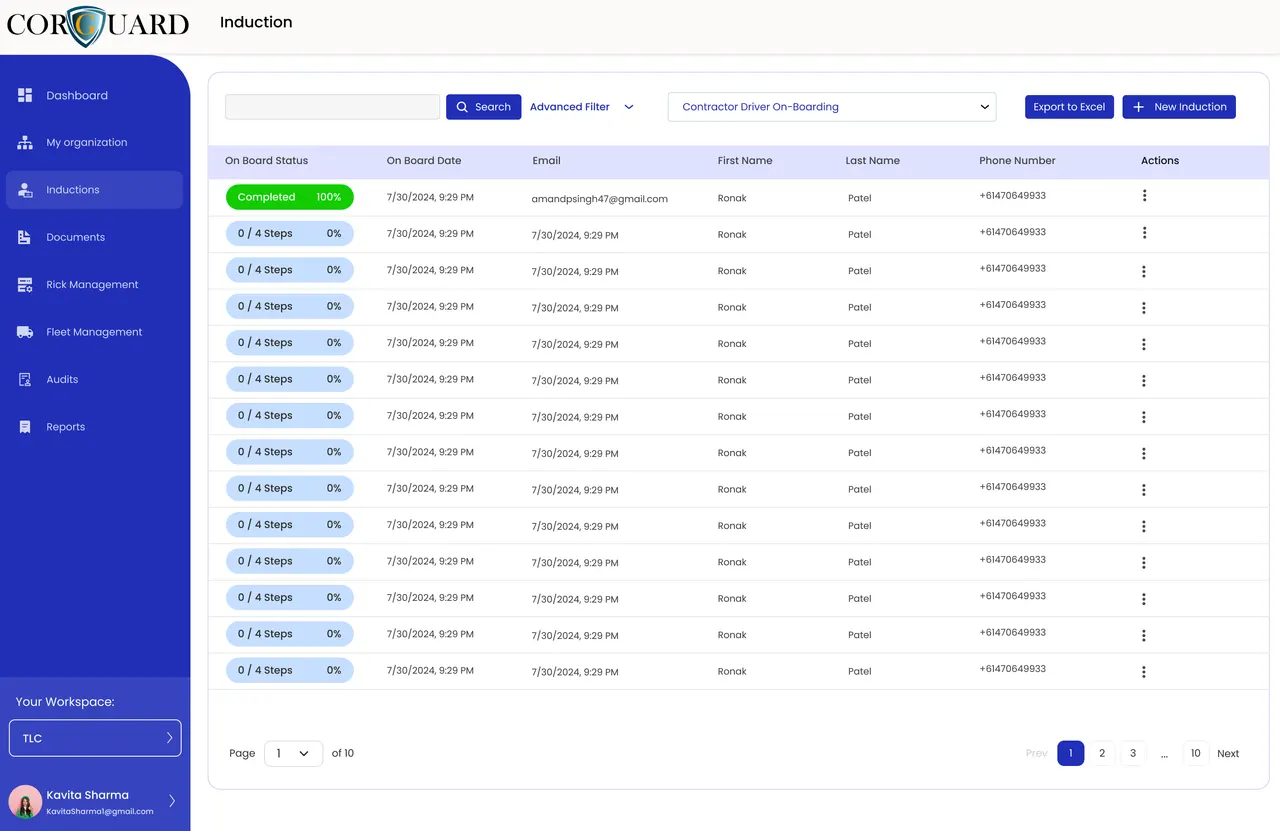
Training records
Connect training completion from cortraining.com.au to evidence and follow-up.
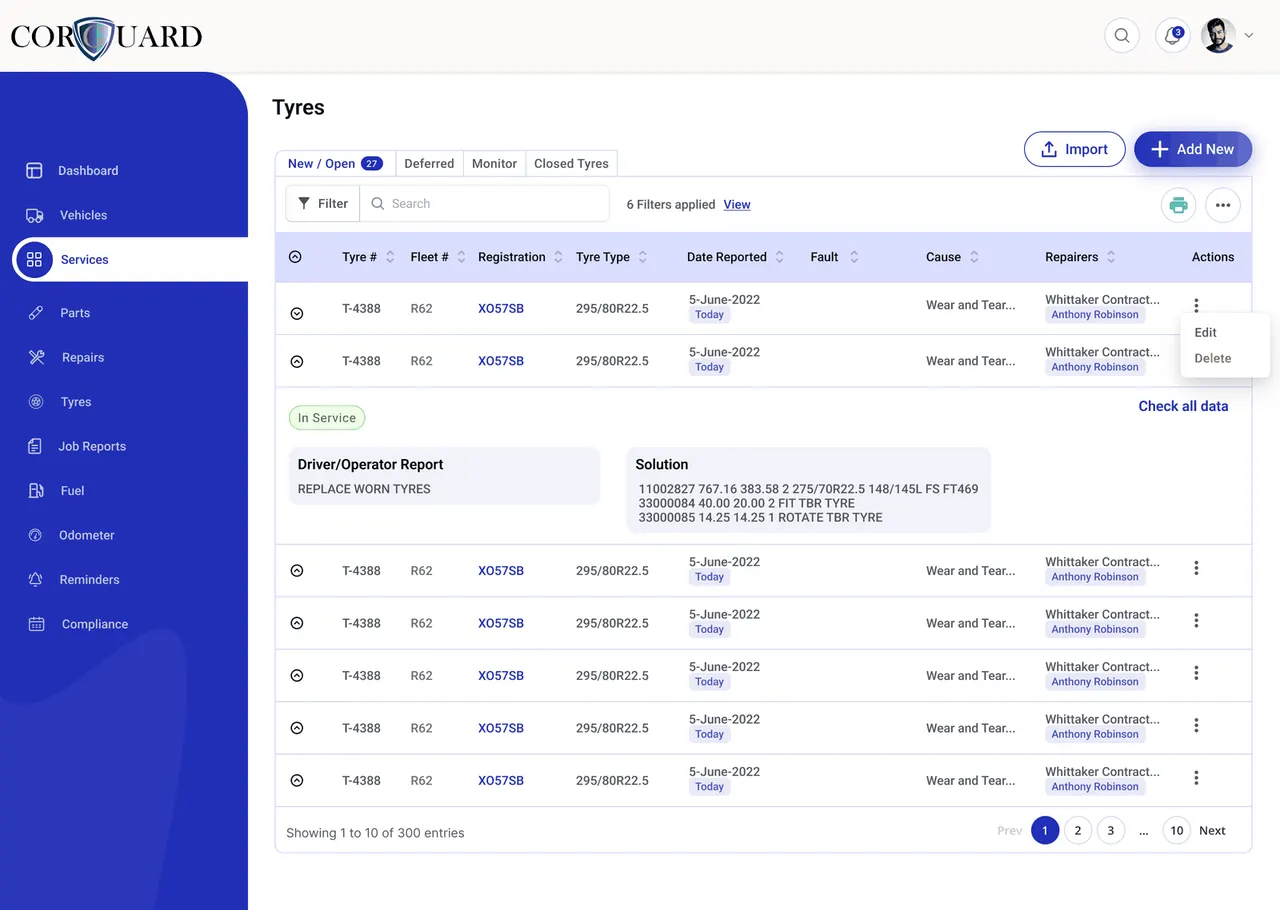
Driver diary checks
Connect fatigue and driver diary review back to manager visibility.
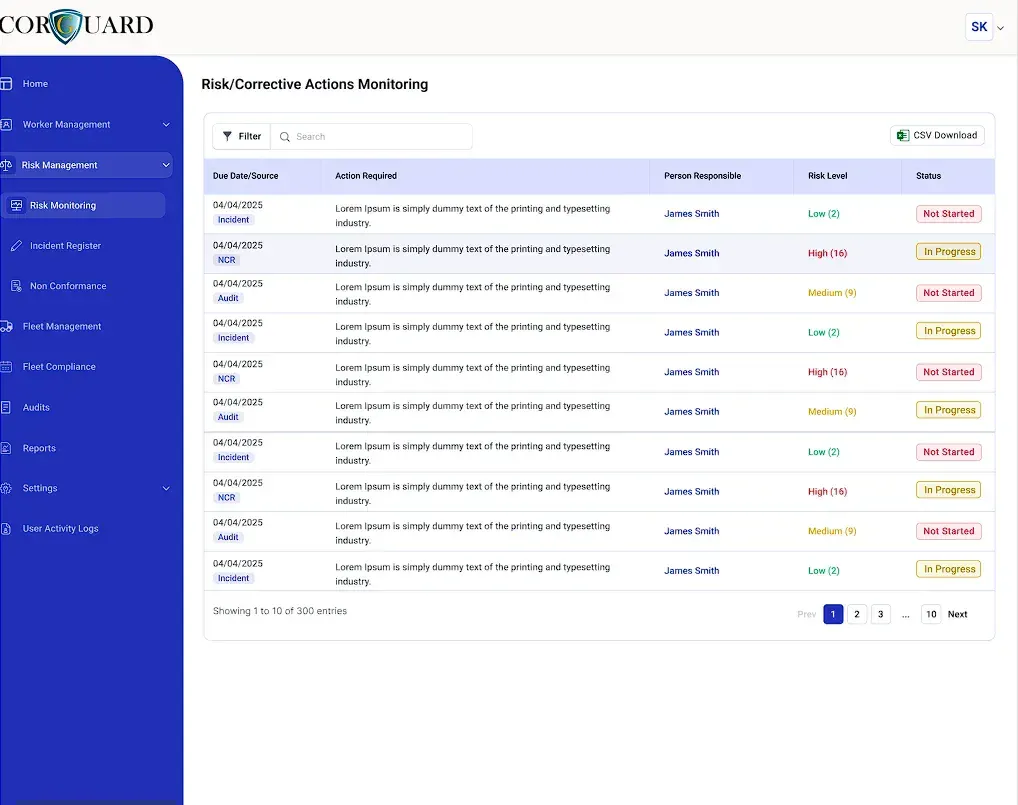
Corrective actions
Turn audit findings, hazards and incidents into tracked actions.
Keep exploring
Related Chain of Responsibility reading
MAEZ insight
Fleet Management
How Chain of Responsibility Affects Your Fleet Management Freight transport powers the Australian economy. It not only provides goods for thousands of people daily but also provides job opportunities to many others.
MAEZ insight
The Definitive Guide To Chain Of Responsibility (COR)
The changes in the chain of responsibility laws under Heavy Vehicle National Law (HVNL) were incorporated on 1st October 2018. These laws were aligned with workplace health and safety laws.
MAEZ insight
Penalties for Breaches of Heavy Vehicle National Law
HVNL refers to the Heavy Vehicle National Law, which defines minimum safety standards across the logistics network and significant penalties for the parties responsible for breaches.
MAEZ insight
Eifers Pty Ltd | NHVR Issues Enforceable Undertaking
Over the many years of operation at MAEZ we are continually staggered to find a lack of Mass control at varying types of business. What is interesting is that businesses that drive revenue from Mass related products, for example, Iron Ore, tend to be very specific with its Mass control, where others are not.
MAEZ insight
What Causes Collisions & How can Fleets Prevent Them? Experts Explain
A preventable accident is one in which the driver failed to do everything reasonably possible to avoid it — understanding collision causes is the first step in fleet prevention.
MAEZ insight
The Impact of Driver-Facing Cameras on Road Safety and the Transport Sector in Australia
The safety of our roads is of paramount importance, particularly in the transport sector. In Australia, the safety of the transport sector relies heavily on the Heavy Vehicle National Law (HVNL) and state-based workplace safety legislation. One key area of focus for transport safety is the use of driver-facing cameras.
Frequently asked questions
Questions people ask about this topic
What does it mean to implement Chain of Responsibility in practice?
Implementing CoR means building operational controls, verified training, and evidence that your safety system works at the front line — not just maintaining written policies. It requires operational-level audits and duty-holder training so every party in the chain understands and meets their responsibilities.
What went wrong in the Holcim case study?
Holcim had a working WHS management system, but an external audit was never completed at an operational level to verify site traffic management, and duty-holder training was not completed. A visiting truck salesperson was struck by a B-Double delivering aggregate, resulting in an enforceable undertaking with over $1.29 million in expenditure plus $4 million in company-wide improvements.
Why is an operational-level audit important for Chain of Responsibility?
Corporate or document-level audits can confirm a system exists on paper, but they do not verify that controls are suitable for the actual activities taking place at a site. The Holcim case shows that a compliant-looking system still leaves a business exposed when operational audits are not completed.
What training do transport operators need for Chain of Responsibility compliance?
Operators need targeted CoR training for both front-line staff and executives who carry primary duties. The Holcim case demonstrated that when duty-holder training is not completed, front-line staff lack the awareness needed to manage vehicle and pedestrian interactions safely.
How does MAEZ help transport businesses implement Chain of Responsibility?
MAEZ helps through a three-stage approach: Find (identify gaps before an auditor does), Fix (build SMS controls around how the business actually runs), and Prove (use structured records and evidence to demonstrate compliance). This includes advisory, training, audit, and implementation pathways, with CoRGuard software supporting evidence workflows where needed.